
Maritime ·
Climate Change and Sharks: How Warming Oceans Affect Apex Predato
Sharks are among the most ancient and powerful creatures on Earth. For over 400 million years, they’ve ruled the oceans as apex predators, helping keep marine ecosystems balanced. But now, sharks face a threat they’ve ne...
By Rebecca "Madam Chronicler" Ryan
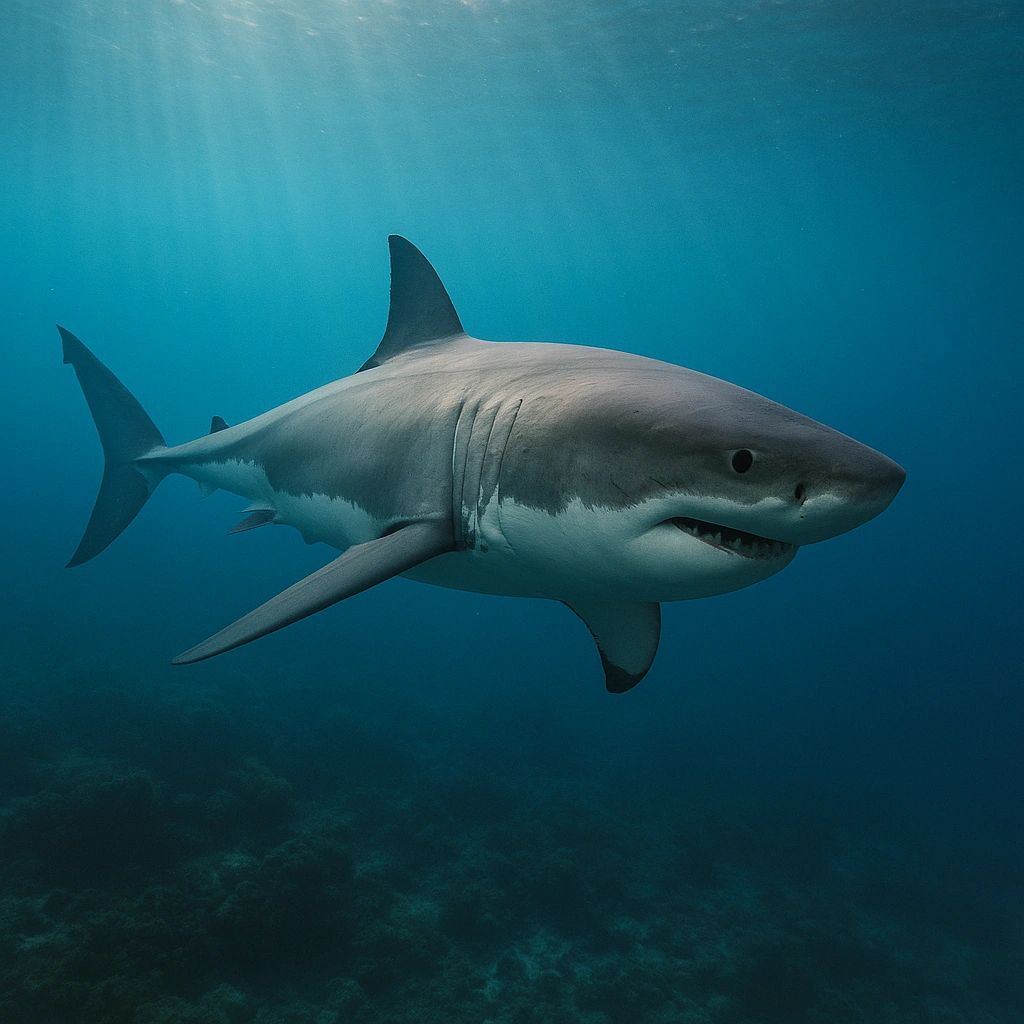
Sharks are among the most ancient and powerful creatures on Earth. For over 400 million years, they’ve ruled the oceans as apex predators, helping keep marine ecosystems balanced. But now, sharks face a threat they’ve never encountered before—climate change.
As Earth’s climate warms, our oceans are heating up too. These rising temperatures are more than just numbers on a graph—they’re changing the very world sharks live in. From where they swim and hunt to how they reproduce and survive, sharks are feeling the heat. And that’s not good news for them—or for us.
Let’s dive into how climate change is impacting sharks, what scientists are discovering, and why protecting these apex predators is key to saving our oceans.
The Ocean Is Warming—Fast
Before we talk about sharks, let’s look at what’s happening to their habitat. According to the Intergovernmental Panel on Climate Change (IPCC), the ocean has absorbed more than 90% of the excess heat trapped by greenhouse gases since the 1970s (IPCC, 2021). That means while we feel warmer air on land, the ocean is soaking up most of the heat.
In fact, ocean temperatures are rising at record-breaking speeds. This warming isn’t just happening at the surface—it’s reaching deeper into the ocean, changing entire marine ecosystems. Coral reefs are bleaching, fish are migrating to cooler waters, and food webs are shifting. And in the middle of it all are sharks.
Sharks on the Move: Chasing Cooler Waters
Sharks are cold-blooded animals, meaning their body temperature depends on the surrounding water. So, when water heats up, they have to move.
Many shark species are shifting their range—swimming farther north or into deeper waters to find cooler temperatures. For example, blacktip sharks used to migrate to Florida every winter. But now, they’re showing up farther north, in places like North Carolina (Tyminski et al., 2015). Similarly, great white sharks are being spotted in cooler regions like Cape Cod and even Canada (Curtis et al., 2018).
This might sound like an easy fix—just swim somewhere cooler, right? Not quite. When sharks move to new areas, they may run into unfamiliar prey, new predators, or even more human activity like fishing and boating. This can throw off their natural behaviors and make survival harder.
Changes in Food and Hunting
Warming oceans don’t just move sharks—they move everything sharks eat. Fish, squid, and other prey species are also heading to cooler waters. Some are disappearing from traditional shark feeding grounds altogether.
This can lead to a “food mismatch.” Sharks arrive where they used to find plenty of food, only to discover the buffet is gone. A study by Payne et al. (2018) found that changing ocean temperatures are shrinking some prey populations, while others are growing—but in different places. For sharks, that means more time and energy spent hunting, and less energy saved for growth and reproduction.
And when apex predators like sharks can’t find enough to eat, entire marine ecosystems can spiral out of balance. Sharks help control populations of fish and other species. Without them, some species may overpopulate while others crash, disrupting coral reefs, kelp forests, and fisheries.
Warmer Waters = Shark Baby Problems
Here’s another twist: warmer oceans could mess with shark reproduction.
Many sharks lay eggs or give birth to live young in shallow, coastal waters—areas now heavily affected by climate change. Warmer temperatures can speed up embryo development in shark eggs, which might sound like a good thing. But faster development doesn’t always mean stronger babies. In some species, it leads to smaller, weaker pups that are less likely to survive (Di Santo, 2015).
In addition, rising temperatures can affect sex ratios. In some shark species, like the spotted catshark, the temperature of the surrounding water can determine whether embryos become male or female. Warmer waters can result in too many males—or too many females—which disrupts population balance (Hoffmayer et al., 2013).
Fewer baby sharks mean fewer adults in the future. And for many species that already reproduce slowly, this could be devastating.
Ocean Acidification and Sharks
Climate change doesn’t just heat the water. It also changes its chemistry. As oceans absorb more carbon dioxide (CO₂) from the atmosphere, the water becomes more acidic. This is called ocean acidification.
Acidic water affects many marine animals, especially those with shells or calcium-based skeletons. But even sharks—tough as they are—can’t escape the effects.
Studies show that acidification can reduce the ability of shark embryos to grow properly, and it may impact their sense of smell (Dixson et al., 2015). Sharks rely heavily on smell to hunt. If acidification dulls this critical sense, it could make finding food much harder—especially in a world where food is already scarcer.
More Sharks Near Shore?
With all these changes happening in open waters, many shark species are appearing closer to shore. That’s where the water is sometimes cooler (thanks to freshwater runoff) and where prey like fish and rays can gather in larger numbers.
But this coastal crowding creates new problems. More sharks near shore means more interaction with humans—and more risk of conflict.
That doesn’t mean sharks are becoming more aggressive. It just means they’re following food and temperature into our space. Most shark bites are still accidental, and fatal attacks are extremely rare. But increased contact raises the chance for negative encounters and can lead to calls for culling or harming sharks—something scientists strongly oppose.
Instead, the focus should be on understanding why sharks are coming closer and finding ways to share these coastal waters safely.
Coral Reefs, Mangroves, and Nurseries in Trouble
Many young sharks grow up in shallow nursery habitats like coral reefs, mangroves, and seagrass beds. These areas offer protection from predators and a rich supply of food.
But these habitats are under serious threat from climate change.
Coral reefs are bleaching and dying because of rising temperatures. Mangroves are being lost to sea level rise and coastal development. And seagrass beds are being damaged by warmer water and pollution.
Without these vital nursery areas, shark populations could decline even faster. And when sharks vanish, their ecosystems follow.
Not All Sharks Are Equal
It’s important to remember that not all shark species are affected the same way. Some, like bull sharks and tiger sharks, are incredibly adaptable. They can tolerate a wide range of temperatures and salinity levels. Others, like the scalloped hammerhead or the Greenland shark, are much more sensitive to environmental changes (Papastamatiou et al., 2021).
This means that climate change could create “winners” and “losers” in the shark world. The adaptable species might expand their range or even thrive in new waters. The sensitive ones could vanish.
Scientists worry that this could reduce biodiversity and weaken ecosystems. The ocean works best with a full set of predators, not just a few tough survivors.
Technology and Tracking: How We Know What’s Happening
So how do we know sharks are moving, struggling, or adapting? It’s thanks to science and technology.
Researchers use satellite tags to track shark movements over thousands of miles. These tags show how sharks respond to changing temperatures, prey migrations, and human activity.
Acoustic monitors, drone footage, and underwater video all help scientists gather data on shark behavior. And genetic studies reveal how changing environments are affecting shark reproduction, health, and population structure.
This information helps researchers, conservationists, and governments make better decisions about how to protect sharks in a warming world.
What Can We Do?
Climate change is a global problem, and saving sharks means tackling it on many fronts. Here’s how we can help:
1. Cut Greenhouse Gas Emissions
The root cause of ocean warming and acidification is CO₂ emissions. Switching to renewable energy, reducing fossil fuel use, and protecting forests are all key actions.
2. Protect Shark Habitats
We must protect and restore coral reefs, mangroves, and seagrass beds. Marine protected areas (MPAs) are also essential for giving sharks safe places to breed and hunt.
3. Support Science and Conservation
Programs like OCEARCH and Global Shark Movement Project provide critical data for managing shark populations. Donating to or volunteering with these efforts helps.
4. Reduce Overfishing and Bycatch
Many shark species are overfished or killed as bycatch. Enforcing sustainable fishing practices and banning harmful gear can reduce these threats.
5. Educate and Advocate
The more people know about sharks, the more they care. Spread the word about how climate change affects sharks and why they’re vital to healthy oceans.
Final Thoughts: Sharks and the Fight Against Climate Change
Sharks are survivors. They’ve outlived dinosaurs, ice ages, and mass extinctions. But climate change is something different—and more dangerous.
As apex predators, sharks play a huge role in keeping ocean ecosystems stable. If they suffer, the whole marine world feels it. That’s why protecting sharks isn’t just about saving one group of animals. It’s about protecting the balance of life in the sea.
By taking action against climate change now, we can help sharks—and all of us—have a better future. Because when sharks thrive, the ocean thrives. And when the ocean thrives, so do we.
Bibliography
Curtis, T. H., McCandless, C. T., Carlson, J. K., Skomal, G. B., Kohler, N. E., Natanson, L. J., … & Pratt, H. L. (2018). Seasonal distribution and historic trends in abundance of white sharks, Carcharodon carcharias, in the western North Atlantic Ocean. PLOS ONE, 13(1), e0191897. https://doi.org/10.1371/journal.pone.0191897
Di Santo, V. (2015). Ocean acidification exacerbates the impacts of global warming on embryonic little skate, Leucoraja erinacea (Mitchill). Journal of Experimental Biology, 218, 3446–3454. https://doi.org/10.1242/jeb.127878
Dixson, D. L., Jennings, A. R., Atema, J., & Munday, P. L. (2015). Odor tracking in sharks is reduced under future ocean acidification conditions. Global Change Biology, 21(4), 1454–1462. https://doi.org/10.1111/gcb.12678
Hoffmayer, E. R., Hendon, J. M., & Parsons, G. R. (2013). Seasonal occurrence, movements, and site fidelity of the blacktip shark, Carcharhinus limbatus, in Mississippi coastal waters and the north central Gulf of Mexico. Environmental Biology of Fishes, 96(6), 701–715. https://doi.org/10.1007/s10641-012-0065-6
IPCC. (2021). Climate Change 2021: The Physical Science Basis. Contribution of Working Group I to the Sixth Assessment Report of the Intergovernmental Panel on Climate Change. Cambridge University Press. https://www.ipcc.ch/report/ar6/wg1/
Papastamatiou, Y. P., Watanabe, Y. Y., Bradley, D., Dee, L. E., & Lowe, C. G. (2021). Drivers of daily routines in an ectothermic marine predator: hunt warm, rest warmer? PLOS ONE, 16(4), e0250023. https://doi.org/10.1371/journal.pone.0250023
Payne, N. L., Snodgrass, O. E., Leigh, S. C., & Semmens, J. M. (2018). A new method for resolving uncertainty of energy requirements in large water-breathing animals. Ecology and Evolution, 8(13), 7221–7230. https://doi.org/10.1002/ece3.4187
Tyminski, J. P., de la Parra-Venegas, R., Cano, J. G., & Hueter, R. E. (2015). Vertical movements and patterns in diving behavior of whale sharks as revealed by pop-up satellite tags in the eastern Gulf of Mexico. PLOS ONE, 10(11), e0142156. https://doi.org/10.1371/journal.pone.0142156
Originally published at the live site .