
Stories ·
Fahlo: How a Simple Bracelet Is Helping Save Wildlife Around the
In an era where the natural world faces mounting threats—from climate change to habitat loss—people are increasingly looking for ways to contribute to conservation efforts. Enter Fahlo, a company that has found a creativ...
By Rebecca "Madam Chronicler" Ryan
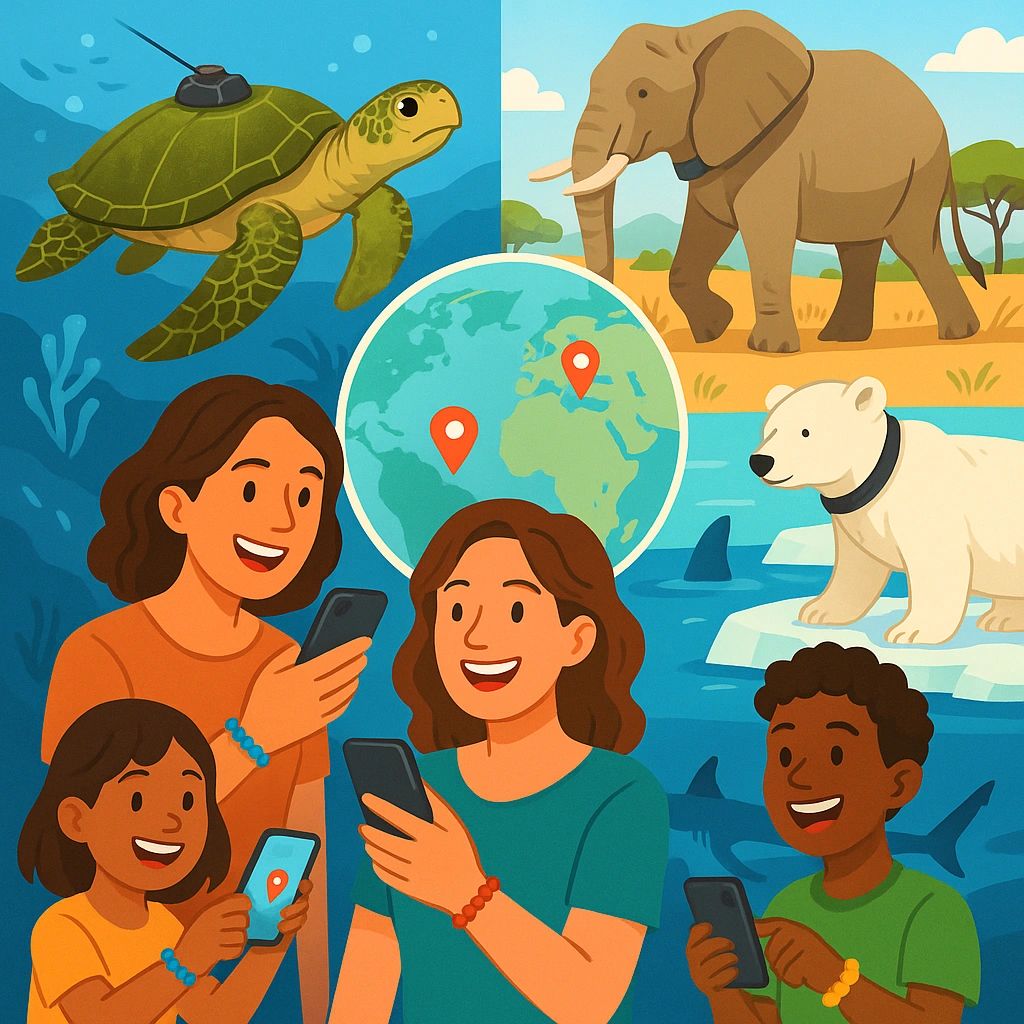
In an era where the natural world faces mounting threats—from climate change to habitat loss—people are increasingly looking for ways to contribute to conservation efforts. Enter Fahlo, a company that has found a creative, meaningful, and surprisingly simple way to connect people with wildlife: through beautifully designed bracelets that allow you to track real animals in the wild. By pairing modern technology with consumer outreach, Fahlo is turning everyday purchases into powerful tools for education, engagement, and environmental protection.
In this post, we’ll explore Fahlo’s origins, its conservation partnerships, how its animal tracking technology works, and its impact on global wildlife. Most importantly, we’ll explain why Fahlo represents a new model for wildlife conservation—one where storytelling and science walk hand in hand.
What Is Fahlo?
Fahlo (pronounced “follow”) is a mission-driven company that partners with non-profit conservation organizations to help save animals through product-based fundraising. Their main products are tracking bracelets, which are colorful, stylish, and embedded with a unique code. Each bracelet corresponds to a real animal—like a sea turtle, elephant, shark, or polar bear—that is being monitored by conservation scientists in the field.
When you purchase a bracelet, you’re given a link to an online dashboard where you can follow the animal’s movements in near-real time. You also receive a name, photo, and a brief backstory about the animal you’re following. It’s part storytelling, part citizen science, and part philanthropy—all rolled into a bracelet you can wear every day.
Fahlo is perhaps best known for its original product, the Turtle Bracelet, which began as a partnership with Sea Turtle Conservancy (STC), the world’s oldest sea turtle research organization. Since then, the company has expanded its offerings to include:
- Sharks (partnered with Saving the Blue)
- Lions and Elephants (partnered with Save the Elephants and other Africa-based NGOs)
- Penguins, Polar Bears, and Orcas (in partnership with Polar Bears International and other Arctic wildlife groups)
The Origin of Fahlo: Business Meets Purpose
Fahlo was founded in 2018 by two entrepreneurs who saw a gap in the market: people wanted to make a difference but didn’t know how. Charitable donations can feel impersonal and intangible. Buying a bracelet, on the other hand, offers something tactile and emotionally rewarding—especially when you’re tracking a real animal that depends on your support.
Fahlo’s founders realized that today’s consumers want to feel connected to the causes they care about. They don’t just want to donate; they want to engage, follow, and understand. The company’s mission became clear: “To create a meaningful experience that allows people to learn about and protect wildlife.”
It’s a mission that has resonated with a global audience. As of 2025, Fahlo has sold millions of bracelets, with each one helping fund real-world conservation efforts.
How Animal Tracking Works
At the heart of Fahlo’s bracelets is animal telemetry—the scientific practice of remotely tracking wildlife. This is typically done using GPS or satellite tags attached to an animal’s body. These tags transmit data back to researchers, allowing them to study migration routes, breeding grounds, behavior, and threats in real time (Hussey et al., 2015).
For example:
- Sea turtles are often tracked via satellite tags affixed to their shells. These tags ping satellites each time the turtle surfaces, giving researchers a detailed map of their movements (Godley et al., 2008).
- Sharks may carry acoustic transmitters that are picked up by underwater receivers, or they may be fitted with pop-up satellite tags that record depth, temperature, and location.
- Elephants often wear GPS collars that transmit location data via cellular networks or satellite, allowing conservationists to monitor their movement patterns and prevent human-wildlife conflict (Douglas-Hamilton et al., 2005).
Fahlo takes this scientific data—gathered by its conservation partners—and integrates it into user-friendly dashboards. These digital platforms allow bracelet buyers to track their assigned animal, sometimes for months or even years, depending on the lifespan of the tag and the health of the animal.
Conservation in Action: Fahlo’s Partners and Projects
Fahlo doesn’t do the tracking themselves. Instead, they collaborate with leading non-profit organizations that specialize in field-based conservation. Here’s a closer look at a few key partnerships:
1. Sea Turtle Conservancy (STC)
Based in Florida, the STC has been working since 1959 to protect endangered sea turtles throughout the Caribbean, Gulf of Mexico, and Atlantic. Using satellite telemetry, they track loggerheads, green turtles, and leatherbacks to understand nesting behavior and migratory patterns. Funds from Fahlo have helped the STC tag more turtles and expand education initiatives in Costa Rica and Panama (Witherington et al., 2009).
2. Saving the Blue
This marine conservation group focuses on restoring populations of threatened shark species. By tagging hammerheads, tiger sharks, and great whites, they collect vital data on oceanic ecosystems. Fahlo’s shark bracelets support the organization’s fieldwork and public outreach, helping shift attitudes about sharks from fear to fascination (Gallagher & Hammerschlag, 2011).
3. Save the Elephants
Founded in Kenya, Save the Elephants has pioneered the use of GPS collars to monitor African elephant herds. Their work has reduced poaching, improved human-wildlife coexistence, and informed national park management. Funds from Fahlo help provide new tracking equipment, ranger salaries, and anti-poaching programs (Wittemyer et al., 2005).
4. Polar Bears International
In the Arctic, where polar bears face existential threats from melting ice, researchers are tracking their movements to assess how climate change affects their ability to hunt and reproduce. Fahlo’s polar bear bracelets contribute to this vital work by funding satellite collaring and ice monitoring technologies (Derocher et al., 2004).
Why It Works: The Psychology of Conservation Through Storytelling
So why has Fahlo succeeded where other conservation efforts have struggled? Much of the answer lies in narrative psychology—the human tendency to connect deeply with stories. Studies have shown that people are more likely to support wildlife conservation when they are emotionally engaged through personal stories or anthropomorphic characters (Clayton & Myers, 2009).
By giving each animal a name, photo, and “biography,” Fahlo transforms raw data into a relatable narrative. A shark becomes “Finley,” a sea turtle becomes “Shelly,” and an elephant becomes “Amari.” These aren’t just animals anymore; they’re characters in a story you’re invited to follow.
This emotional connection increases the likelihood of long-term engagement and repeated giving. It also enhances science communication, making complex ecological issues more accessible to a lay audience.
Fahlo’s Global Impact
Since its founding, Fahlo has made tangible contributions to conservation:
- Millions of dollars raised for non-profits through bracelet sales
- Thousands of animals tracked across continents and oceans
- Dozens of field projects supported, from poaching patrols to sea turtle nesting surveys
- Extensive educational reach, especially among younger audiences who use animal dashboards to learn geography, biology, and environmental science
Fahlo’s bracelets are even being used in classrooms to teach students about animal behavior and conservation ethics. Teachers report increased student interest in science and stronger empathy toward animals when using real-time tracking data (Krasny & Tidball, 2009).
Criticism and Ethical Considerations
No organization is without critique, and Fahlo is no exception. Some critics argue that the commercialization of conservation can lead to “greenwashing” or consumer guilt-mitigation without true behavioral change (Carrier, 2018). Others point out that animal tracking, if not done ethically, can stress wildlife or lead to unintended ecological consequences.
However, Fahlo seems to be aware of these concerns. The company works only with organizations that follow strict animal welfare protocols. It is also transparent about the percentage of proceeds donated—typically a minimum of 10% of profits go directly to partner NGOs.
Still, ongoing scrutiny is essential. Conservation is a complex, often messy endeavor, and companies like Fahlo must continually assess the impact of their operations.
The Future of Conservation Commerce
Fahlo represents a new model for 21st-century conservation—one that blends commerce, community, and connectivity. In many ways, it parallels other social enterprises like TOMS or Patagonia, where products are not just commodities, but conduits for purpose.
As technology evolves, we may see even more immersive experiences. Imagine bracelets that connect to augmented reality apps, livestreams from animal cams, or AI-generated updates about your animal’s “daily life.” The possibilities for engagement are nearly limitless.
Fahlo also highlights the role that Gen Z and Millennials are playing in reshaping philanthropy. These generations are less likely to make large one-time donations and more likely to engage with causes through recurring micro-actions—like sharing animal updates on social media or gifting bracelets to friends.
Conclusion: Following the Wild with Fahlo
In a time of biodiversity crisis, every connection to nature counts. Fahlo is helping build those connections, one bracelet—and one story—at a time. Whether you’re tracking a loggerhead turtle across the Gulf of Mexico or an elephant through Kenya’s savannahs, you’re participating in something bigger than yourself: a global effort to understand, respect, and protect the animals that share our planet.
In the words of renowned conservationist Dr. Sylvia Earle, “Knowing is the key to caring, and with caring there is hope that people will be motivated to take positive actions.” Fahlo turns that principle into a tangible product—one that brings people closer to wildlife, and maybe, inspires them to protect it.
References
Carrier, J. G. (2018). Greenwashing and the Problem of Product-Based Conservation. Journal of Political Ecology, 25(1), 643–661. https://doi.org/10.2458/v25i1.22751
Clayton, S., & Myers, G. (2009). Conservation psychology: Understanding and promoting human care for nature. Wiley-Blackwell.
Derocher, A. E., Lunn, N. J., & Stirling, I. (2004). Polar bears in a warming climate. Integrative and Comparative Biology, 44(2), 163–176. https://doi.org/10.1093/icb/44.2.163
Douglas-Hamilton, I., Krink, T., & Vollrath, F. (2005). Movements and corridors of African elephants in relation to protected areas. Naturwissenschaften, 92(4), 158–163. https://doi.org/10.1007/s00114-004-0606-9
Gallagher, A. J., & Hammerschlag, N. (2011). Global shark currency: The distribution, frequency, and economic value of shark ecotourism. Current Issues in Tourism, 14(8), 797–812. https://doi.org/10.1080/13683500.2011.585227
Godley, B. J., Blumenthal, J. M., Broderick, A. C., Coyne, M. S., Godfrey, M. H., Hawkes, L. A., & Witt, M. J. (2008). Satellite tracking of sea turtles: Where have we been and where do we go next? Endangered Species Research, 4, 3–22. https://doi.org/10.3354/esr00060
Hussey, N. E., Kessel, S. T., Aarestrup, K., Cooke, S. J., Cowley, P. D., Fisk, A. T., … & Whoriskey, F. G. (2015). Aquatic animal telemetry: A panoramic window into the underwater world. Science, 348(6240), 1255642. https://doi.org/10.1126/science.1255642
Krasny, M. E., & Tidball, K. G. (2009). Applying a resilience systems framework to urban environmental education. Environmental Education Research, 15(4), 465–482. https://doi.org/10.1080/13504620903003290
Wittemyer, G., Douglas-Hamilton, I., & Getz, W. M. (2005). The socioecology of elephants: Analysis of the processes creating multitiered social structures. Animal Behaviour, 69(6), 1357–1371. https://doi.org/10.1016/j.anbehav.2004.08.018
Witherington, B. E., Hirama, S., & Hardy, R. (2009). Young sea turtles of the pelagic Sargassum-dominated drift community: Habitat use, population density, and threats. Marine Ecology Progress Series, 295, 265–276. https://doi.org/10.3354/meps295265
Originally published at the live site .