
Maritime ·
Is a Manta Ray a Predator or Prey?
Manta rays are some of the most amazing creatures in the ocean. With their wide, wing-like fins and graceful swimming style, they look like underwater birds. But when we see them glide by, a question comes to mind—are ma...
By Rebecca "Madam Chronicler" Ryan
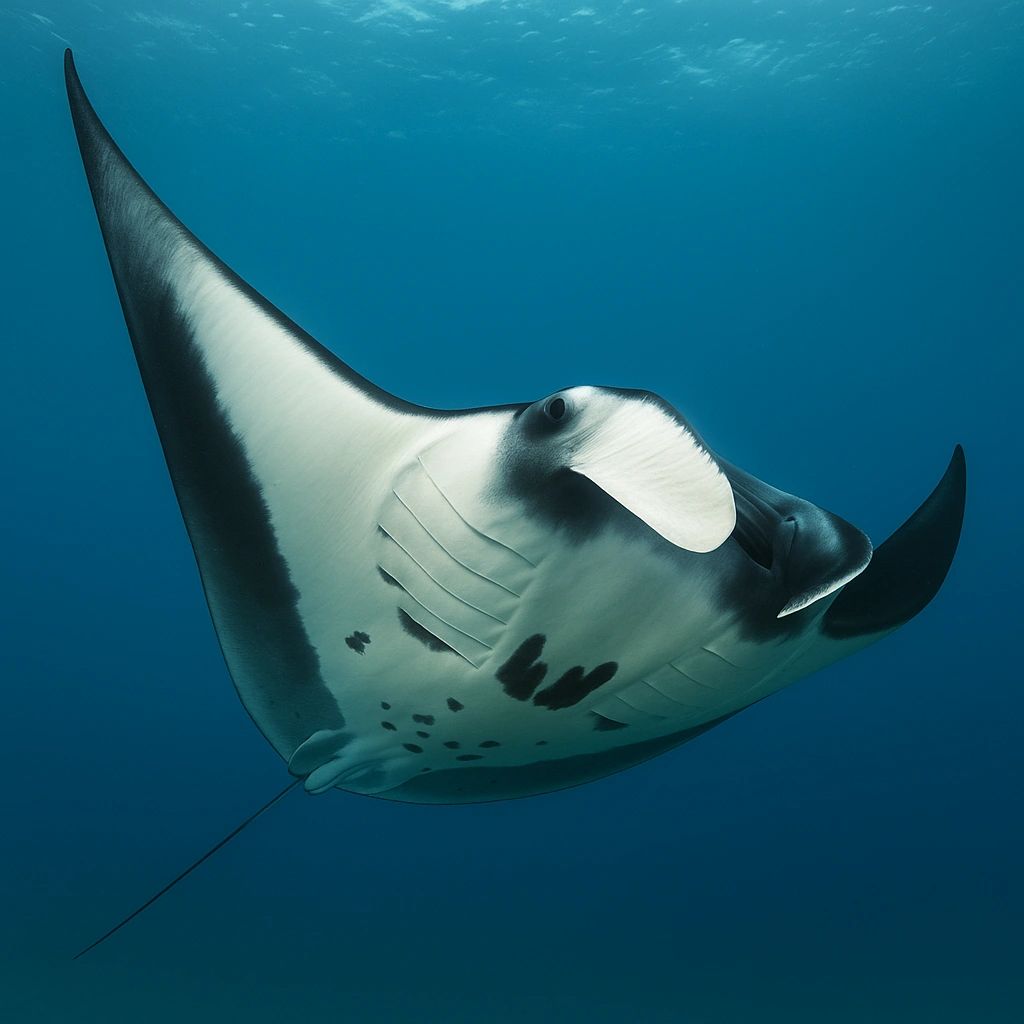
Manta rays are some of the most amazing creatures in the ocean. With their wide, wing-like fins and graceful swimming style, they look like underwater birds. But when we see them glide by, a question comes to mind—are manta rays predators, or are they prey? The answer isn’t as simple as picking one side. Manta rays actually play both roles in the ocean food web.
In this blog, we’ll explore what manta rays eat, who eats them, how they stay safe, and where they fit in the big picture of ocean life. By the end, you’ll have a whole new appreciation for these gentle giants of the sea.
What Is a Manta Ray?
Before we dive into predator vs. prey, let’s talk about what a manta ray actually is. Manta rays are large ocean animals related to sharks and other rays. They are cartilaginous fish, meaning their skeletons are made of cartilage instead of bones—just like a shark’s.
There are two main species of manta rays:
- The reef manta ray (Mobula alfredi)—usually found near coral reefs.
- The giant oceanic manta ray (Mobula birostris)—the biggest ray in the world, sometimes growing over 20 feet wide!
Manta rays live in warm ocean waters all over the globe. They often swim near the surface, sometimes leaping out of the water in huge flips. And no, they don’t have a stinger like stingrays, so they’re totally harmless to humans.
What Do Manta Rays Eat?
Now let’s get into whether manta rays are predators. To figure that out, we have to look at what they eat.
Manta rays are filter feeders. That means they swim with their mouths wide open, collecting tiny food from the water. This food includes:
- Plankton: Tiny ocean creatures like copepods and krill.
- Microscopic shrimp and larvae.
- Small fish in some cases.
Even though manta rays are huge—some weigh over 3,000 pounds—they eat some of the smallest animals in the ocean. To catch their food, they swim in slow loops through clouds of plankton. It’s almost like they’re flying in slow motion through an invisible buffet.
So, are they predators? Technically, yes—but not in the way we usually think of predators. Manta rays don’t chase or attack their prey like sharks or orcas. Instead, they gently sweep it up while swimming. Scientists call this a form of passive predation (Couturier et al., 2012).
Who Eats Manta Rays?
Now let’s flip the question. Are manta rays ever prey?
Although they’re big and fast swimmers, manta rays do have predators. When they are young or small, manta rays are more vulnerable to attacks. Common predators include:
- Large sharks: Especially tiger sharks and great hammerheads.
- Orcas (killer whales): Known to hunt rays.
- Humans: Yes, sadly, humans are one of the biggest threats to manta rays. People hunt them for their gill plates, which are used in traditional medicine in some parts of Asia (O’Malley et al., 2017).
Young manta rays (called pups) are more at risk than adults. Once they’re fully grown, they’re harder to eat, but not completely safe.
How Do Manta Rays Stay Safe?
Even though manta rays don’t have stingers, they do have some great defenses.
1. Speed and Agility
Manta rays are strong swimmers. They can flap their huge fins like wings and glide quickly through the water. If a predator gets too close, they can zoom away or perform sharp turns to escape.
2. Color Camouflage
Their backs are usually dark, while their undersides are white. This is called countershading, and it helps them blend in with the ocean. From above, they look like the dark sea. From below, they blend into the bright surface.
3. Size
Just being big is a great defense. Not many animals are large enough or brave enough to attack a full-grown manta ray.
4. Group Behavior
Sometimes, manta rays gather in groups called “feeding aggregations.” Being in a group can reduce the risk of being singled out by predators.
Manta Rays in the Food Web
Every animal in the ocean plays a role in the food web. This is like a big map showing who eats whom. Manta rays are somewhere in the middle:
- They eat small animals (plankton), so they are predators to those creatures.
- But they are also eaten by bigger animals, so they are prey too.
In science, we call animals like manta rays mesopredators. That means they’re not top-level predators (like orcas), but they’re also not just helpless prey. They have a mixed role.
What Makes Manta Rays Special?
Manta rays are more than just predators or prey—they’re key players in ocean ecosystems. By eating plankton, they help control populations of tiny sea creatures. This keeps the food web in balance.
They also help spread nutrients. When manta rays move through different ocean areas, they release waste that feeds other organisms. Think of them as gentle gardeners of the sea.
Threats to Manta Rays
Sadly, manta rays face a lot of dangers—mostly from humans.
1. Fishing
People hunt manta rays for their gill plates, which are used in traditional Chinese medicine. This practice has become a big problem in recent decades.
2. Bycatch
Manta rays often get caught by accident in nets meant for other fish. This is called bycatch, and it’s a huge issue.
3. Pollution
Plastic pollution, oil spills, and chemical waste can all harm manta rays. Because they filter so much water through their mouths, they can swallow microplastics and toxins.
4. Climate Change
Warming oceans are changing where plankton live. If manta rays can’t find enough food, they might not survive. Coral reefs, where many manta rays feed and gather, are also in danger.
Are Manta Rays Endangered?
Yes, some species of manta rays are listed as vulnerable or endangered by the International Union for Conservation of Nature (IUCN). Their populations are shrinking due to overfishing and habitat loss (Marshall et al., 2019).
The good news is that many countries now have laws to protect manta rays. Some places have created “manta sanctuaries” where it’s illegal to hunt or harm them. Education and conservation efforts are making a difference.
How Can We Help Manta Rays?
You don’t have to live near the ocean to help manta rays. Here are some ways anyone can help:
- Support eco-friendly tourism: Choose tour operators that follow marine protection rules.
- Avoid products made from ocean animals, like gill plates or coral jewelry.
- Cut down on plastic use: Use reusable bags, bottles, and straws to reduce pollution.
- Donate or volunteer with organizations that protect marine life.
- Learn and share: The more people know about manta rays, the more likely we are to protect them.
Fun Facts About Manta Rays
Let’s wrap up with a few fun facts that make manta rays even cooler:
- They have the biggest brains of any fish! Manta rays are super smart and curious.
- They can recognize themselves in mirrors, a sign of self-awareness.
- Each manta ray has unique spot patterns on its belly, like a fingerprint.
- They can leap out of the water, even doing flips!
Final Answer: Predator or Prey?
So, is a manta ray a predator or prey? The answer is… both!
- As predators, they feed on tiny plankton and help keep the ocean in balance.
- As prey, they are hunted by sharks, orcas, and humans.
- But they are also more than that—they are gentle giants that play a vital role in ocean ecosystems.
Manta rays show us that not every predator has to be fierce and not every prey animal is weak. Sometimes, nature is full of beautiful balance, and manta rays are the perfect example.
Bibliography
Couturier, L. I. E., Marshall, A. D., Jaine, F. R. A., Kashiwagi, T., Pierce, S. J., Townsend, K. A., … & Richardson, A. J. (2012). The biology and ecology of the giant manta ray Manta birostris. Zoology, 115(4), 197–210. https://doi.org/10.1016/j.zool.2012.03.005
Marshall, A. D., Compagno, L. J. V., & Bennett, M. B. (2019). Red listing and the extinction risk of manta rays. Biological Conservation, 145(1), 206–216. https://doi.org/10.1016/j.biocon.2011.10.009
O’Malley, M. P., Lee‐Brooks, K., & Medd, H. B. (2017). The global trade of manta and mobula ray gill plates: Challenges and opportunities for conservation. Aquatic Conservation: Marine and Freshwater Ecosystems, 27(4), 748–759. https://doi.org/10.1002/aqc.2730
Originally published at the live site .