
Maritime ·
Jaws at 50: Celebrating the Shark That Changed Cinema—and the Oce
In June 1975, a great white shark roared into movie theaters and never left our collective imagination. Its name wasn’t spoken in the film, but we all remember it: Jaws. Now, 50 years later, Steven Spielberg’s masterpiec...
By Rebecca "Madam Chronicler" Ryan
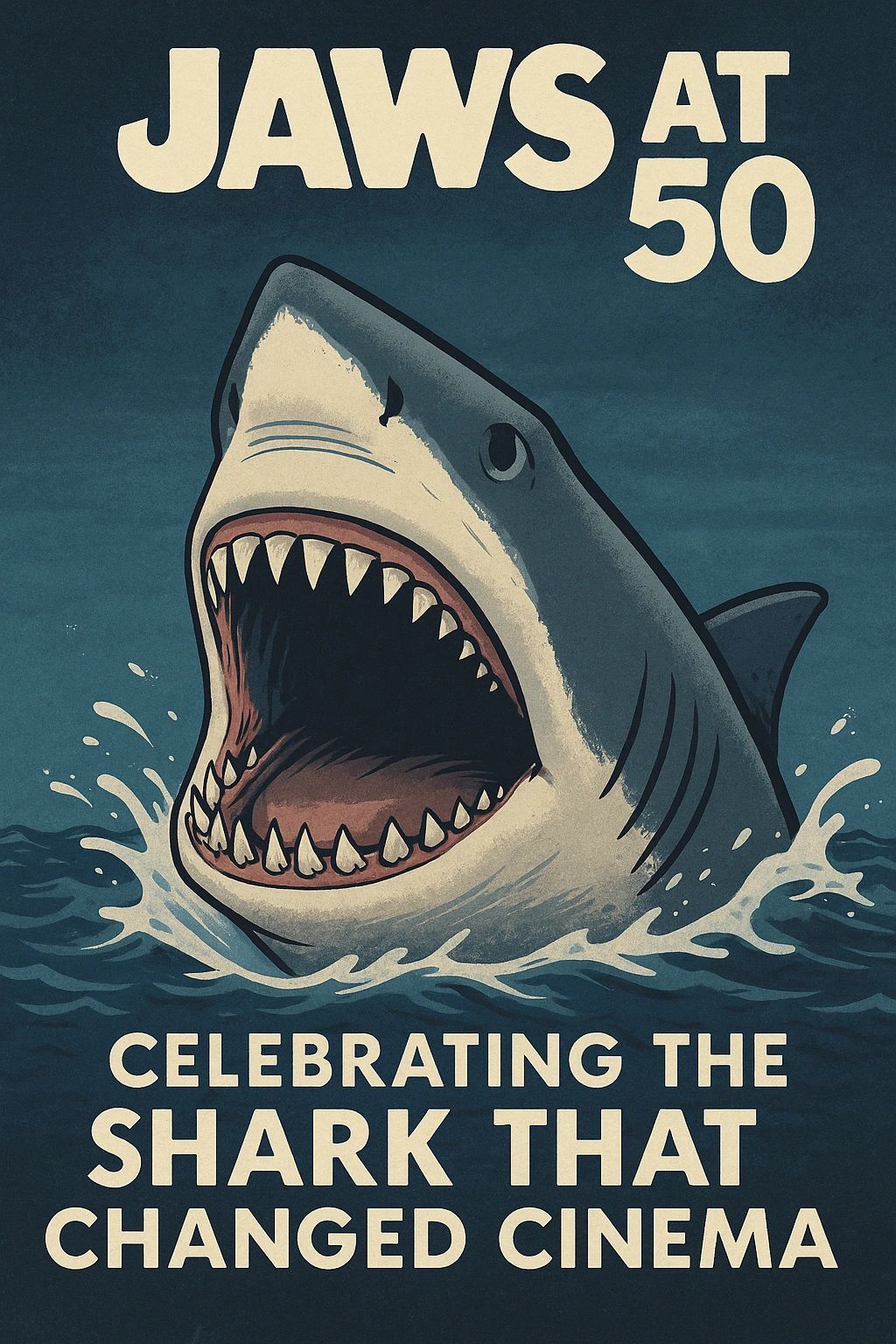
In June 1975, a great white shark roared into movie theaters and never left our collective imagination. Its name wasn’t spoken in the film, but we all remember it: Jaws. Now, 50 years later, Steven Spielberg’s masterpiece still casts a long shadow over pop culture, film history, and even marine conservation.
Whether you first saw it on a VHS tape, caught it during a Shark Week marathon, or heard the iconic da-dum da-dum theme long before watching the film itself, Jaws has become more than a movie—it’s a legend. It’s a cinematic thriller, a cultural phenomenon, and a touchstone for how humans perceive sharks and the sea.
As we celebrate the 50th anniversary of Jaws, we reflect on the legacy of a movie that made people afraid to go into the water, redefined the summer blockbuster, and (perhaps surprisingly) helped spark global awareness about sharks. Here’s a deep dive into why Jaws still matters.
The Movie That Made a Monster—and a Master
Directed by a then-29-year-old Steven Spielberg, Jaws was based on the 1974 novel by Peter Benchley. The story follows a seaside town terrorized by a rogue great white shark, and the unlikely trio of men—Chief Brody, marine biologist Matt Hooper, and grizzled fisherman Quint—who set out to stop it.
The film premiered on June 20, 1975, and became an instant phenomenon. It grossed over $470 million worldwide (adjusted for inflation, that’s well over $2 billion today), making it the highest-grossing film at the time and cementing Spielberg’s career.
Part of Jaws’ genius came from necessity. The mechanical shark, nicknamed “Bruce,” often malfunctioned. Spielberg turned the limitation into art: by keeping the shark mostly unseen and relying on music and suggestion, he created tension so thick you could slice it with a dorsal fin.
From John Williams’ haunting score to the unforgettable monologue about the USS Indianapolis, Jaws fused suspense, drama, and adventure like few films before or since. It was, in many ways, the first modern blockbuster—released in the summer, promoted on TV, and widely distributed across hundreds of theaters.
Sharkmania: The Cultural Tsunami AfterJaws
After Jaws, sharks swam into the center of American culture. Merchandise, sequels, documentaries, and theme park rides followed. The phrase “You’re gonna need a bigger boat” became part of the lexicon. Kids dressed as sharks for Halloween. Beachgoers glanced nervously at every ripple in the water.
But the phenomenon had a darker side. Jaws triggered a wave of shark fear that rippled across the globe. Newspapers ran headlines about “killer sharks.” Fishermen organized shark hunts. Pop culture began portraying sharks almost exclusively as bloodthirsty villains.
Peter Benchley himself later regretted how his book and the film demonized sharks. In later years, he became a vocal advocate for shark conservation, working with organizations like WildAid and the Environmental Defense Fund.
As he famously said, “Knowing what I know now, I could never write that book today” (Benchley, 2002).
The Science of Sharks vs. the Myth ofJaws
One of the most enduring criticisms of Jaws is that it presented sharks as villains, when in reality, they are crucial—and often misunderstood—parts of marine ecosystems.
Let’s clear up a few Jaws-inspired myths:
MYTH: Great white sharks hunt humans.FACT: Humans are not on the menu. Shark bites are rare and often cases of mistaken identity (McPhee, 2014). In 2023, there were only 57 unprovoked shark attacks worldwide, with 10 fatalities—a tiny risk compared to drowning or jellyfish stings (ISAF, 2024).
MYTH: Sharks are bloodthirsty killers.FACT: Sharks are highly evolved predators with specific diets. Great whites, for example, feed mainly on seals and fish. They play a vital role in regulating prey populations and keeping coral reefs and seagrass beds healthy (Ferretti et al., 2010).
MYTH: Sharks are everywhere near beaches.FACT: Most sharks avoid humans. The vast majority of beachgoers will never encounter a shark.
Despite these facts, Jaws created what scientists call a “Jaws Effect”—a distortion in public perception that leads to fear, policy missteps, and in some cases, shark culls (Muter et al., 2013).
From Villain to Victim: The Conservation Turn
Ironically, the fear stirred by Jaws may have laid the groundwork for greater public awareness of sharks. Over the past 30 years, shark conservation has emerged as a major global concern.
Today, more than one-third of shark species are threatened with extinction, due to overfishing, habitat loss, and the fin trade (Dulvy et al., 2021). Great whites, the star of Jaws, are listed as vulnerable on the IUCN Red List.
In response, scientists, filmmakers, and activists have worked to shift public opinion:
- Documentaries like Sharkwater (2006) and Blue Planet II (2017) highlight sharks’ beauty and importance.
- Organizations like Oceana and the Shark Trust advocate for bans on shark finning and promote sustainable fisheries.
- Shark tourism, including cage diving with great whites, has created new economic incentives to protect rather than kill them (Gallagher & Hammerschlag, 2011).
Even Hollywood has changed its tone. Films like Finding Nemo and The Meg portray sharks with more complexity—sometimes as misunderstood, sometimes as humorous, occasionally as heroes.
A Cinematic Masterclass: WhyJawsStill Holds Up
Five decades later, Jaws is still a masterclass in filmmaking. It’s taught in film schools, cited by directors, and revered by critics. But what makes it so enduring?
1. Suspense Over Spectacle
Spielberg’s choice to show the shark sparingly created psychological terror that’s more effective than gore. It’s a technique echoed in modern horror films like A Quiet Place and The Blair Witch Project.
2. Character-Driven Storytelling
Chief Brody, Hooper, and Quint are more than stock figures—they’re richly developed characters with conflicting values. Their chemistry drives the final act as much as the shark does.
3. Universal Themes
At its core, Jaws is about fear, control, and survival. It taps into primal anxieties—of the unknown, the deep, the natural world rebelling.
4. Iconic Score
John Williams’ two-note theme is synonymous with tension. It’s arguably the most recognizable piece of film music ever composed.
The Jaws Legacy: Where It Shows Up Today
Jaws didn’t just launch a franchise—it launched an era.
- Shark Week, which debuted in 1988, owes its existence to the public fascination Jaws ignited.
- Blockbuster marketing, with trailers, toys, and tie-ins, began with Jaws and continued with Star Wars, Jurassic Park, and the Marvel Cinematic Universe.
- The idea of the “summer movie event” was born with Jaws and now dominates the global box office calendar.
Even in the age of CGI, Jaws’ practical effects and story-first approach feel fresh. It remains a reminder that what we imagine is often scarier—and more powerful—than what we see.
Celebrating the 50th Anniversary: Events, Tributes, and Screenings
For its 50th anniversary, Jaws is making a big splash.
1. Special Screenings
IMAX and 4K restored versions of Jaws are being shown in theaters around the world, many with live orchestras performing John Williams’ score.
2. Museum Exhibits
The Academy Museum of Motion Pictures in Los Angeles and the Martha’s Vineyard Museum (where much of Jaws was filmed) are hosting exhibits featuring props, behind-the-scenes photos, and interviews.
3. Books and Documentaries
A wave of retrospectives is hitting shelves, including updated editions of The Jaws Log by Carl Gottlieb and new documentaries like Jaws @ 50: The Film That Ate the World.
4. Shark Conservation Campaigns
Several organizations are using the anniversary as a moment to promote awareness about shark decline, sustainable oceans, and the need for stronger protections.
WhatJawsTeaches Us—50 Years Later
So, what’s the takeaway from a half-century of Jaws?
It’s more than fear. It’s fascination. It’s awe. It’s a lesson in storytelling—and in humility.
Jaws tapped into our oldest myths about the ocean: that it’s vast, mysterious, and filled with creatures beyond our control. But it also reminds us that fear can be a double-edged sword. When harnessed wisely, it leads to caution and respect. When unchecked, it leads to misunderstanding and harm.
As we celebrate the film’s legacy, let’s remember that the real shark is not a monster—but a mirror. It reflects our relationship with nature, with fear, and with power.
Final Thoughts: From Celluloid to Conservation
Fifty years after it made audiences scream and surfers stay on the shore, Jaws still commands attention. It was the shark that changed everything—cinema, tourism, conservation, and culture.
It turned a fear of the unknown into a box office triumph. It made a sea creature into a star. And ultimately, it challenged us to look more deeply—not just into the water, but into ourselves.
So here’s to Jaws at 50. A film that thrilled, terrified, and inspired. A shark that made history. And a legacy that’s still making waves.
References
Benchley, P. (2002). Shark Trouble: True Stories About Sharks and the Sea. Random House.
Dulvy, N. K., Pacoureau, N., Rigby, C. L., Pollom, R. A., Jabado, R. W., Ebert, D. A., … & Simpfendorfer, C. A. (2021). Overfishing drives over one-third of all sharks and rays toward a global extinction crisis. Current Biology, 31(21), 4773–4787.e8. https://doi.org/10.1016/j.cub.2021.08.062
Ferretti, F., Worm, B., Britten, G. L., Heithaus, M. R., & Lotze, H. K. (2010). Patterns and ecosystem consequences of shark declines in the ocean. Ecology Letters, 13(8), 1055–1071. https://doi.org/10.1111/j.1461-0248.2010.01489.x
Gallagher, A. J., & Hammerschlag, N. (2011). Global shark currency: The distribution, frequency, and economic value of shark ecotourism. Current Issues in Tourism, 14(8), 797–812. https://doi.org/10.1080/13683500.2011.585227
International Shark Attack File (ISAF). (2024). 2023 Shark Attack Summary. University of Florida, Florida Museum of Natural History. https://www.floridamuseum.ufl.edu/shark-attacks/
McPhee, D. (2014). Unprovoked shark bites: Are they becoming more prevalent? Coastal Management, 42(5), 478–492. https://doi.org/10.1080/08920753.2014.942046
Muter, B. A., Gore, M. L., Gledhill, K. S., Lamont, C., & Huveneers, C. (2013). Australian and US news media portrayal of sharks and their conservation. Conservation Biology, 27(1), 187–196. https://doi.org/10.1111/j.1523-1739.2012.01952.x
Originally published at the live site .