
Maritime ·
Meet Colossus: The King of the Air Jaws Sharks
Have you ever seen a great white shark launch out of the water like a rocket? If you have, you’ve probably witnessed one of nature’s most amazing hunting moves—called a breach. And if you've watched the “Air Jaws” series...
By Rebecca "Madam Chronicler" Ryan
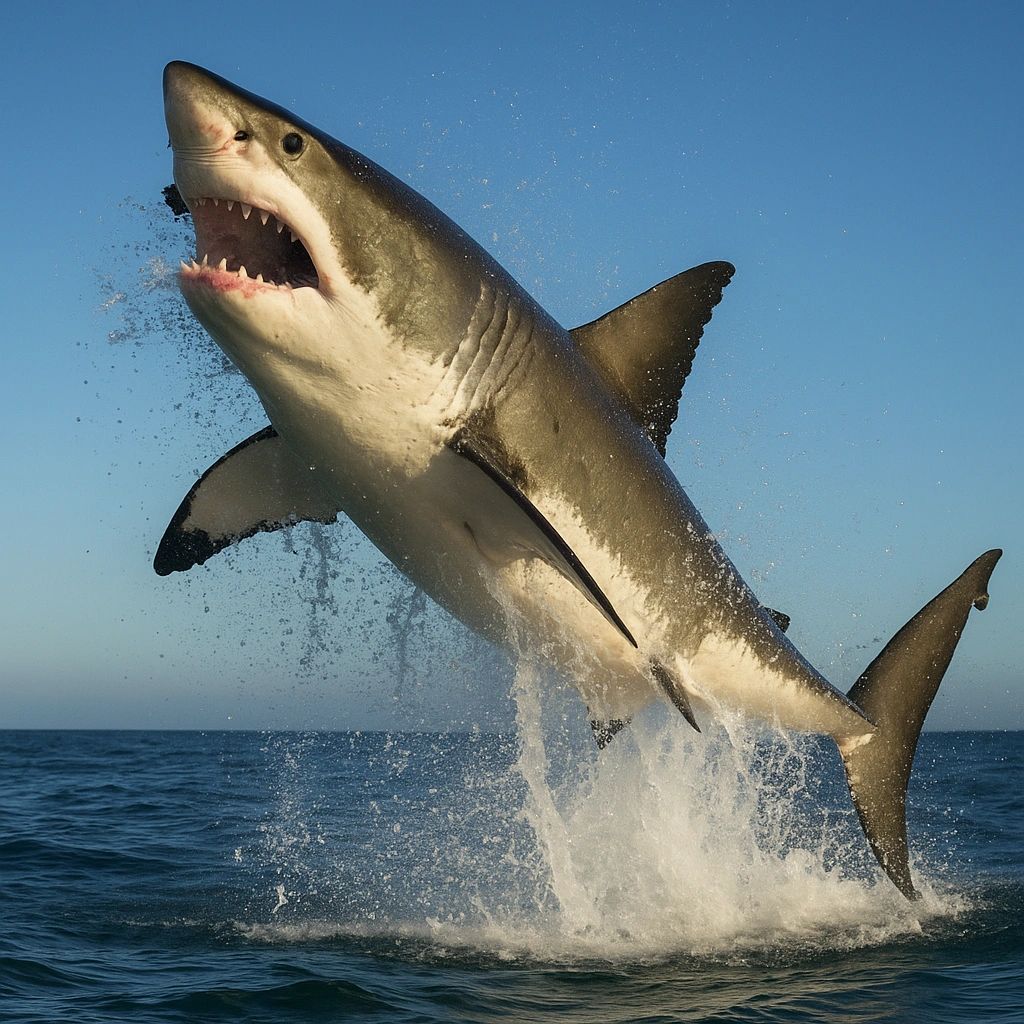
Have you ever seen a great white shark launch out of the water like a rocket? If you have, you’ve probably witnessed one of nature’s most amazing hunting moves—called a breach. And if you’ve watched the “Air Jaws” series on Shark Week, there’s one shark that really stands out: Colossus.
Colossus isn’t just any great white shark. He’s a massive, powerful apex predator with a jaw-dropping ability to leap high into the air. In fact, he helped make Shark Week a global sensation. In this blog, we’ll dive deep into who Colossus is, why he’s so special, and what scientists have learned from watching him. So strap on your virtual scuba gear—we’re going underwater!
What Is “Air Jaws”?
“Air Jaws” is a long-running series that airs on Discovery Channel’s Shark Week. It started in 2001 and focuses on great white sharks that live near Seal Island in False Bay, South Africa. These sharks are known for their unusual and amazing hunting behavior: they breach the surface of the water to catch seals. Sometimes they even fly 10 feet into the air!
Imagine a 2,000-pound shark exploding out of the water like a missile. It’s no wonder people call it “Air Jaws.” Scientists and filmmakers use special high-speed cameras, drones, and even decoys to capture these epic moments. That’s where Colossus comes in.
Who Is Colossus?
Colossus is one of the most famous sharks featured in the “Air Jaws” series. He first appeared on camera in 2003, and quickly stole the show. Why? Because Colossus is enormous. Experts estimate he measures over 14 feet long and weighs around 2,000 pounds or more.
But it’s not just his size that’s impressive. It’s what he can do. Colossus is known for his high-flying breaches, precise hunting skills, and fearless personality. He’s been seen leaping completely out of the water, flipping mid-air, and diving back down in one fluid motion.
Shark experts like Chris Fallows and Jeff Kurr, who have worked on “Air Jaws” for years, say that Colossus is unlike any other shark they’ve seen. He’s smart, powerful, and dominates the waters around Seal Island.
Where Does Colossus Live?
Colossus has been spotted many times in False Bay, a large body of water near Cape Town, South Africa. One of the most famous parts of False Bay is Seal Island, where tens of thousands of Cape fur seals live. These seals are fast swimmers, but they’re also a favorite meal for great white sharks.
Seal Island is a perfect hunting ground for sharks like Colossus. The water is deep around the island, giving sharks space to launch their surprise attacks from below. It’s like nature’s version of a trampoline.
Why Do Great Whites Breach?
Great white sharks usually hunt by swimming below their prey and charging upward at high speed. When seals are swimming at the surface, sharks like Colossus rocket up from the depths and sometimes breach—meaning they fly out of the water.
But breaching isn’t easy. It takes a lot of energy. Not every shark can do it, and not every attempt is successful. That’s why Colossus is such a big deal. He’s a master of this technique, showing off with perfect leaps that amaze both scientists and viewers.
Researchers believe that breaching helps great whites catch seals more easily, especially when the seals don’t see them coming. It’s all about surprise and speed.
How Scientists Study Colossus
Studying a wild great white shark is no easy task. These animals are constantly on the move, often swimming hundreds or even thousands of miles. But thanks to modern technology, researchers can track and learn from sharks like Colossus in new ways.
1. Drone Footage
Using drones, scientists can now observe sharks from above without disturbing them. This gives them a bird’s-eye view of the action. Drones have captured incredible scenes of Colossus breaching, circling decoys, and chasing prey.
2. Underwater Cameras
Special underwater cameras give a close-up view of sharks in action. In some “Air Jaws” episodes, researchers use submersibles or robot cameras to get even closer to Colossus without risking their lives.
3. Decoys
One of the most famous tools in “Air Jaws” is the seal decoy. It’s a fake seal made of foam or rubber, designed to look like the real thing. When dragged behind a boat, it tricks sharks into breaching. Colossus has been filmed launching himself at decoys with jaw-dropping force.
4. Tagging
Scientists also use satellite tags to track where sharks go. While Colossus himself hasn’t been tagged on camera, many other sharks in the same area have been. This gives researchers clues about migration, hunting, and behavior.
What Makes Colossus So Special?
Let’s take a moment to talk about why Colossus is more than just another big fish.
1. Personality
Yes, sharks have personalities! According to scientists, Colossus has shown signs of curiosity, confidence, and even boldness. He often appears when researchers are filming and doesn’t shy away from cameras or boats.
2. Size and Power
At over 14 feet long, Colossus is near the upper size limit for great white sharks. His body is packed with muscle, making him a top predator. When he breaches, he shows just how powerful these animals can be.
3. Fame and Influence
Thanks to his role in “Air Jaws,” Colossus has become a symbol of shark conservation and ocean awareness. People from all over the world have seen his leaps and learned more about sharks because of him. He helps inspire a love of the ocean—and respect for its creatures.
Is Colossus Still Out There?
That’s the big mystery. Colossus hasn’t been seen on camera in recent years, and no one knows exactly where he is. Some scientists believe he may have moved to another part of the ocean. Others wonder if he’s still alive.
Great white sharks are long-lived animals. Some can live for 70 years or more. So there’s a chance Colossus is still patrolling the seas, just out of view.
No matter where he is, his legend lives on.
What We Can Learn from Colossus
Colossus is more than just a TV star. He’s a window into the world of sharks—a chance to learn how they hunt, where they live, and how we can protect them.
Here are some key lessons from his story:
1. Sharks Are Not Mindless Killers
Despite what movies may say, sharks aren’t out to get people. They’re complex animals with important roles in ocean ecosystems. Colossus reminds us that sharks are graceful, intelligent, and worth protecting.
2. Conservation Matters
Great whites like Colossus face threats from overfishing, pollution, and climate change. By learning about them, we can help protect their habitats and make sure they’re around for future generations.
3. Nature Is Amazing
Watching Colossus fly out of the water is like watching a nature superhero. His strength, skill, and beauty show just how incredible life in the ocean can be.
Final Thoughts: The Legacy of Colossus
Even if we never see Colossus again, his story continues to inspire. From his breathtaking breaches to his fearless hunting, he’s become a legend of the sea. Thanks to him, millions of people have gained a new appreciation for sharks.
Whether you’re a Shark Week fan or just someone who loves animals, Colossus teaches us something important: there’s still so much we don’t know about the ocean—and that mystery is part of what makes it magical.
So next time you see a splash on the horizon, think of Colossus. The king of Air Jaws might just be out there, flying high and hunting below.
Bibliography
Andreotti, S., Rutzen, M., von der Heyden, S., Henning, G. A., Shannon, L. J., & Sauer, W. H. H. (2016). Long-term cage diving tourism does not affect the activity space of white sharks. Marine Ecology Progress Series, 562, 173–183. https://doi.org/10.3354/meps11959
Fallows, C., Fallows, A., & Hammerschlag, N. (2012). Effects of tourism-related provisioning on the behavior of white sharks Carcharodon carcharias. Marine Ecology Progress Series, 492, 199–209. https://doi.org/10.3354/meps10426
Huveneers, C., Apps, K., Becerril-García, E. E., Bruce, B. D., Butcher, P. A., Carlisle, A. B., … & Weng, K. C. (2021). Future of telemetry in marine predator research and conservation. Biological Conservation, 255, 108995. https://doi.org/10.1016/j.biocon.2021.108995
Martin, R. A., Hammerschlag, N., Collier, R. S., & Fallows, C. (2005). Predatory behavior of white sharks Carcharodon carcharias at Seal Island, South Africa. Journal of the Marine Biological Association of the United Kingdom, 85(5), 1121–1135. https://doi.org/10.1017/S002531540501218X
Weng, K. C., O’Sullivan, J. B., Lowe, C. G., Winkler, C. E., Dewar, H., & Block, B. A. (2007). Movements, behavior and habitat preferences of juvenile white sharks Carcharodon carcharias in the eastern Pacific. Marine Ecology Progress Series, 338, 211–224. https://doi.org/10.3354/meps338211
Originally published at the live site .