
Maritime ·
Shark Estuaries: Nature’s Hidden Nurseries for Ocean Predators
When you picture a shark, you might imagine it cruising through the deep blue sea far from land. But did you know that many sharks spend some of the most important years of their lives in shallow, muddy, and brackish wat...
By Rebecca "Madam Chronicler" Ryan
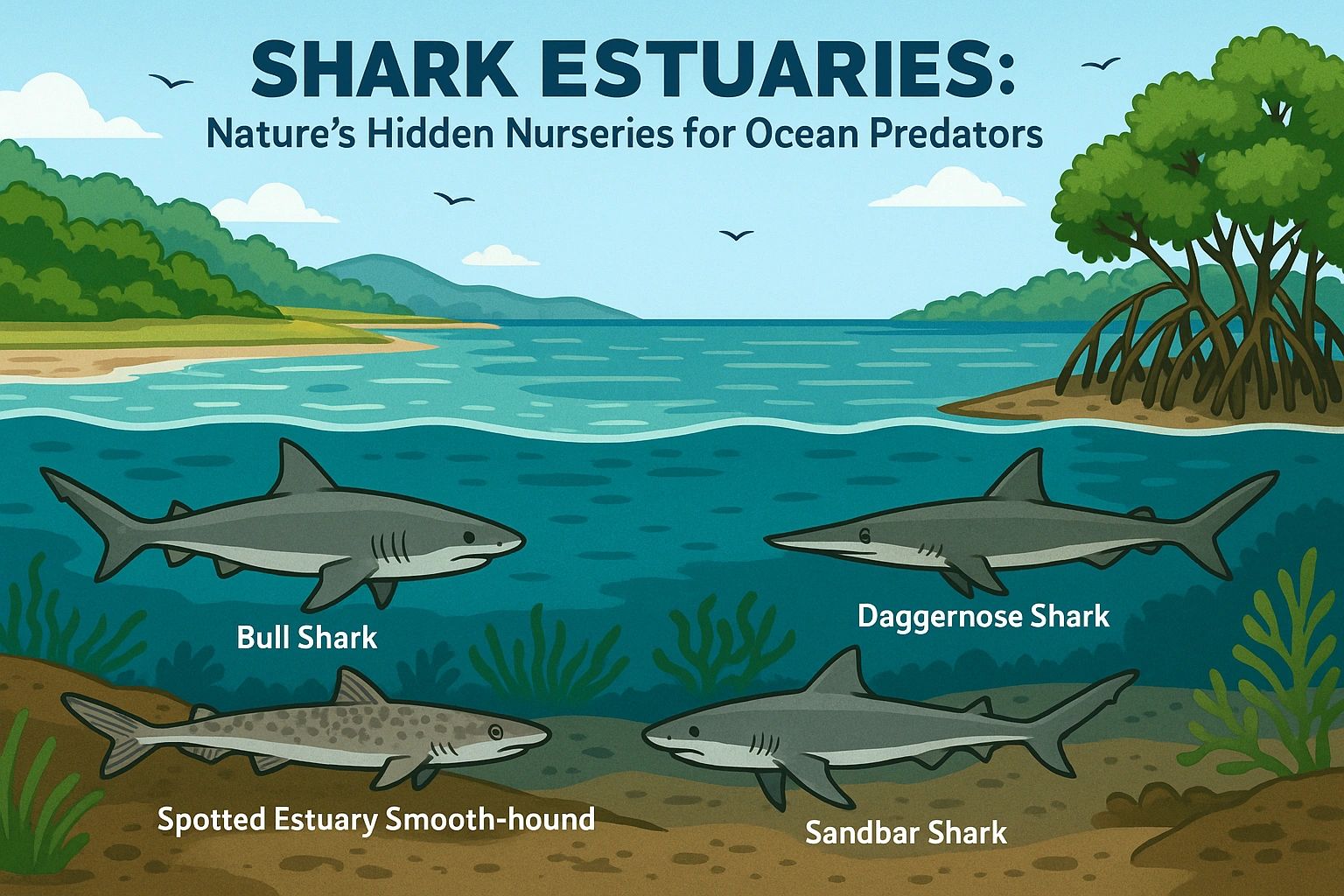
When you picture a shark, you might imagine it cruising through the deep blue sea far from land. But did you know that many sharks spend some of the most important years of their lives in shallow, muddy, and brackish waters? These special places, called estuaries, are where rivers meet the ocean, mixing freshwater with saltwater to create a unique habitat filled with life.
For sharks, estuaries can be safe havens — nurseries where their young can grow without as many threats from predators, and rich feeding grounds where the food is abundant. Let’s explore how sharks use estuaries, which species rely on them most, and why these environments matter for the health of our oceans.
What Exactly Is an Estuary?
An estuary forms where a river flows into the sea. The water here is a blend of freshwater and saltwater, often referred to as brackish water. This environment is constantly changing with tides, rainfall, and seasons. The shifting water levels and salinity make estuaries challenging for many creatures — but for sharks, especially young ones, they can be perfect.
Estuaries are typically rich in nutrients thanks to the mix of river sediments and ocean tides. This means they support a huge variety of fish, crustaceans, and other marine life. For a growing shark, it’s like living in a buffet with plenty of hiding places.
Why Sharks Love Estuaries
1. Safe Nursery Grounds
The open ocean can be dangerous for small sharks. Larger predators, including other sharks, would happily make a meal out of them. Estuaries, with their shallower waters and complex habitats like mangroves and seagrass beds, offer safer conditions where juveniles can grow with less risk.
2. A Steady Food Supply
Estuaries attract fish, crabs, shrimp, and other prey species. This steady food supply helps young sharks grow quickly, giving them a better chance at survival once they leave for deeper waters.
3. Adaptation to Changing Water
Some sharks, like the bull shark, can handle dramatic changes in salinity. This allows them to move between rivers and oceans with ease, taking full advantage of estuarine environments.
Shark Species That Use Estuaries
While not all sharks live in estuaries, several species depend on them at some point in their life cycles.
Bull Sharks (Carcharhinus leucas)
Bull sharks are the champions of adaptability. They can live in both saltwater and freshwater, traveling far up rivers. Females often give birth in estuaries, and the young may stay there for years until they’re large enough to venture into the open ocean.
Research in places like Mobile Bay, Alabama, shows that young bull sharks prefer warm areas near river mouths. These spots provide both shelter and a rich food supply.
Sandbar Sharks (Carcharhinus plumbeus)
Sandbar sharks are often found in bays and estuaries, especially along the U.S. East Coast. Juveniles are common in places like Chesapeake Bay, where the warm, shallow waters provide an ideal nursery.
Spotted Estuary Smooth-hound (Mustelus lenticulatus)
This shark lives in New Zealand’s estuaries and shallow coastal waters. It’s even been discovered that these sharks can produce clicking sounds — the first-known example of a shark using noise this way.
Daggernose Shark (Isogomphodon oxyrhynchus)
The daggernose shark lives in the muddy estuaries and mangroves of South America. Sadly, it is critically endangered, with only a few hundred individuals believed to remain in the wild.
Other Estuarine Visitors
Blacktip sharks, bonnetheads, spinner sharks, small hammerheads, and even some rays also use estuaries for feeding and raising young. They may not spend their entire lives there, but these environments are still critical for their development.
How Scientists Study Sharks in Estuaries
Studying sharks in murky estuary waters can be tricky, but researchers use several methods to learn more.
Tagging and Tracking
Scientists attach acoustic tags to sharks. These tags send signals to underwater receivers, allowing researchers to track movements over months or years. This helps them learn when and where sharks spend their time in estuaries.
Environmental Modeling
By measuring temperature, salinity, depth, and habitat type, scientists can create maps showing where sharks are most likely to be found. This helps identify critical nursery areas.
Diet Analysis
By studying the chemical composition of shark tissues, researchers can figure out what kinds of prey they eat in estuaries. This shows how much they depend on river-based food sources.
Long-Term Monitoring
Because estuary conditions change with climate, development, and pollution, scientists keep an eye on these habitats over many years to track how shark populations respond.
The Bigger Picture: Why Estuaries Matter to Sharks and Us
Estuaries aren’t just important for sharks — they’re vital for entire ecosystems and human communities.
1. Conservation
If estuaries are damaged by pollution, dredging, or coastal development, sharks lose these safe spaces. Without healthy nurseries, shark populations could decline, disrupting the ocean food web.
2. Biodiversity
Many species besides sharks depend on estuaries — from fish and birds to shellfish and marine mammals. Protecting estuaries means protecting countless species.
3. Human Safety and Coexistence
Understanding shark movements in estuaries can help reduce conflicts between sharks and people. For example, knowing when bull sharks are more common in a river system can help guide safe boating and swimming practices.
4. Climate Resilience
Healthy estuaries can help protect coastlines from storms and flooding. Mangroves, salt marshes, and seagrass beds absorb wave energy and store carbon, which also helps fight climate change.
Threats to Shark Estuaries
Unfortunately, these habitats face many dangers:
- Pollution from agriculture, industry, and cities can harm both sharks and their prey.
- Habitat loss from coastal construction and dredging destroys critical nursery areas.
- Overfishing can reduce prey availability and even target young sharks directly.
- Climate change is altering water temperatures, salinity, and sea levels, all of which can affect estuary use by sharks.
How We Can Help Protect Shark Estuaries
Support Habitat Protection
Marine protected areas and estuary restoration projects help ensure these habitats remain safe for sharks and other wildlife.
Reduce Pollution
Limiting plastic waste, controlling agricultural runoff, and improving wastewater treatment can all benefit estuaries.
Sustainable Fishing
Following catch limits and avoiding fishing in known nursery areas can help maintain shark populations.
Community Education
Raising awareness about the role of estuaries in shark survival can inspire local conservation efforts.
Summary Table: Sharks and Their Estuary Connections
Shark Species Estuary Role Key Features
Bull Shark Nursery & feeding Can live in fresh or saltwater; gives birth in
estuaries.
Sandbar Shark Nursery Common in bays; juveniles thrive in shallow,
warm water.
Spotted Estuary Resident species Found in New Zealand estuaries; produces
smooth-hound clicking sounds
Daggernose Shark Resident species Critically endangered; lives in muddy
estuaries and mangroves
Blacktip, Bonnethead Nursery & Seasonal estuary visitors for food and shelter.
Hammerhead feeding
Final Thoughts
Shark estuaries are more than just muddy backwaters — they are bustling nurseries that help shape the future of ocean predators. From the adaptable bull shark to the rare daggernose, many species depend on these transitional waters to survive their early years.
Protecting estuaries isn’t just about saving sharks — it’s about preserving the health and resilience of entire ecosystems, supporting fisheries, protecting coastlines, and ensuring that these incredible habitats are around for generations to come.
By learning more about sharks in estuaries and taking steps to protect these environments, we’re helping both the ocean and ourselves.
Bibliography
- Gallagher, A. J., Shiffman, D. S., Byrnes, E. E., Hammerschlag-Peyer, C. M., & Hammerschlag, N. (2017). Patterns of resource use and isotopic niche overlap among three species of sharks occurring within a protected subtropical estuary. iScience, 25(9), 104867.
- Jaureguiberry, P., et al. (2023). A review of the life history and ecology of euryhaline and estuarine elasmobranchs. Reviews in Fish Biology and Fisheries.
- Plumlee, J. D., et al. (2018). Community structure of elasmobranchs in estuaries along the northwest Gulf of Mexico. Estuarine, Coastal and Shelf Science, 207, 73–81.
- Rulifson, R. A. (2018). Delineation and mapping of coastal shark habitat within a shallow lagoonal estuary. PLOS ONE.
- Simpfendorfer, C. A., et al. (2005). Distribution and habitat use of juvenile bull sharks (Carcharhinus leucas) in a tropical estuary. Marine and Freshwater Research, 56(1), 65–72.
- White, W. T., & Last, P. R. (2012). Description of new shark species from estuarine environments in Australasia. Zootaxa, 3241(1), 1–33.
Originally published at the live site .