
Rivers ·
Shark Nurseries in the Bayous: A Hidden World of Survival
When people think of sharks, they usually picture them cruising the open ocean or prowling along sandy coastlines. But what if I told you that some of the most important shark habitats are not out in the deep blue, but t...
By Rebecca "Madam Chronicler" Ryan
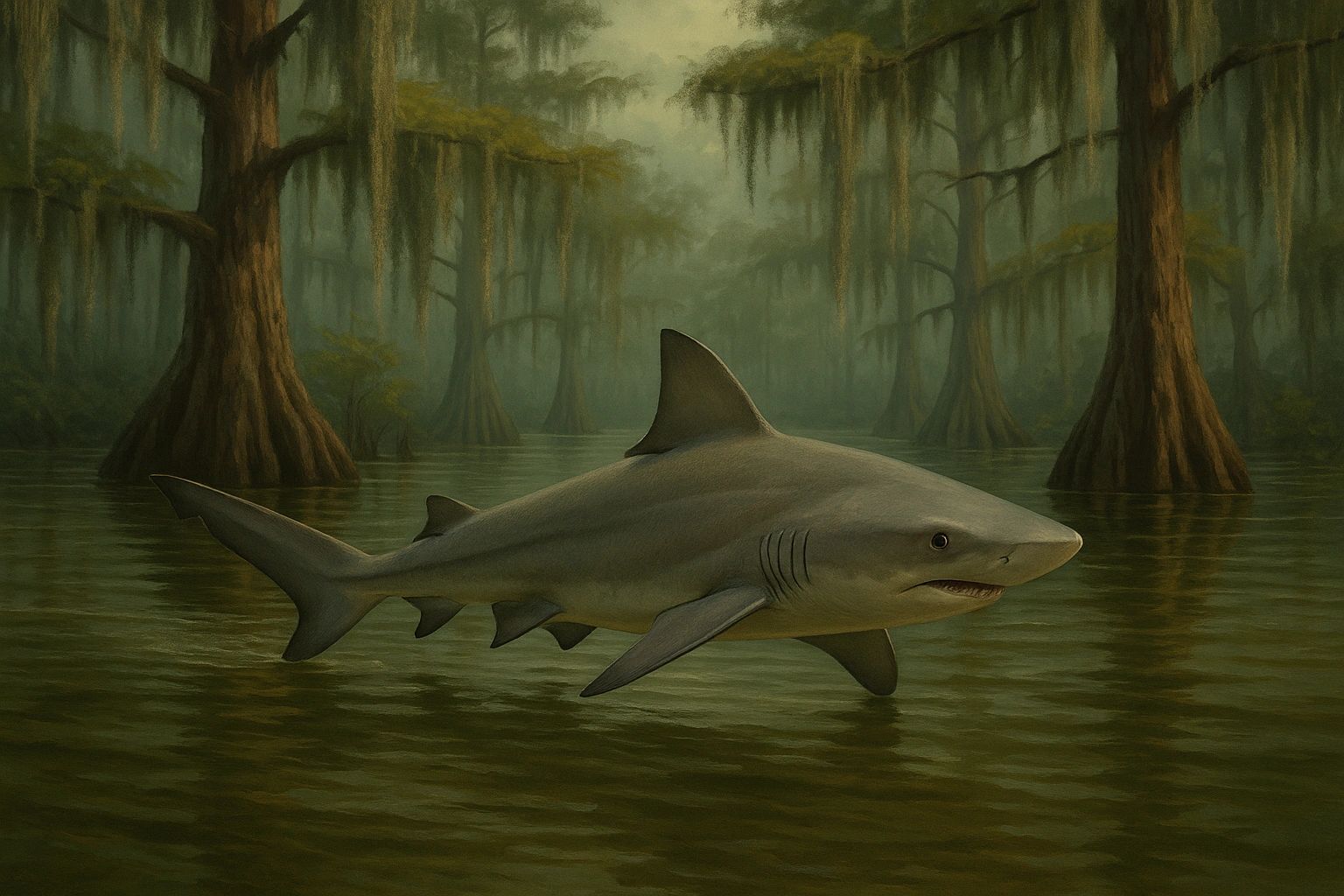
When people think of sharks, they usually picture them cruising the open ocean or prowling along sandy coastlines. But what if I told you that some of the most important shark habitats are not out in the deep blue, but tucked away in murky bayous, estuaries, and coastal wetlands? These quiet, swampy waterways—often lined with cypress trees and teeming with alligators, fish, and birds—serve as some of the ocean’s most critical shark nurseries.
Shark nurseries are the unsung cradles of survival. They provide young sharks with shelter, food, and protection during the most vulnerable years of their lives. In the bayous of the Gulf Coast, especially Louisiana and parts of Texas and Florida, scientists have found thriving nurseries for species like bull sharks, blacktip sharks, and bonnetheads.
This blog dives deep into the hidden world of shark nurseries in bayous—why they exist, how they help sharks survive, what makes bayous so unique, and why their preservation is essential for the health of the ocean itself.
What Is a Shark Nursery?
A shark nursery is a place where sharks give birth and where their pups spend their early life. Marine biologists classify an area as a nursery if it meets three main conditions:
- Young sharks are found there repeatedly across years.
- The area is used for extended periods of time, not just a quick stop.
- Juvenile sharks are more abundant there than in other habitats.
These criteria were first outlined in classic shark research, and since then, scientists have identified nurseries for many species worldwide【Heupel et al., 2007】.
Sharks, unlike fish that scatter thousands of eggs, usually give birth to a smaller number of well-developed pups. Because of this, survival rates are crucial. A safe nursery with good resources gives those pups the best chance at growing into adulthood.
Why Bayous Make Ideal Shark Nurseries
At first glance, bayous might seem like an odd place for sharks. The water can be murky, brackish, and filled with roots, logs, and muddy bottoms. Yet these environments have several features that make them perfect nurseries:
1. Shallow, Protected Waters
Bayous are often shallow and winding, making them hard for larger predators to access. This gives young sharks a refuge where they’re less likely to be eaten by bigger sharks or marine mammals.
2. Abundant Food
Bayous are biodiversity hotspots. Small fish, shrimp, crabs, and other prey thrive in these nutrient-rich waters. Shark pups can feed without having to swim long distances, conserving energy.
3. Lower Predator Density
While bayous host predators like alligators, gar, and large fish, they typically have fewer large marine predators compared to the open sea. This reduces risks for young sharks.
4. Brackish Water Advantage
Many bayous have brackish water—a mix of saltwater and freshwater. This can deter some ocean predators that prefer full saltwater but is well-tolerated by adaptable shark species like bull sharks.
5. Stable Environment for Growth
Because bayous are connected to rivers and estuaries, they act as buffer zones against storms and changing tides. This stability helps shark pups develop without being swept into dangerous open waters.
Shark Species That Use Bayous as Nurseries
Several shark species along the Gulf Coast and southeastern U.S. have been documented using bayous and estuaries as nurseries. Let’s look at the most notable ones.
Bull Sharks (Carcharhinus leucas)
Bull sharks are the poster child for bayou nurseries. They are famously adaptable and can tolerate freshwater. Juvenile bull sharks have been found deep in rivers like the Mississippi and the Atchafalaya Basin, thriving in murky freshwater far from the Gulf. These rivers and bayous act as protective nurseries until the sharks are large enough to return to saltier waters【Matich & Heithaus, 2015】.
Blacktip Sharks (Carcharhinus limbatus)
Blacktip sharks often use shallow estuaries as nurseries. In Louisiana bayous, researchers have tracked juveniles feeding on schools of mullet and shrimp. These nurseries are critical for maintaining local populations【Castro, 1993】.
Bonnethead Sharks (Sphyrna tiburo)
These small hammerhead relatives use seagrass beds in coastal bayous as feeding grounds. Juveniles feed heavily on crabs, which are abundant in these ecosystems【Heupel & Simpfendorfer, 2002】.
Spinner Sharks (Carcharhinus brevipinna)
Though less common, spinner sharks sometimes use estuarine areas. Their reliance on baitfish schools aligns perfectly with bayou food webs.
How Scientists Study Shark Nurseries in Bayous
Studying sharks in the swamp isn’t easy. Unlike the open ocean, bayous are shallow, full of vegetation, and can be dangerous to navigate. Yet scientists have developed several methods to uncover the secrets of these nurseries:
- Tagging and Tracking – Juvenile sharks are caught, tagged with acoustic transmitters, and released. Receivers placed throughout bayous track their movements.
- Longline Surveys – Researchers use longlines with baited hooks to monitor shark abundance.
- Environmental DNA (eDNA) – By analyzing water samples, scientists can detect the DNA of sharks present in the area without needing to capture them【Bakker et al., 2017】.
- Aerial Drones – Drones are increasingly used to observe shallow estuaries and detect juvenile shark activity.
Through these methods, researchers have confirmed that bayous are not just accidental shark habitats but intentional, critical nurseries.
Challenges Shark Pups Face in Bayous
Even with all the benefits, life in a bayou nursery isn’t easy for a baby shark. They face many threats:
Predation
Alligators, large fish like alligator gar, and even birds like ospreys can prey on juvenile sharks.
Environmental Stress
Low oxygen levels are common in bayous, especially during hot summers. Sharks must adapt or move to better-oxygenated waters.
Human Impacts
Pollution, boat traffic, and fishing pressure all pose threats. Runoff from agriculture and industry can change water quality, making nurseries less hospitable.
Why Bayou Nurseries Matter for Shark Populations
Shark nurseries aren’t just important locally—they affect the entire ocean ecosystem.
- Population Stability – Healthy nurseries mean more young sharks survive to adulthood, sustaining populations.
- Biodiversity Support – By controlling prey populations, juvenile sharks already influence local ecosystems.
- Genetic Diversity – Nurseries ensure sharks from different regions survive, maintaining strong genetic pools.
Without nurseries, shark populations would collapse much faster under the pressure of overfishing and climate change.
Climate Change and the Future of Shark Nurseries
Climate change poses new challenges for shark nurseries. Rising temperatures, sea-level rise, and increased storm activity threaten bayou ecosystems.
- Warming Waters – Higher temperatures can stress juvenile sharks and alter prey availability.
- Saltwater Intrusion – Rising seas can push saltwater deeper into bayous, changing their delicate balance.
- Habitat Loss – Coastal erosion and wetland destruction reduce the availability of nursery grounds【Sherman et al., 2016】.
Protecting bayous is thus not only about preserving swamps—it’s about safeguarding shark populations for future generations.
Conservation Efforts
Several conservation strategies can help protect shark nurseries in bayous:
- Marine Protected Areas (MPAs) – Designating bayou nurseries as protected zones prevents destructive fishing practices.
- Wetland Restoration – Restoring degraded bayous ensures healthy ecosystems for sharks and other wildlife.
- Community Involvement – Local fishers, boaters, and residents play a key role in reporting shark sightings and reducing harmful practices.
- Scientific Monitoring – Continued research keeps track of how sharks are adapting to changing bayou conditions.
Stories from the Bayous
Local folklore often speaks of sharks seen far upriver, startling fishers who never expected to encounter them in freshwater. Reports of bull sharks caught in the Mississippi River as far north as Illinois have fueled both fear and fascination【Thorson, 1972】. In Louisiana bayous, shrimpers sometimes net juvenile sharks alongside their catch, a reminder that these waters are nurseries of ocean predators.
These encounters highlight the resilience and adaptability of sharks, thriving in places few would expect.
Why You Should Care About Shark Nurseries in Bayous
It’s easy to overlook bayous as just swamps or muddy backwaters. But in reality, they are living cradles of the sea. By supporting shark nurseries, we’re protecting one of nature’s oldest survival strategies.
Sharks are apex predators, keeping ecosystems balanced. Without strong nurseries, fewer sharks survive, leading to cascading effects throughout the ocean food web. Protecting bayous isn’t just about saving sharks—it’s about protecting the health of our oceans.
Conclusion
Shark nurseries in bayous are one of nature’s best-kept secrets. These hidden waterways provide young sharks with food, shelter, and safety during the most fragile part of their lives. From bull sharks prowling freshwater rivers to bonnetheads feeding on crabs in seagrass beds, the bayous are alive with shark life.
But these nurseries face threats from climate change, pollution, and human activity. If we lose them, we risk losing entire shark populations. By valuing and protecting bayous, we secure not only the survival of sharks but also the health of the oceans they rule.
Next time you look at a swampy bayou, think of it not just as murky water but as a nursery—where baby sharks are growing, learning, and preparing to one day take their place in the great blue sea.
Bibliography
- Bakker, J., Wangensteen, O. S., Chapman, D. D., Boussarie, G., Buddo, D., Guttridge, T. L., … Mariani, S. (2017). Environmental DNA reveals tropical shark diversity in contrasting levels of anthropogenic impact. Scientific Reports, 7(1), 16886. https://doi.org/10.1038/s41598-017-17150-2
- Castro, J. I. (1993). The biology of the finetooth shark, Carcharhinus isodon. Environmental Biology of Fishes, 36(2), 219–232. https://doi.org/10.1007/BF00001723
- Heupel, M. R., Carlson, J. K., & Simpfendorfer, C. A. (2007). Shark nursery areas: concepts, definition, characterization and assumptions. Marine Ecology Progress Series, 337, 287–297. https://doi.org/10.3354/meps337287
- Heupel, M. R., & Simpfendorfer, C. A. (2002). Estimation of mortality of juvenile blacktip sharks, Carcharhinus limbatus, within a nursery area using telemetry data. Canadian Journal of Fisheries and Aquatic Sciences, 59(4), 624–632. https://doi.org/10.1139/f02-036
- Matich, P., & Heithaus, M. R. (2015). Individual variation in ontogenetic niche shifts in habitat use and movement patterns of a large estuarine predator (Carcharhinus leucas). Oecologia, 178(2), 347–359. https://doi.org/10.1007/s00442-015-3241-6
- Sherman, K., Aquarone, M. C., & Adams, S. (2016). Sustaining the world’s large marine ecosystems. Gland, Switzerland: IUCN.
- Thorson, T. B. (1972). The status of the bull shark, Carcharhinus leucas, in the Amazon River. Copeia, 1972(4), 601–605. https://doi.org/10.2307/1442728
Originally published at the live site .