
Maritime ·
Southern Nights, Northern Teeth: How Far Do Sharks Swim Inland?
When most people picture sharks, they think of open oceans, crashing surf, or deep blue seas. But here’s a surprising truth: some sharks are just as at home far inland as they are in the saltwater waves. From the souther...
By Rebecca "Madam Chronicler" Ryan
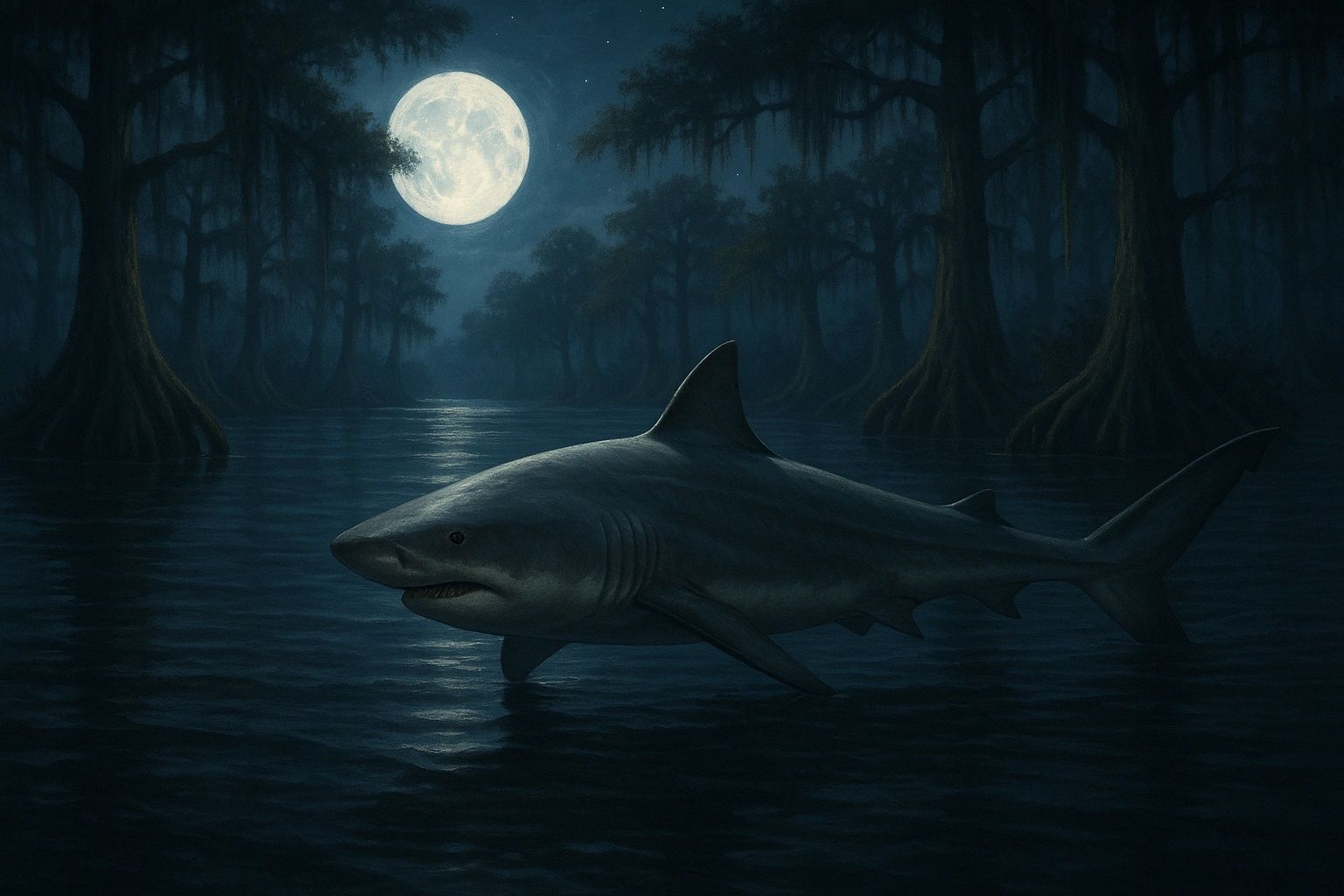
When most people picture sharks, they think of open oceans, crashing surf, or deep blue seas. But here’s a surprising truth: some sharks are just as at home far inland as they are in the saltwater waves. From the southern warmth of the Gulf of Mexico, powerful predators like bull sharks have been known to swim hundreds of miles up rivers, winding their way north into freshwater worlds where you’d never expect to find them.
This raises some big questions: How far do sharks really go inland? What allows them to make these freshwater journeys? And what does it mean for people, wildlife, and rivers that connect the Gulf to the heartland of America?
Let’s dive deep into this fascinating topic of southern nights and northern teeth—where Gulf sharks trade saltwater coasts for muddy riverbanks under the stars.
Sharks in the Gulf: The Coastal Starting Point
The Gulf of Mexico is one of the shark capitals of the world. With warm waters, rich estuaries, and a wide continental shelf, it hosts over 40 shark species. Some, like the blacktip and spinner shark, stay near the coast. Others, like tiger sharks and hammerheads, roam deeper offshore. But one shark in particular has a reputation for leaving the Gulf behind and heading inland—the bull shark (Carcharhinus leucas).
Bull sharks thrive in coastal estuaries, brackish lagoons, and river mouths. They are aggressive, powerful swimmers, and unlike most sharks, they can adapt their bodies to survive in freshwater. That adaptation is the key to their inland adventures.
The Shark That Doesn’t Mind Freshwater
Most sharks rely on salt in their environment to help balance electrolytes in their bodies. Without it, they would dehydrate quickly, their cells unable to hold enough water. Bull sharks, however, have a special trick.
Through a process called osmoregulation, bull sharks can adjust how their kidneys, gills, and liver handle salt and urea. When they’re in saltwater, their bodies work like most other sharks. But in freshwater, they shift gears—dumping less salt and conserving more urea to hold water in their bodies. This lets them swim up rivers for long stretches, sometimes staying inland for months.
Scientists studying bull sharks in Florida’s Indian River Lagoon and the Mississippi River found that juveniles often grow in these low-salinity waters before returning to the sea as adults (Pillans & Franklin, 2004; Heupel & Simpfendorfer, 2008). Freshwater nurseries may help young sharks avoid some of the bigger predators in the open Gulf.
Famous Inland Journeys: How Far Do Sharks Really Go?
So, just how far north can Gulf sharks make it? History and science give us some jaw-dropping examples:
1. Mississippi River Explorers
In 1937, fishermen near Alton, Illinois—just 15 miles north of St. Louis—caught a bull shark in the Mississippi River. That’s more than 1,000 miles from the Gulf of Mexico! Reports from that era stunned scientists and the public alike. Modern tracking suggests such long journeys are rare but possible when conditions are right.
2. Lake Nicaragua Bull Sharks
Outside the U.S., one of the most famous freshwater shark populations lives in Lake Nicaragua. For decades, people thought the sharks there were landlocked. But tagging studies proved they swim up the San Juan River from the Caribbean Sea, leaping rapids along the way like salmon (Thorson, 1982).
3. Australian Rivers
In Australia, bull sharks often travel far inland through rivers like the Brisbane and Clarence. One study recorded sharks 400 kilometers upstream, thriving in water where most marine animals couldn’t survive (Pillans et al., 2005).
These cases show bull sharks aren’t just dabbling in rivers—they’re full-on explorers, pushing the boundaries of where sharks can live.
Why Swim Inland at All?
From an evolutionary standpoint, swimming inland gives bull sharks some big advantages:
- Nursery Habitat: Rivers and estuaries offer safe places for young sharks to grow, with fewer large predators than the open Gulf.
- Hunting Opportunities: Freshwater rivers are rich with fish, turtles, and even birds that sharks can feed on.
- Survival Flexibility: Being able to move between salt and freshwater gives bull sharks an edge over species limited to one habitat.
By spreading into inland systems, bull sharks expand their range and tap into new food webs.
Night Moves: Why the Darkness Matters
The title of our story—Southern Nights, Northern Teeth—isn’t just poetic. Many bull shark movements upriver happen under the cover of night. Acoustic tracking studies show sharks often travel most actively during twilight and nighttime hours (Heupel, Simpfendorfer & Collins, 2006).
At night, prey fish come closer to the surface or move into shallower areas, making them easier targets. Rivers also quiet down without boat traffic, letting sharks explore with less disturbance. Imagine a dark summer night in the Deep South—the air thick with humidity, the river still—while just below, a shark slides silently northward.
Human Encounters: Fact or Fear?
The idea of sharks in rivers often sparks fear, but how risky is it really? Statistically, attacks are rare. Florida, Texas, Louisiana, and Mississippi do see occasional shark bites, but almost all occur in coastal waters, not far upriver.
Still, there are historic cases of bull shark bites in brackish and freshwater environments. One of the most infamous occurred in 1916 in Matawan Creek, New Jersey—part of the inspiration for Jaws. While that was the Atlantic side, it showed the same freshwater behavior Gulf sharks exhibit.
For Gulf communities, the bigger issue may not be safety but awareness. Fishermen and boaters are often surprised to encounter sharks inland. Knowing they’re possible helps people respect rivers as shared spaces between humans and apex predators.
Science on the Move: How Researchers Track Inland Sharks
To understand how far Gulf sharks go, scientists use several cutting-edge methods:
- Acoustic Tags: Small devices are attached to sharks’ fins, sending signals picked up by river receivers. These reveal how long sharks stay and how far they travel.
- Satellite Tags: For larger individuals, satellite tags beam back movements between freshwater and saltwater zones.
- Stable Isotope Analysis: By studying chemical signatures in shark tissues, researchers can tell if a shark’s diet came mostly from freshwater or marine prey.
Studies in the Mobile-Tensaw Delta in Alabama, for example, used acoustic tags to show juvenile bull sharks regularly move into freshwater sections (Drymon et al., 2010).
Ecological Ripples: Sharks in Freshwater Food Webs
When bull sharks swim inland, they don’t just visit quietly. They reshape ecosystems:
- Top-Down Control: As apex predators, they regulate fish populations, preventing overgrazing on vegetation.
- Competition: Sharks compete with large freshwater fish like gar or catfish.
- Connectivity: By moving between rivers and the Gulf, sharks link ecosystems that would otherwise stay separate.
Ecologists call this process “ecological coupling.” Sharks connect southern coasts with inland rivers, carrying energy and nutrients across boundaries.
How Climate Change and Dams Affect Inland Shark Travel
Bull sharks’ inland adventures aren’t guaranteed. Human changes to rivers can block or limit their movements:
- Dams and Locks: These physical barriers prevent sharks from traveling farther north, cutting off access to upstream habitats.
- Pollution: Sharks are sensitive to toxins. Heavy industrial runoff can deter them or even kill juveniles.
- Climate Change: Warming waters may expand the time of year bull sharks can tolerate freshwater. Drought, however, reduces river flow, making it harder for sharks to travel.
In the future, Gulf bull sharks may push even farther north as rivers stay warmer for longer periods. But the flip side is shrinking habitats from human development.
Sharks of the Night: Cultural Legends of Inland Predators
Communities along southern rivers have long whispered about mysterious creatures in the water. Folklore in Louisiana and Alabama often mentions “devil fish” or “river monsters.” While some tales describe giant catfish, others could trace back to real encounters with inland sharks.
Indigenous legends in Central America even include shark spirits in rivers, reflecting a cultural memory of bull sharks leaping rapids on their way to Lake Nicaragua. The blend of mystery and science keeps inland shark sightings in a special place between fact and legend.
What This Means for People Living Along Rivers
For people living near Gulf-connected rivers, knowing sharks may be present is important—but it’s not a reason to panic. Here are a few takeaways:
- Respect the Water: Just as you’d treat alligators with caution in the South, sharks deserve respect.
- Fishing Awareness: Anglers may occasionally catch bull sharks in rivers. Handling them safely and releasing juveniles is vital for conservation.
- Environmental Stewardship: Protecting river systems keeps them healthy not just for humans, but for the incredible wildlife that uses them—including sharks.
The Big Picture: Southern Nights, Northern Teeth
So, how far do sharks swim inland from the Gulf? The answer: astonishingly far. From the sultry southern nights of Louisiana bayous to the northern edges of Illinois rivers, bull sharks have proven they can thrive where no one expects them.
Their ability to bridge salt and freshwater worlds makes them one of the most adaptable predators on Earth. At night, under quiet river skies, their northern teeth remind us that the Gulf’s influence stretches far beyond its beaches.
For scientists, every inland shark is a living mystery—proof that nature’s boundaries are more fluid than we imagine. For communities, they’re a reminder that rivers are wild, powerful places, connected all the way back to the sea.
Bibliography
Drymon, J. M., Powers, S. P., & Carmichael, R. H. (2010). Trophic plasticity in the Atlantic sharpnose shark (Rhizoprionodon terraenovae) from the north-central Gulf of Mexico. Marine and Coastal Fisheries: Dynamics, Management, and Ecosystem Science, 2(1), 115-126. https://doi.org/10.1577/C09-038.1
Heupel, M. R., & Simpfendorfer, C. A. (2008). Movement and distribution of young bull sharks (Carcharhinus leucas) in a variable estuarine environment. Aquatic Biology, 1, 277–289. https://doi.org/10.3354/ab00030
Heupel, M. R., Simpfendorfer, C. A., & Collins, A. B. (2006). Residency and movement patterns of bonnethead sharks (Sphyrna tiburo) in a large Florida estuary. Environmental Biology of Fishes, 76, 47–67. https://doi.org/10.1007/s10641-006-9007-6
Pillans, R. D., & Franklin, C. E. (2004). Plasma osmolyte concentrations and rectal gland mass of bull sharks (Carcharhinus leucas) caught along a salinity gradient. Comparative Biochemistry and Physiology Part A: Molecular & Integrative Physiology, 138(4), 363–371. https://doi.org/10.1016/j.cbpb.2004.05.003
Pillans, R. D., Stevens, J. D., & Franklin, C. E. (2005). Freshwater to seawater acclimation of juvenile bull sharks (Carcharhinus leucas): Plasma osmolytes and kidney function. Journal of Comparative Physiology B, 175(1), 37–44. https://doi.org/10.1007/s00360-004-0464-8
Thorson, T. B. (1982). Life history implications of a tagging study of the largetooth sawfish and the bull shark in Lake Nicaragua. Environmental Biology of Fishes, 7(3), 207–228. https://doi.org/10.1007/BF00005567
Originally published at the live site .