
Maritime ·
The Antarctic Ghost Shark: Deep Sea Mystery of the Southern Ocean
In the icy depths of the Southern Ocean, far beneath the waves where sunlight never shines, lives a strange and ghostly creature. It’s not a shark in the way we usually think of them, but it is related. Meet the Antarcti...
By Rebecca "Madam Chronicler" Ryan
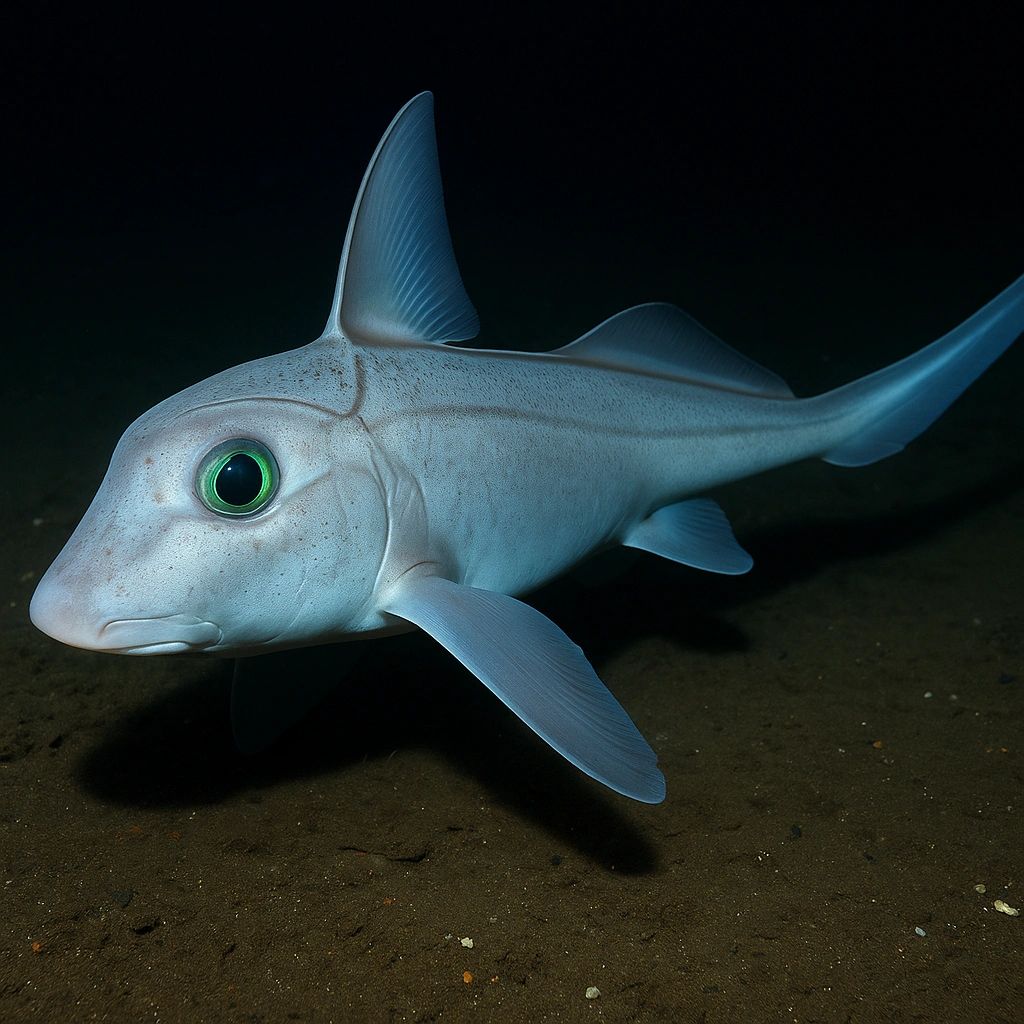
In the icy depths of the Southern Ocean, far beneath the waves where sunlight never shines, lives a strange and ghostly creature. It’s not a shark in the way we usually think of them, but it is related. Meet the Antarctic ghost shark—also called the Chimaera. With its spooky look, wing-like fins, and long whip-like tail, this deep-sea dweller seems like something out of a fantasy movie. But it’s very real and plays an important role in one of the coldest places on Earth.
So what is the Antarctic ghost shark? Why is it important? And how do scientists even study such a weird and hidden animal? Let’s dive in and explore the ghost shark’s secrets, survival tricks, and the mysteries we’re still trying to figure out.
What Is a Ghost Shark?
Even though it’s called a shark, the ghost shark isn’t a true shark. It’s part of a group called chimaeras, which split off from sharks over 400 million years ago. That’s before dinosaurs even existed! Ghost sharks are more closely related to sharks and rays than to bony fish like tuna or salmon.
Chimaeras have skeletons made of cartilage, not bone, just like sharks. They also have some very unique features:
- Large heads with rabbit-like faces
- Long, thin tails like a whip
- Skin that looks smooth and rubbery
- And males have a strange club-shaped structure on their heads used during mating!
The Antarctic ghost shark’s scientific name is Hydrolagus spp. (scientists are still debating the exact species in Antarctica, but several types have been found). These fish live in very deep, cold waters, sometimes over a mile beneath the surface. Down there, the water is pitch black, and the pressure is intense. But the ghost shark is right at home.
What Do They Look Like?
If you ever saw one of these animals, you’d never forget it. They look like something from another world:
- Their bodies are silver, white, or pale blue—almost glowing.
- Their eyes are large and greenish to help them see in the dark.
- Their heads are big and rounded.
- And they have wing-like fins that let them glide over the seafloor.
These features help ghost sharks survive in the cold and dark Antarctic waters. Their coloring helps them blend in with the surroundings so predators can’t spot them. And their big eyes help them find prey in low light.
Where Do They Live?
Ghost sharks have been found all over the world’s deep oceans, but the Antarctic ghost shark is special. It lives in one of the coldest and most remote parts of the ocean—the waters surrounding Antarctica.
These areas are called the Southern Ocean. It’s filled with icebergs, freezing temperatures, and strong ocean currents. Most life stays near the surface where plankton and sunlight are. But ghost sharks live much deeper, where no sunlight reaches.
They live in a part of the ocean known as the benthic zone, which means the bottom of the ocean. Some Antarctic ghost sharks have been found as deep as 2,000 meters (that’s over 6,500 feet!).
What Do They Eat?
Even though ghost sharks might look creepy, they’re not dangerous. They don’t chase other fish or bite humans. Instead, they eat small animals they find on the ocean floor like:
- Crustaceans (like shrimp or tiny crabs)
- Mollusks (like clams or sea snails)
- Worms and sea slugs
Ghost sharks have hard plates instead of sharp teeth. These plates let them crush the shells of their prey. Their sense of smell is very strong, which helps them find food in the dark. And their mouths are located under their heads, which is perfect for scooping up snacks from the sea bottom.
How Do They Reproduce?
This is where things get even weirder. Male ghost sharks have a clasper on their forehead. It’s shaped like a small club and is used to hold onto the female during mating. Males also have claspers near their pelvic fins—something shared with sharks and rays.
Females lay egg capsules, which are sometimes called “mermaid’s purses.” These egg cases are leathery and shaped like a football with long tendrils. They anchor themselves in the sand or rocks so they don’t float away.
Inside, a baby ghost shark grows slowly. It can take many months before the young fish hatches. Scientists believe that ghost sharks grow very slowly and live long lives—maybe over 30 years—but we still have a lot to learn.
Why Are They Called “Ghost” Sharks?
Their name comes from both their appearance and their strange, silent lifestyle. They:
- Live in dark, mysterious waters
- Have pale, glowing skin
- Move slowly and silently
- Are rarely seen by humans
Because they live so deep, they’re not often caught in fishing nets or spotted by divers. That makes them hard to study and gives them a ghostly reputation.
How Do Scientists Study Them?
Studying ghost sharks is not easy! Their deep habitats are hard to reach, cold, and expensive to explore. But scientists use some creative tools:
- Deep-sea submersibles: These small submarines carry cameras and can go very deep.
- Remote Operated Vehicles (ROVs): These robotic explorers are controlled from ships and can collect video and samples.
- Bottom trawls: Sometimes researchers use nets that scrape along the seafloor to bring up ghost sharks and other deep-sea animals.
One important research trip happened in the Ross Sea, off Antarctica. A team of scientists from New Zealand and the United States captured video of ghost sharks gliding silently across the bottom. They also collected specimens to learn more about their anatomy and DNA.
A 2017 study published in the journal Polar Biology described several new species of deep-sea chimaeras in the Southern Ocean, showing just how much we still don’t know .
What Threats Do Ghost Sharks Face?
Even though ghost sharks live far from people, they’re not totally safe.
1. Deep-sea fishing
Sometimes ghost sharks are caught accidentally in deep-sea fishing nets. These are called “bycatch,” and even though the fishers aren’t targeting them, it can still harm their population.
2. Climate change
Warming oceans can change where animals live. If the ocean currents shift or if deep water becomes warmer, ghost sharks might lose their habitat or prey.
3. Ocean pollution
Even deep parts of the ocean are not safe from pollution. Microplastics have been found in some deep-sea fish, and scientists worry about toxins building up in deep ecosystems.
Why Are Ghost Sharks Important?
Ghost sharks might seem odd or scary, but they’re a key part of the deep-sea food web. They help keep populations of small animals in balance. Their eggs also feed other deep-sea creatures like crabs and snails.
Studying ghost sharks also helps scientists learn more about:
- Evolution: Chimaeras are some of the oldest living relatives of sharks. They can help us understand what early fish were like.
- Deep-sea ecosystems: Ghost sharks show how animals survive in extreme environments.
- Climate change: By tracking where ghost sharks live, we can see how the deep ocean is changing over time.
Cool Facts About the Antarctic Ghost Shark
Let’s wrap up with some cool (and slightly creepy) facts:
🌊 They glow under certain light! Some chimaeras have biofluorescent skin that glows under blue light.
🦷 They don’t have teeth—just grinding plates. Perfect for crushing shells.
🦑 They can sense electricity. Like sharks, ghost sharks have special organs called ampullae of Lorenzini that detect weak electric fields made by other animals.
🐣 Their eggs take months to hatch. Patience is key in the deep sea.
👻 They’ve been called “ghosts of the deep.” But they’re real and surprisingly important.
Final Thoughts: Why Ghost Sharks Matter
The Antarctic ghost shark might not be famous like the great white shark or the hammerhead, but it’s just as fascinating. These strange, deep-sea fish are ancient survivors, gliding through a world we’re only beginning to understand.
They remind us that the ocean is still full of mysteries. Even today, in the age of space travel and high-speed internet, we’re discovering new animals in our own planet’s deep sea.
By protecting creatures like the ghost shark, we’re protecting an entire hidden world. And who knows? Maybe the next big ocean discovery will come from a place just like the icy depths of Antarctica.
Bibliography
Didier, D. A. (2004). Phylogeny and classification of extant Holocephali (Chondrichthyes). In Biology of Sharks and Their Relatives, eds. J.C. Carrier, J.A. Musick, & M.R. Heithaus, CRC Press, pp. 115–135.
Finucci, B., Cheok, J., & Ebert, D. A. (2021). Ghosts of the deep: A review of chimaeroid fishes (Holocephali) in the Southern Hemisphere. Diversity, 13(12), 613. https://doi.org/10.3390/d13120613
Kyne, P. M., & Simpfendorfer, C. A. (2007). Chondrichthyan fishes and their conservation status in the Southern Ocean. ICES Journal of Marine Science, 64(4), 661–667. https://doi.org/10.1093/icesjms/fsm022
Stein, D. L., & Mejía-Falla, P. A. (2007). A new species of chimaera from the southern oceans (Holocephali: Chimaeridae). Copeia, 2007(3), 585–590. https://doi.org/10.1643/0045-8511(2007)2007[585:ANSOCF]2.0.CO;2
Treberg, J. R., & Speers-Roesch, B. (2016). The unusual metabolism of chimaeras: adaptations to deep-sea life? Physiological and Biochemical Zoology, 89(6), 506–514. https://doi.org/10.1086/688247
Originally published at the live site .