
Maritime ·
The Bull Shark: A Fierce, Flexible, and Fascinating Predator
If you’ve ever swum in a coastal bay, river mouth, or tropical beach, chances are you were closer to a bull shark than you knew. These powerful and adaptable sharks are among the most misunderstood—and most intriguing—pr...
By Rebecca "Madam Chronicler" Ryan
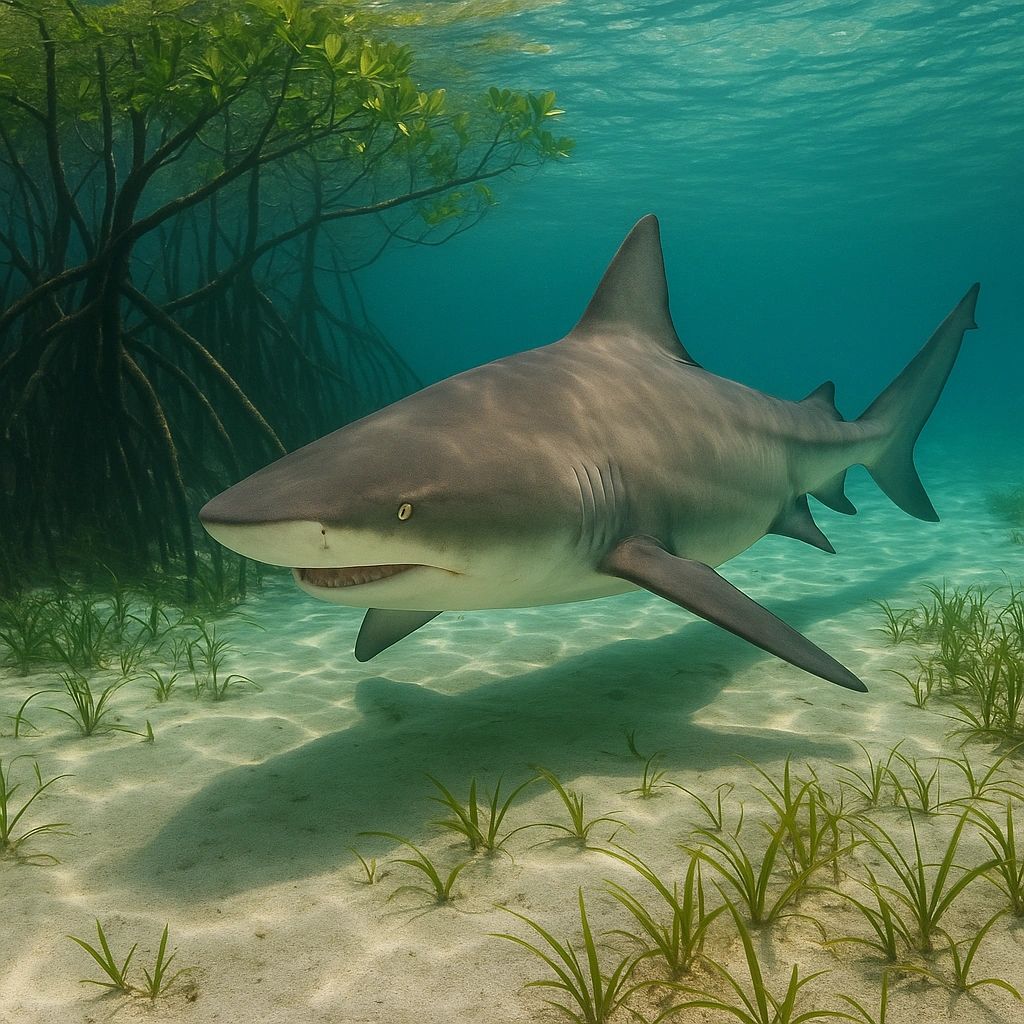
If you’ve ever swum in a coastal bay, river mouth, or tropical beach, chances are you were closer to a bull shark than you knew. These powerful and adaptable sharks are among the most misunderstood—and most intriguing—predators in the sea. Unlike many shark species that stick to open ocean habitats, bull sharks (Carcharhinus leucas) can thrive in both salt and freshwater. They’ve been found thousands of miles up rivers, lurking near city shores, and even in inland lakes.
So what makes the bull shark so unique? Why are they sometimes called the most dangerous shark in the world? And what role do they play in their ecosystems—and in our understanding of shark biology?
This blog explores the biology, behavior, and human interactions of bull sharks, celebrating their resilience while advocating for better public understanding and conservation.
A Snapshot of the Species
The bull shark, named for its stout build and aggressive reputation, is a large requiem shark that inhabits warm, shallow waters around the world. They can grow to over 11 feet (3.3 meters) in length and weigh up to 500 pounds (227 kilograms) (Compagno, 1984). Females are generally larger than males, which is typical among sharks.
Bull sharks are apex predators with a broad, stocky body and a blunt snout. Their coloring—gray above and white below—helps them blend in with both the ocean floor and the surface when viewed from different angles, a form of camouflage known as countershading.
But what truly sets bull sharks apart is their physiological ability to regulate salt levels, enabling them to move between saltwater and freshwater environments—sometimes traveling thousands of miles inland (Thorson, 1971).
Masters of Two Worlds: Salt and Freshwater Flexibility
Unlike most sharks, which are confined to marine environments, bull sharks possess specialized adaptations that allow them to live in freshwater for extended periods.
This ability hinges on their remarkable control over osmoregulation—the balance of salt and water within their bodies. While marine sharks typically excrete excess salts and retain urea to balance osmotic pressure, bull sharks can reverse this process in freshwater, excreting large volumes of diluted urine and adjusting ion exchange through their gills and kidneys (Pillans et al., 2005).
This adaptability explains their presence in unusual places:
- The Amazon River: Bull sharks have been spotted over 2,000 miles upstream.
- The Mississippi River: A bull shark was caught near Alton, Illinois—more than 700 miles from the Gulf of Mexico.
- Lake Nicaragua: Once believed to be a landlocked population, these sharks actually move between the lake and the Caribbean via the San Juan River.
This dual lifestyle provides bull sharks with a competitive edge. It gives them access to prey in estuarine and freshwater systems, and allows juveniles to grow in safer, predator-free nurseries.
Feeding Behavior and Diet
Bull sharks are opportunistic carnivores, meaning they eat a wide variety of prey depending on availability. Their diet includes:
- Bony fish (like mullet, jacks, tarpon)
- Rays and smaller sharks
- Crustaceans and mollusks
- Sea turtles
- Occasionally birds or terrestrial mammals near river mouths
Bull sharks are ram-feeders, meaning they actively chase and engulf prey. They use their powerful jaws and robust teeth to bite through tough skin, bone, and shells. Their bite force has been measured at over 6,000 newtons—among the highest ever recorded in a shark species of their size (Huskey et al., 2011).
They tend to hunt in turbid or murky waters, using electroreception to detect the electrical signals of hidden prey. Their hunting style is efficient, stealthy, and highly effective.
Bull Sharks and Humans: Risk and Reality
Bull sharks have gained a reputation as one of the “big three” sharks most commonly involved in unprovoked attacks on humans, alongside great whites (Carcharodon carcharias) and tiger sharks (Galeocerdo cuvier).
This reputation is based on several factors:
- Their preference for shallow coastal areas, where humans swim
- Their territorial behavior, especially around estuaries
- Their poor visibility habitats, which increase mistaken-identity bites
According to the International Shark Attack File (ISAF), bull sharks are implicated in dozens of confirmed unprovoked attacks (ISAF, 2024). In some areas, like the Indian River Lagoon in Florida or Durban, South Africa, they are believed to be the primary species behind bites.
However, it’s important to keep the risk in perspective. You are more likely to be killed by a falling coconut, lightning strike, or even a vending machine than by a shark (Pepin-Neff & Wynter, 2018).
And most bites are not fatal. Bull sharks, like all sharks, do not hunt humans. Bites are usually exploratory or the result of misidentification.
Bull Sharks in Pop Culture and Myth
Bull sharks have appeared in numerous documentaries, books, and films. Unlike the great white, which gained infamy from Jaws, the bull shark has a more regional and practical terror. It’s often framed as the shark you didn’t know was near you.
Highlights include:
- The TV movie Red Water (2003), where bull sharks terrorize a Louisiana bayou.
- Numerous Shark Week specials on river-dwelling sharks.
- Real-life survival tales, like the 1916 New Jersey shark attacks (see our Jaws-inspired blog), in which a bull shark may have been the culprit.
These portrayals often sensationalize bull sharks, but they’ve also brought attention to their biology and behavior.
Ecological Importance
Bull sharks are apex predators, and their presence influences the entire ecosystem. By regulating the populations of mid-level predators and prey species, they help maintain trophic balance.
For example, in estuarine systems, bull sharks may help keep populations of rays and bony fish in check, which in turn prevents overgrazing of seagrass beds. This kind of top-down control is vital for ecosystem health (Heithaus et al., 2008).
Additionally, their use of estuaries as nursery habitats underscores the importance of protecting coastal ecosystems. Pollution, habitat loss, and shoreline development threaten these nurseries and, by extension, bull shark populations.
Reproduction and Life Cycle
Bull sharks are viviparous, meaning they give birth to live young. Gestation lasts about 10 to 11 months, after which the female gives birth to 1–13 pups in shallow estuaries, mangroves, or river mouths (Castro, 1996).
These habitats provide protection from larger predators and abundant food. Juvenile bull sharks may stay in these areas for several years before moving to open ocean habitats.
Females reproduce every two to three years. This slow reproductive rate, combined with high juvenile mortality and fishing pressure, makes bull sharks vulnerable to population decline.
Conservation Status and Threats
Bull sharks are currently listed as Near Threatened by the IUCN Red List (Simpfendorfer & Burgess, 2009), and their populations are declining in several regions due to:
- Bycatch in commercial fisheries
- Targeted fishing for fins and meat
- Habitat loss in coastal nursery areas
- Pollution and microplastics in estuarine systems
Bull sharks are particularly at risk because they frequent heavily populated, heavily fished regions. Their size and presence near shore make them frequent victims of recreational fishing as well.
International agreements like CITES (Convention on International Trade in Endangered Species) and national laws in Australia, the U.S., and South Africa offer varying degrees of protection. But enforcement and public awareness remain critical challenges.
Research and Tracking: Learning From the Tag
Scientists use acoustic and satellite tags to study bull shark behavior. These tags provide valuable insights into:
- Seasonal migrations
- Home range size
- Movement between salt and freshwater
- Responses to environmental changes
In Florida, bull sharks have been tracked moving between the Indian River Lagoon and the Atlantic Ocean. In Australia, they’re studied as part of shark barrier programs designed to minimize human-shark interactions while avoiding unnecessary shark deaths.
Research has shown that bull sharks have site fidelity—returning to the same estuaries year after year to pup. This makes habitat protection even more essential (Heupel & Simpfendorfer, 2002).
Coexisting With Bull Sharks
Given their proximity to human populations, how do we safely coexist with bull sharks?
Tips for Ocean Safety:
- Avoid swimming at dawn, dusk, or in murky water.
- Don’t swim near schools of fish or where baitfish are present.
- Avoid wearing shiny jewelry or bright clothing.
- Don’t enter the water if bleeding or with open wounds.
- Swim in groups, and avoid isolated beaches without lifeguards.
More importantly, we need to move beyond fear and toward understanding. Bull sharks are not monsters. They are wild animals, navigating a complex and changing ocean.
Conclusion: The Resilient Rogue of Coastal Waters
Bull sharks are many things: powerful, adaptable, curious, and complex. They challenge our understanding of what a shark can be—freshwater explorer, apex predator, estuarine guardian. They are survivors, thriving in the challenging borderlands between ocean and land.
But they also need protection. Their habitats are shrinking. Their populations are under pressure. And their reputation—fueled more by myth than fact—still hinders conservation.
As science continues to shed light on their world, we’re left with a clear message: bull sharks deserve both respect and protection. They are a key part of marine ecosystems and a powerful symbol of nature’s resilience.
So the next time you wade into coastal waters, take a moment to appreciate the mystery, majesty, and misunderstood might of the bull shark. They’re not just closer than you think—they’re more incredible than you imagined.
References
Castro, J. I. (1996). Biology of the bull shark, Carcharhinus leucas, in the Lake Nicaragua-Río San Juan system. Environmental Biology of Fishes, 47(3), 275–290. https://doi.org/10.1007/BF00005044
Compagno, L. J. V. (1984). FAO Species Catalogue: Sharks of the world. Vol. 4. FAO Fisheries Synopsis No. 125.
Heithaus, M. R., Frid, A., Wirsing, A. J., & Worm, B. (2008). Predicting ecological consequences of marine top predator declines. Trends in Ecology & Evolution, 23(4), 202–210. https://doi.org/10.1016/j.tree.2008.01.003
Heupel, M. R., & Simpfendorfer, C. A. (2002). Estimation of mortality of juvenile blacktip sharks (Carcharhinus limbatus) within a nursery area using telemetry data. Canadian Journal of Fisheries and Aquatic Sciences, 59(4), 624–632. https://doi.org/10.1139/f02-036
Huskey, S. H., Wilga, C. D., & Hale, M. E. (2011). The shark feeding mechanism: A review of structure and function. Functional Morphology of Feeding and Swimming in Chondrichthyes, 35–58. https://doi.org/10.1007/978-3-642-20338-1_2
ISAF (International Shark Attack File). (2024). 2023 Worldwide Shark Attack Summary. Florida Museum of Natural History. https://www.floridamuseum.ufl.edu/shark-attacks/
Pepin-Neff, C., & Wynter, T. (2018). Shark bites and public attitudes: Policy implications from the first global attitudinal study. Marine Policy, 96, 8–13. https://doi.org/10.1016/j.marpol.2018.07.001
Pillans, R. D., Franklin, C. E., & Wilson, S. (2005). Freshwater tolerance of bull sharks (Carcharhinus leucas): Physiological and behavioural observations. Journal of Experimental Zoology Part A: Comparative Experimental Biology, 303(6), 409–420. https://doi.org/10.1002/jez.a.153
Simpfendorfer, C., & Burgess, G. H. (2009). Carcharhinus leucas. The IUCN Red List of Threatened Species 2009: e.T39372A10220195. https://dx.doi.org/10.2305/IUCN.UK.2009-2.RLTS.T39372A10220195.en
Thorson, T. B. (1971). Movement of bull sharks, Carcharhinus leucas, between Caribbean Sea and Lake Nicaragua. Copeia, 1971(2), 336–338. https://doi.org/10.2307/1442841
Originally published at the live site .