
Maritime ·
The Fastest Shark in the Ocean: Meet the Shortfin Mako Shark
If you ever dreamed of a sea creature built like a torpedo and faster than most race boats, look no further than the shortfin mako shark. This sleek, powerful predator holds the title of the fastest shark in the ocean—an...
By Rebecca "Madam Chronicler" Ryan
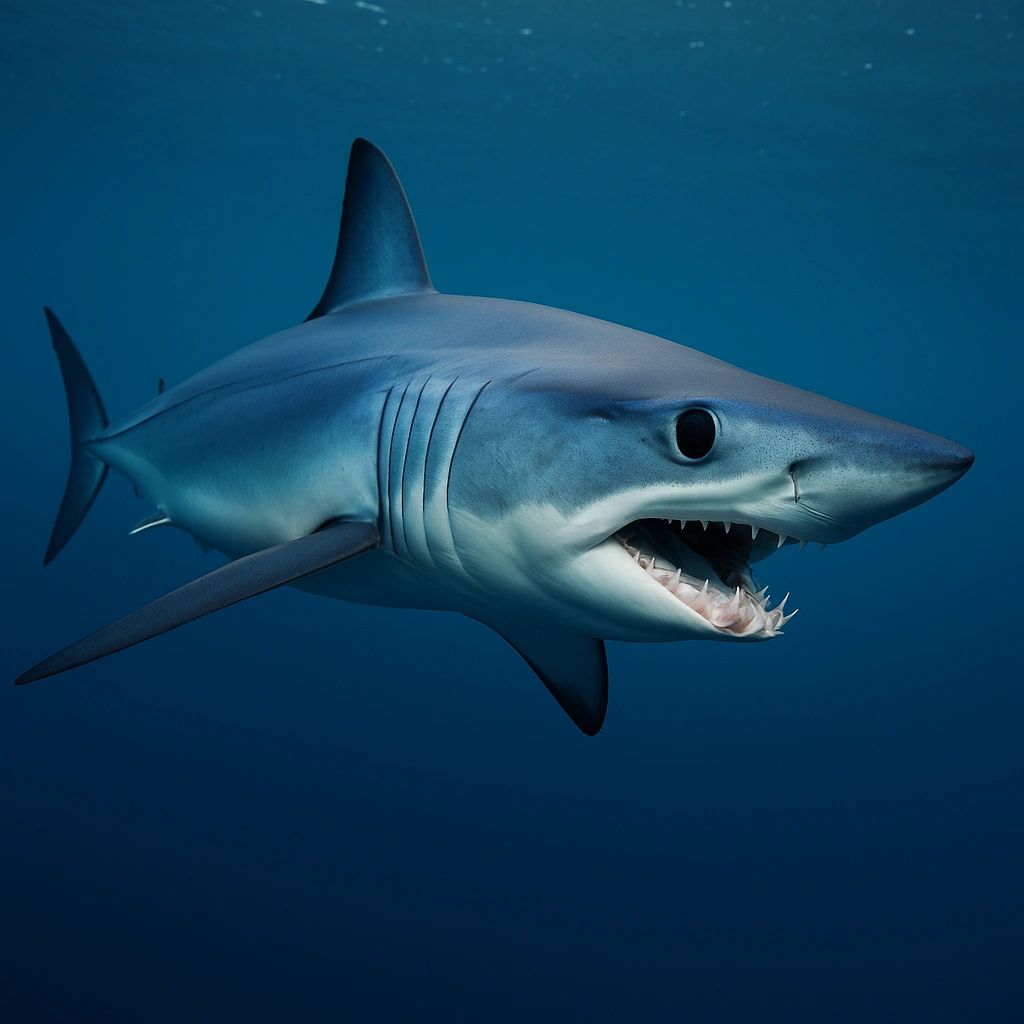
If you ever dreamed of a sea creature built like a torpedo and faster than most race boats, look no further than the shortfin mako shark. This sleek, powerful predator holds the title of the fastest shark in the ocean—and it’s not even close. But what makes the shortfin mako so fast? Where does it live? What does it eat? And why is it so important to protect this ocean sprinter?
Let’s dive into the incredible world of the shortfin mako shark and find out why it deserves the spotlight.
What is a Shortfin Mako Shark?
The shortfin mako shark (Isurus oxyrinchus) is a member of the mackerel shark family, which also includes the great white shark. It can be found in warm and temperate waters all over the world. With a bullet-shaped body, pointed snout, and a metallic blue top, this shark was built for speed. Adult shortfin makos usually grow to about 10 feet (3 meters) in length and weigh around 130–300 pounds (60–135 kg), but some can grow much larger.
One of the most unique features of the shortfin mako is its warm-blooded ability. While most fish are cold-blooded, makos can raise the temperature of their muscles, allowing them to swim faster and hunt more efficiently in cooler waters (Bernal et al., 2001).
Just How Fast Is the Shortfin Mako?
The shortfin mako has been clocked at speeds up to 45 miles per hour (72 km/h) (Compagno, 2001). That’s faster than Olympic swimmers, faster than speedboats, and definitely faster than any human in the water. This speed helps them catch some of the ocean’s fastest fish, like tuna and swordfish.
Scientists believe this shark’s unique body shape and powerful muscles give it a hydrodynamic advantage. The mako’s narrow tail fin and long keels along its body reduce drag, allowing it to slice through the water like a living missile (Donley et al., 2004).
Where Do Shortfin Makos Live?
Shortfin mako sharks are highly migratory, meaning they travel long distances across the ocean. They’re usually found in offshore waters far from shore but sometimes come close to coastlines while chasing prey.
These sharks live in many places, including:
- The Gulf Stream in the Atlantic Ocean
- The Pacific coasts of the U.S. and Mexico
- The Mediterranean Sea
- Waters off South Africa and Australia
One tagged mako shark traveled over 13,000 miles in less than two years—one of the longest recorded migrations of any shark species (Stevens et al., 2010).
What Do Shortfin Makos Eat?
Makos are apex predators, meaning they’re at the top of the food chain. They mostly eat fast-moving fish like:
- Tuna
- Mackerel
- Bonito
- Swordfish
- Squid
Sometimes they’ll even eat other sharks and small marine mammals. Their sharp teeth are curved and designed to tear through slippery prey with ease. With their speed and bite, they’re like the cheetahs of the sea!
Makos use surprise and speed to strike. They often attack from below, rocketing upward at lightning speeds to ambush prey in the blink of an eye (Martinez et al., 2002).
How Do Shortfin Makos Reproduce?
Like many sharks, shortfin makos reproduce slowly. They’re ovoviviparous, which means the young grow inside eggs that hatch inside the mother’s body. After a pregnancy that lasts more than a year, the mother gives birth to 4 to 25 pups.
The pups are born already able to hunt, but they grow slowly and don’t reach full size for years. This slow growth and low birth rate make the species especially vulnerable to overfishing.
Are Shortfin Makos Dangerous to Humans?
Shortfin makos are not generally considered a big threat to humans. However, they can be dangerous if provoked or caught on a fishing line. Because they’re so strong and fast, makos can leap out of the water—sometimes over 20 feet into the air—and have even landed in boats!
That said, attacks on humans are very rare. According to the International Shark Attack File, only a few shortfin mako attacks have ever been confirmed, and even fewer were fatal (ISAF, 2023). They’d much rather chase fish than people.
Why Are Shortfin Makos in Trouble?
Unfortunately, this incredible shark is now endangered. The shortfin mako’s speed hasn’t been enough to protect it from humans. For years, they’ve been caught by:
- Commercial longline fishing boats
- Sport fishermen looking for a big catch
- People hunting for their meat and fins
Makos are often caught as bycatch—meaning they’re not the target but still get hooked on fishing gear. Because they’re slow to grow and reproduce, their populations can’t recover quickly.
In 2019, the International Union for Conservation of Nature (IUCN) listed the shortfin mako as endangered globally (Rigby et al., 2019). Some populations are even considered critically endangered, especially in the North Atlantic.
What’s Being Done to Help?
In recent years, there’s been a global push to protect the shortfin mako. Conservation groups, scientists, and governments are working together to slow the decline. Some important steps include:
- Fishing bans: The International Commission for the Conservation of Atlantic Tunas (ICCAT) agreed in 2021 to ban all shortfin mako retention in the North Atlantic.
- CITES listing: Makos were added to the Convention on International Trade in Endangered Species (CITES) Appendix II in 2019. This makes it harder to trade mako products internationally without permits.
- Better data collection: Scientists are using satellite tags to track mako migrations and understand where they need the most protection.
Many experts believe that, with time and proper rules, mako populations can bounce back. But they need our help.
Why Should We Care?
Besides being the fastest shark, shortfin makos are a key part of the ocean ecosystem. As apex predators, they help control fish populations and keep the food web balanced. If makos disappear, it could cause a ripple effect, harming other sea creatures and even fisheries humans depend on.
Makos are also indicators of ocean health. Their decline tells us that something is wrong—too much fishing, too much pollution, or too little regulation. Saving the mako means protecting the ocean for everyone.
Plus, they’re just plain cool. With their shimmering bodies, rocket speed, and wild leaps, makos are some of the most exciting animals on Earth. Wouldn’t it be a shame to lose them?
Fun Facts About the Shortfin Mako
- They jump high! Makos can leap 20 feet (6 meters) out of the water. That’s higher than a two-story house!
- Warm muscles = more power. Thanks to a special network of blood vessels called the rete mirabile, makos can keep their muscles warm in cold water.
- Their teeth are always showing. Unlike many sharks, mako teeth stick out even when the mouth is closed.
- They’re related to great whites. Makos and great whites share a common ancestor and have many similarities in how they hunt.
- They travel far. One mako swam from New Jersey to West Africa and back—an epic journey!
What Can You Do to Help?
Even if you don’t live near the ocean, you can still help protect the shortfin mako. Here’s how:
- Support sustainable seafood. Look for seafood with labels like “MSC Certified” that show it was caught responsibly.
- Say no to shark products. Avoid buying shark fin soup, shark cartilage pills, or shark leather items.
- Donate to ocean groups. Many nonprofits are working hard to protect sharks—groups like Shark Trust, Oceana, and the Wildlife Conservation Society.
- Educate others. Share what you know! Most people don’t realize how amazing and threatened makos really are.
- Reduce plastic use. Less plastic means less pollution in the ocean, which helps all marine life.
Final Thoughts: Long Live the Ocean’s Speed Demon
The shortfin mako is more than just the fastest shark in the sea—it’s a symbol of ocean power, mystery, and beauty. But even the strongest swimmers need help when humans throw the balance off.
By learning about these amazing animals and supporting smart conservation, we can make sure the mako keeps zipping through the waves for generations to come.
So the next time you picture a shark, don’t just think of the scary ones. Think of the mako—sleek, fast, and fighting for survival. Because if we save the fastest shark in the ocean, we just might save the ocean too.
Bibliography (APA Format)
Bernal, D., Donley, J. M., Shadwick, R. E., & Syme, D. A. (2001). Mammal-like muscles power swimming in a cold-water shark. Nature, 409(6821), 728–729. https://doi.org/10.1038/35055564
Compagno, L. J. V. (2001). Sharks of the World: An Annotated and Illustrated Catalogue of Shark Species Known to Date. FAO Species Catalogue for Fishery Purposes.
Donley, J. M., Sepulveda, C., Konstantinidis, P., Gemballa, S., & Shadwick, R. E. (2004). Convergent evolution in mechanical design of lamnid sharks and tunas. Nature, 429(6989), 61–65. https://doi.org/10.1038/nature02585
International Shark Attack File (ISAF). (2023). ISAF 2023 Worldwide Shark Attack Summary. Florida Museum of Natural History. https://www.floridamuseum.ufl.edu/shark-attacks/
Martinez, C. M., Porter, M. E., & Epp, S. J. (2002). Swimming dynamics of the shortfin mako. Journal of Experimental Biology, 205(19), 2819–2824.
Rigby, C. L., Barreto, R., Carlson, J., Fernando, D., Fordham, S., Francis, M. P., … & Pacoureau, N. (2019). Isurus oxyrinchus. The IUCN Red List of Threatened Species 2019: e.T39341A2915850. https://doi.org/10.2305/IUCN.UK.2019-3.RLTS.T39341A2915850.en
Stevens, J. D., Bonfil, R., Dulvy, N. K., & Walker, P. A. (2010). The effects of fishing on sharks, rays, and chimaeras (chondrichthyans), and the implications for marine ecosystems. ICES Journal of Marine Science, 57(3), 476–494. https://doi.org/10.1006/jmsc.2000.0724
Originally published at the live site .