
Maritime ·
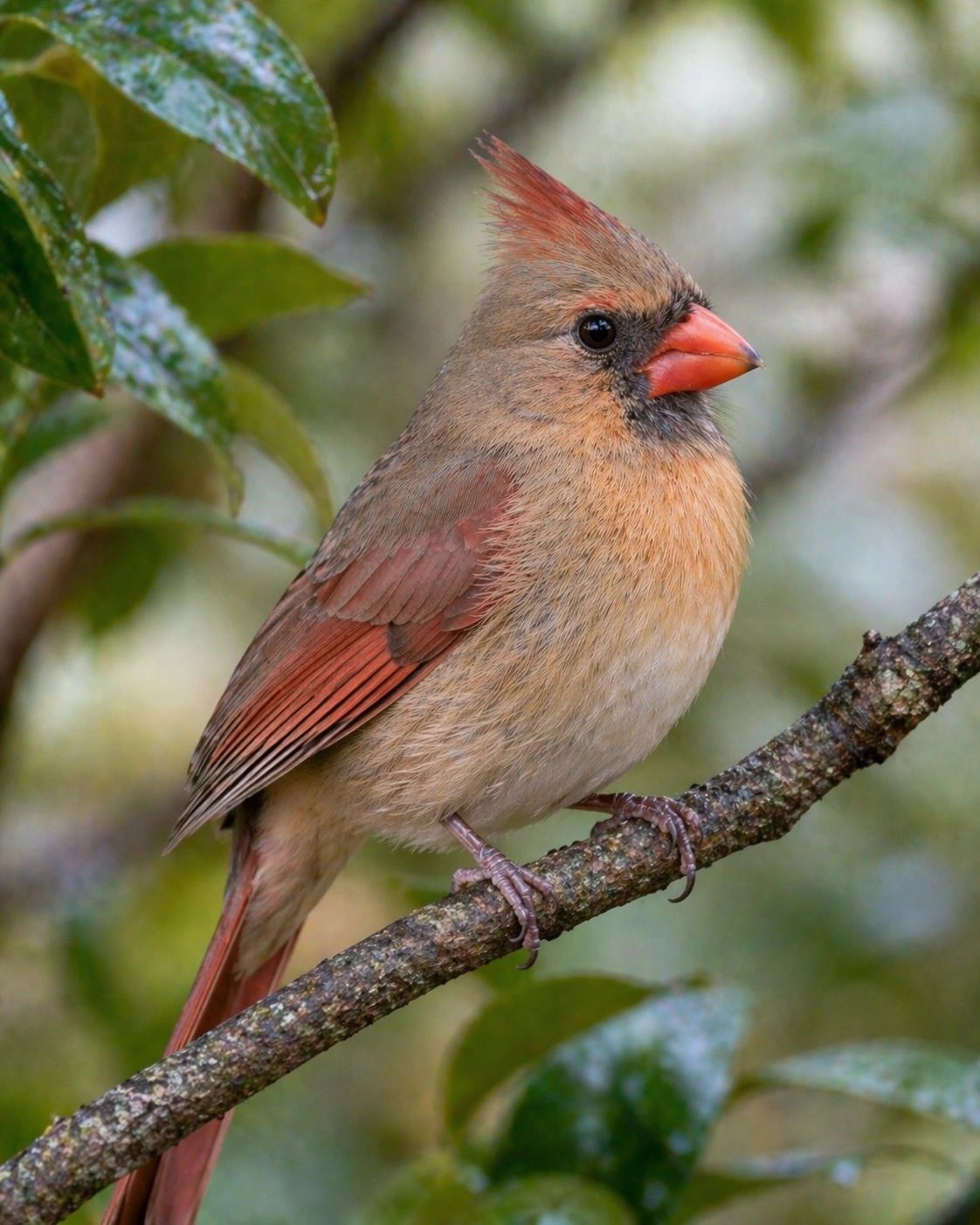
The Female Cardinal: The Bird You Didn’t Notice
Some birds are impossible to miss.
By Rebecca "Madam Chronicler" Ryan
Some birds are impossible to miss.
They arrive in a flash of color.
They stand out against everything around them.
They become the moment the instant you see them.
And then there are birds that don’t do that.
Not because they aren’t there.
Not because they don’t matter.
But because they aren’t the ones you’re looking for.
The female cardinal is one of those birds.
The Bird Everyone Notices First
The first time I really paid attention to cardinals, it wasn’t because of her.
It was because of him.
Bright red.
Impossible to ignore.
Perched in the open, exactly where your eyes would naturally land. You don’t have to search for a male cardinal. You don’t have to listen carefully or look twice.
You see him.
And once you do, everything else fades for a moment.
That’s how it starts.
That’s how it usually starts.
The One Standing Nearby
But what I didn’t notice right away—what I hadn’t trained myself to look for yet—was that he wasn’t alone.
She was there too.
Not hidden.
Not far away.
Just… quieter.
Standing a short distance from him, moving through the same space, part of the same moment—but without the color that immediately draws your attention.
And that’s what made her easy to miss.
A Different Kind of Color
At first glance, the female cardinal doesn’t stand out the way the male does.
There’s no bright red.
No bold contrast that demands your focus.
Instead, her colors feel softer.
Warm browns.
Muted tans.
Hints of red—not gone entirely, but woven into the edges. A touch along the wings. A subtle wash near the crest.
It’s not meant to dominate.
It’s meant to belong.
According to the Smithsonian Handbooks: Birds of North America (Eastern Region), female Northern Cardinals have this more subdued coloration as a form of camouflage, allowing them to remain less visible while nesting and protecting their young.
And once you understand that, the difference makes sense.
A Presence That Doesn’t Compete
What stood out most wasn’t just how she looked.
It was how she moved.
She didn’t compete for attention.
She didn’t push forward into the open.
She moved through the space with the same awareness as the male—but without the need to be seen first.
There was no urgency in her behavior.
No need to stand out.
She simply existed within the moment.
The Same Song—A Different Voice
One of the most surprising things about the female cardinal is something many people don’t realize.
She sings.
Not just occasionally.
Not just softly.
But clearly.
Distinctly.
Like the male.
Her song carries the same whistled quality, the same structured phrases that make cardinals so recognizable. According to Smithsonian references, female cardinals sing for communication—often signaling to their mate or coordinating behavior around nesting.
And hearing it, knowing it’s her, changes the experience.
Because suddenly, the bird you didn’t notice becomes the one you’re listening for.
A Bird That Stays Close
Unlike birds that pass through quickly, cardinals stay.
They don’t move far.
They don’t disappear for long stretches.
They remain part of the environment in a steady, consistent way.
And because of that, the female cardinal is almost always there—if you’re paying attention.
Not hidden.
Just overlooked.
Feeding Side by Side
Watching them together, the dynamic becomes clearer.
The male and female move through the same space, often feeding close to each other, sometimes taking turns, sometimes sharing the same area without conflict.
There’s no sense of competition.
Only balance.
At times, you might even see the male feed the female—a behavior that reinforces their bond and reflects the connection between them.
It’s not something dramatic.
But it’s something you remember once you notice it.
A Role That Doesn’t Stand Out—but Matters Most
The female cardinal carries a responsibility that isn’t always visible.
She builds the nest.
She incubates the eggs.
She stays still for long periods of time, relying on her subtle coloring to remain unnoticed.
Her role isn’t built around being seen.
It’s built around being effective.
And that makes it easy to overlook—until you understand it.
The Moment You Finally See Her
There’s a moment when everything shifts.
Not because she changes.
But because you do.
You stop looking only for the bright red.
You start scanning for softer tones.
You begin to notice movement instead of color.
And suddenly, she’s there.
Not hidden.
Not new.
Just finally seen.
A Different Kind of Recognition
Like the other birds in this series, there’s a moment of clarity.
But this one feels different.
It’s not about identifying something unfamiliar.
It’s about recognizing something that was already there.
That had always been there.
And realizing that you had simply overlooked it.
A Bird That Changes What You Notice
What the female cardinal changes most is perspective.
It reminds you that not everything important stands out immediately.
That not everything is designed to be the center of attention.
And that sometimes, what you miss says more about how you’re looking than what’s actually there.
A Quiet Strength
There is something about the female cardinal that feels grounded.
Steady.
Unmoving in a way that isn’t passive—but intentional.
She doesn’t need to stand out to have presence.
She doesn’t need to be loud to be heard.
She exists fully within the space, even when she isn’t the first thing you notice.
Conclusion: The Bird You Didn’t Notice
The female cardinal is not the brightest bird.
She is not the most obvious.
She is not the one most people talk about first.
But she is there.
Always there.
Moving through the same space.
Sharing the same moment.
And once you notice her—once you understand what you were missing—you realize something simple.
Not everything important demands attention.
Some things wait for you to look a little closer.
Bibliography
Cornell Lab of Ornithology. All About Birds: Northern Cardinal.
Smithsonian Institution. Smithsonian Handbooks: Birds of North America (Eastern Region).
National Audubon Society. Northern Cardinal.
Sibley, David Allen. The Sibley Guide to Birds.
Florida Fish and Wildlife Conservation Commission. Florida Bird Species Information.
Originally published at the live site .