
Maritime ·
The Healing Power of the Ocean: Why Blue Spaces Boost Health
Introduction
By Rebecca "Madam Chronicler" Ryan
Introduction
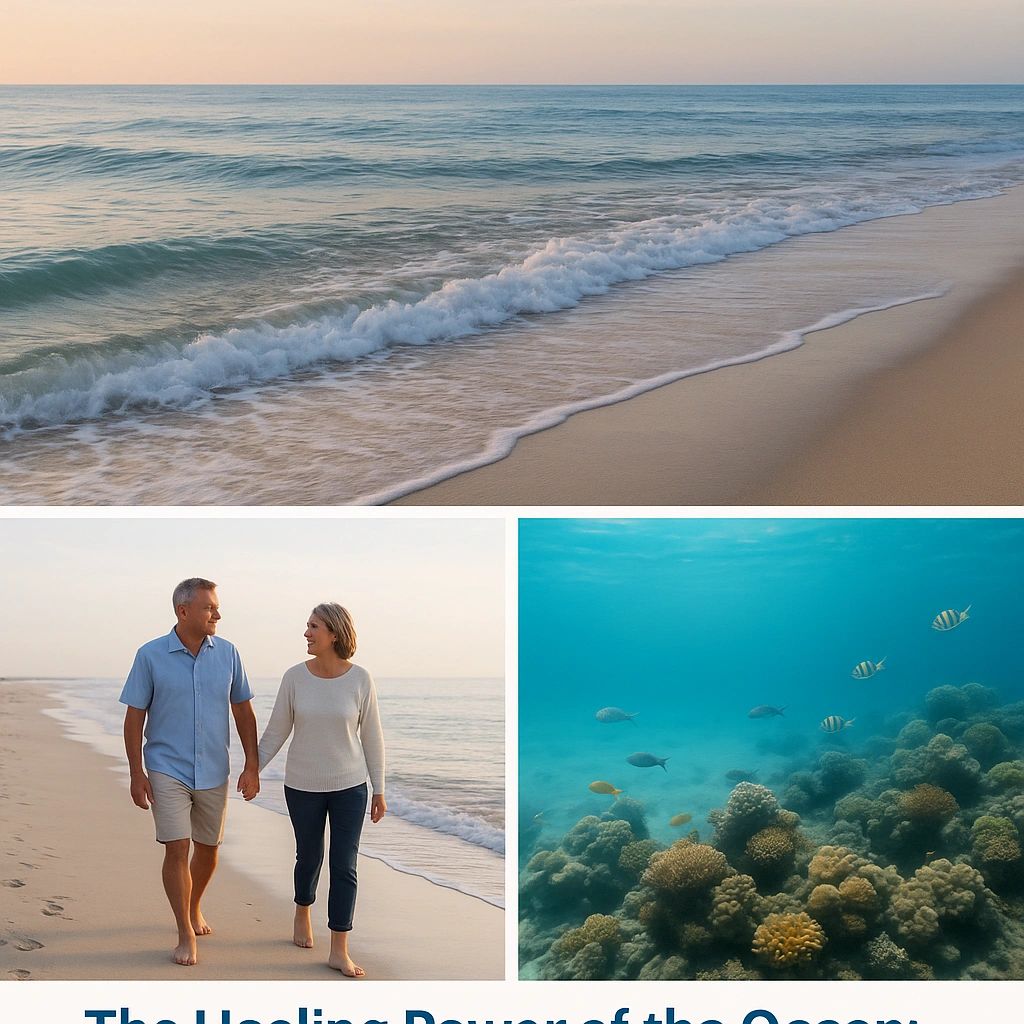
Imagine sitting by the seaside. You hear the gentle lapping of waves, feel a light breeze, smell salt in the air, and watch the horizon stretch into forever. In that moment, your mind may feel calmer and your shoulders may relax. It’s not just in your imagination—being near water, in what researchers call “blue spaces”, really can improve your mental health.
Whether it’s the vast open ocean, a calm lake, a flowing river, or the shoreline of a coastal town, blue spaces are showing strong promise as places of healing and restoration. In this blog, we’ll explore why being near water helps us feel better, what the science says, how access matters, who benefits most, what kinds of activities help, and how you can use this knowledge in your daily life.
What Are Blue Spaces?
The term blue spaces refers to outdoor environments that are dominated by water—oceans, seas, rivers, lakes, canals, coastal zones, wetlands. According to the World Health Organization (WHO), blue spaces are part of the larger nature-based spaces alongside green spaces (parks, forests) and are increasingly being studied for their effect on mental health. WHO Apps
Blue spaces are more than just scenic views. They can provide:
- Open vistas that reduce mental load and allow the mind to wander.
- Auditory and sensory experiences (waves, wind, water movement).
- Opportunities for movement, social interaction, and restoration.
- Environmental benefits such as cooler air, calming light, and nature connection.
The Science: Evidence That Blue Spaces Help Mental Health
Positive Associations
Researchers have found consistent positive links between exposure to blue spaces and improved mental health and well-being. For example:
- A narrative overview found that greater exposure to outdoor blue spaces was associated with benefits to mental health and well-being in a variety of settings. ScienceDirect
- A systematic review focusing on older adults found that proximity and quantity of blue space correlated with improved mental health, while qualitative findings reported therapeutic benefits, social interaction and sensory experiences. MDPI
- A large ecological study of the North American Great Lakes found that people living nearer large freshwater blue spaces had slightly lower hospitalizations for anxiety/mood disorders. PLOS
Mechanisms: How It Might Work
Understanding why blue spaces are helpful takes us deeper. One meta-analysis looked at mediating pathways—physical activity, restoration (mental recovery), social interaction, and environmental factors. MDPI Key findings:
- Living closer to blue space was linked to higher physical activity levels (Cohen’s d ≈ 0.12-0.14).
- Greater contact with blue space (visits) was associated with better restoration (Cohen’s d ≈ 0.19-0.34).
- Evidence was weaker or mixed for social interaction as the main pathway, suggesting more research needed.
Another study found that physical activity partially mediated associations between coastal proximity and depression/anxiety, meaning: some of the benefit came from being active, but other parts likely came from being near the water even if inactive. BioMed Central
Gaps & Limitations
- Many studies are cross-sectional (snapshot in time) rather than longitudinal (over time), so cause and effect are harder to prove.
- Blue spaces have been less studied than green spaces—so evidence is growing but still developing. WHO Apps+1
- Exposure is often measured simply (distance to water) rather than detailed (quality of water, time spent, type of activity).
- Research on biomarkers (physiological measures) is still limited. Arizona Experts
Why the Ocean (and Seasides) May Be Especially Powerful
Though many blue spaces (freshwater lakes, rivers) show benefits, the ocean and coastal environments bring unique features:
- Vastness and horizon: The open water stretching out may promote restorative attention—the kind of gentle, effortless attention that gives the mind a break.
- Rhythmic sensory input: The continuous sound of waves, shifting light patterns, breeze and tides provide a sensory input that is interesting yet calming.
- Multi-sensory experience: Sight, sound, smell, touch—all of which may combine to deepen the effect.
- High accessibility for recreation: Walking on beach, swimming, kayaking, sitting by the shore all offer options for movement plus nature contact.
- Environmental benefits: Coastal zones may offer cooler air, breezes, vistas, and an escape from urban stressors.
These features link with the mechanisms above: restoration, physical activity, lower stress, social engagement.
Who Benefits Most and When
Age and Life Stage
- Older adults: The review of blue space benefits for older adults found generally positive associations between blue space proximity/quantity and mental health outcomes. MDPI
- Young adults: A study looking at young adults found that exposure to blue space surroundings was associated with fewer depressive symptoms, possibly via improved sleep quality. ScienceDirect
Types of Exposure
- Views or being near water: Even just seeing the water from home or living near a coast showed benefit. Arizona Experts
- Visits and active engagement: Going to the shore, walking along the beach, swimming—these seem to enhance the benefit beyond just proximity. BioMed Central
- Urban vs natural: Studies on urban blue spaces (e.g., waterfronts, canals, city rivers) show that sensory qualities (visual, auditory, tactile) matter for well-being. Frontiers
Accessibility and Equity
Access matters: Having safe, quality, and welcoming blue spaces makes a difference. Barriers (distance, cost, safety, transport, physical ability) reduce benefits. The WHO report emphasizes that differences in access may contribute to health inequities. WHO Apps
What Activities Help Most?
Being near water is one thing — actively engaging raises the impact. Consider these:
- Walking or running along the shore: Combines movement with nature contact.
- Sitting quietly by the water: Allows rest and mental restoration.
- Swimming, paddling, snorkeling: Movement and immersion.
- Watching and listening: Simply being present—watching waves, tides, seabirds, feel breeze.
- Mindful moments: Using the setting for meditation or mindful awareness: focusing on the sound of waves or the feel of water.
- Social or family time: Going to the beach with friends/family supports both nature contact and social connection.
The Ocean, Your Brain & Stress
Here’s a friendly breakdown of what the ocean may do for your mind:
- Lower stress hormones: Nature exposure (including blue space) has been linked to reductions in cortisol (stress hormone) in some studies.
- Restore attention & reduce mental fatigue: The beach environment gently captures attention without demanding focus, allowing the brain to rest.
- Improve mood and reduce anxiety: Visually pleasing water scenes, rhythmic sounds, gentle breeze support calm and positive feelings.
- Promote social and active behaviour: People are more likely to meet friends, walk, swim, relax outdoors in beach/coastal settings.
- Sense of place, belonging, awe: Wide open waters, horizons, nature’s power evoke feelings of connection, wonder—good for mental health.
How to Make the Most of Blue Spaces (Especially the Ocean)
Here are practical tips you can use:
- Schedule regular visits: Even once a week going to the shore or seaside park helps.
- Limit distractions: Put your phone away for 10-15 minutes when you arrive; let your mind wander.
- Engage all your senses: Close your eyes briefly—hear the waves, feel the breeze, smell the saltwater. Then open eyes and watch.
- Take gentle movement: A slow walk on the sand, dipping feet, swimming—this boosts benefits.
- Stay consistent: Benefit increases with regular exposure.
- Invite others: Bring a friend or family member—socializing by the water enhances well-being.
- Use it as a reset: When stress builds up—head to a blue space.
- Be mindful of time of day: Early morning visits often quieter, fewer crowds, calmer water—great for peaceful vibe.
- Create a ‘blue space at home’: If you live far from the coast, bring water-related elements into your space: a water feature, photos/videos of ocean, sounds of waves—and plan a visit when you can.
- Ensure access: If beach access is hard (transport, cost, ability), find local water bodies—river, lake, marsh—because they also offer benefits.
Blue Spaces and Coastal Communities: A Connection
For coastal places (like Florida, Gulf states, etc.), the association between ocean/lakes/coastline and health is especially relevant:
- The economy and lifestyle often centre on the coast, so blue space is part of daily life.
- Mental health benefits from coastal living may support communities in managing stress of changing environments, storms, climate impacts.
- Promoting safe, accessible waterfronts supports not just recreation but community health and resilience.
Limitations, Cautions and What to Watch
- Not all blue spaces are equal: Water quality, safety, accessibility, infrastructure (paths, benches), and personal comfort matter.
- Environmental hazards: Pollution, rough seas, erosion, storms may reduce benefits or create risk.
- Accessibility & inclusion: Ensure that blue space benefits reach all groups—older adults, people with disabilities, lower-income communities.
- More research needed: Especially on causality, biomarkers, and long-term effects.
- Avoiding over-promise: Blue spaces help—but they are part of a bigger mental-health picture (therapy, community support, physical health).
Why This Matters ForYou
If you care about your own mental health, or if you live near the coast (or hope to visit), here’s why you should care:
- Simple, low-cost intervention: Visiting a beach or waterfront doesn’t require expensive treatment but may provide real well-being benefits.
- Nature as medicine: Especially in a world with more stress, screen-time, urban density—blue spaces offer a natural antidote.
- Public health & community benefit: Policies that preserve and promote access to shorelines, waterfronts, and blue spaces aren’t just aesthetic—they are health investments.
- Coastal resilience and quality of life: For coastal towns and states, ensuring clean, accessible oceans and seasides means healthier populations and happier communities.
A Story to Illustrate
Meet Maya. She lives inland, in a busy city. Every week she makes a small trip to the coast—just an hour away. One Saturday morning she arrives early, walks barefoot along the shoreline, breathes the salt air. She takes her phone off, sits on a rock, and simply watches waves. After twenty minutes, she feels her mind slow down, her anxiety fade a little. Over the next hour she walks, meets a friend, sits by the water, laughs quietly, watches a pelican dive. By the time she drives home, the typical weekday stress feels lighter. Her sleep is deeper that night.
For Maya, the ocean became a reset button. A place where her brain could rest, her body move gently, her social self connect. Over months, she notices fewer restless nights, better mood, more energy for work. She didn’t need special equipment—just a regular visit, sense awareness, and the sea.
Final Thoughts
The ocean, the shoreline, the sound of waves—they are more than just beautiful scenery. They are powerful tools for mental health and well-being. Blue spaces invite us to pause, to breathe, to wander, to be present. In those moments we find restoration.
While research is still growing and more questions remain, the message is clear: Make space in your life for water. Whether it’s the crashing surf of the sea, the gentle water of a lake, the calm of a river—all count. And for those lucky enough to live near or visit the ocean, those benefits may be right at your doorstep.
So next time you’re feeling overwhelmed, stressed, or just tired of the daily grind—consider this: Take a trip to the coast. Sit by the water. Listen, breathe, watch, walk. Let the blue world near you work its quiet magic.
Bibliography
Georgiou, M., Morison, G., Smith, N., Tieges, Z., & Chastin, S. (2021). Mechanisms of impact of blue spaces on human health: A systematic literature review and meta-analysis. International Journal of Environmental Research and Public Health, 18(5), 2486. https://doi.org/10.3390/ijerph18052486 MDPI
Guan, J., Ismail, S. B., Salih, S. A., Wan Mohamed, W. S., & Hussain, N. B. (2025). The role of blue space in enhancing mental health and well-being among older adults: A systematic review. Sustainability, 17(8), 3749. https://doi.org/10.3390/su17083749 MDPI
Lu, P., Sani, N. M., Li, Y., & Wang, Y. (2025). How does urban blue space affect human well-being? A study based on the stimulus-organism-response theory. Frontiers in Psychology, 16. https://doi.org/10.3389/fpsyg.2025.1553296 Frontiers
Murrin, E., Taylor, N., Peralta, L., Dudley, D., Cotton, W., & White, R. L. (2023). Does physical activity mediate the associations between blue space and mental health? A cross-sectional study in Australia. BMC Public Health, 23, Article number 203. https://doi.org/10.1186/s12889-023-15101-3 BioMed Central
Pearson, A. L., Shortridge, A., Delamater, P. L., Horton, T. H., Dahlin, K., Rzotkiewicz, A., … others. (2019). Effects of freshwater blue spaces may be beneficial for mental health: A first, ecological study in the North American Great Lakes region. PLOS ONE, 14(8), e0221977. https://doi.org/10.1371/journal.pone.0221977 PLOS
World Health Organization. (2021). Green and blue spaces and mental health: New evidence and perspectives for action. WHO Regional Office for Europe. https://apps.who.int/iris/bitstream/handle/10665/342931/9789289055666-eng.pdf?sequence=1 WHO Apps
Originally published at the live site .