
Places ·
The History of the Ponce Inlet Lighthouse
When we think of Florida’s coastline, most people imagine sunny beaches, blue waves, and palm trees swaying in the breeze. But hidden along the state’s shores are reminders of a much tougher past—one where ships often st...
By Rebecca "Madam Chronicler" Ryan
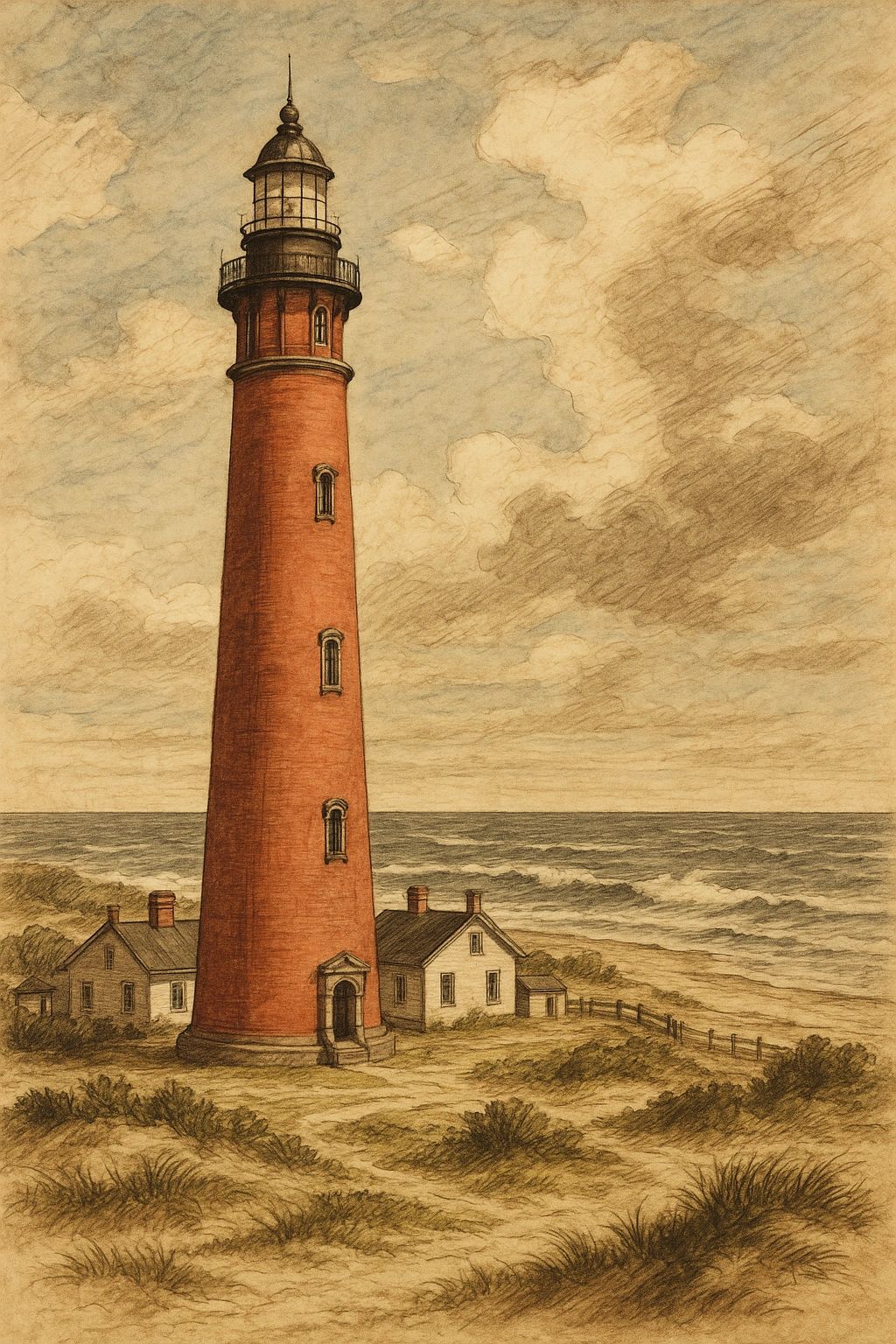
When we think of Florida’s coastline, most people imagine sunny beaches, blue waves, and palm trees swaying in the breeze. But hidden along the state’s shores are reminders of a much tougher past—one where ships often struggled against dangerous waters, fierce storms, and shifting sandbars. One of the most important of these reminders is the Ponce Inlet Lighthouse, the tallest lighthouse in Florida and one of the tallest in the United States. Rising 175 feet above the Atlantic Ocean, this brick tower has guided sailors since the late 1800s.
The story of the Ponce Inlet Lighthouse is more than just the history of a tall structure. It’s a story about shipwrecks, daring rescues, hurricanes, and the determination of communities who wanted to protect sailors. It’s also about how technology changed the way people travel the seas and how Florida worked to preserve a piece of its maritime history.
In this blog, we’ll dive deep into the history of the Ponce Inlet Lighthouse, exploring its beginnings, the challenges faced by its keepers, its decline, and its rebirth as one of the most important lighthouse museums in the country.
Before the Lighthouse: A Coast of Shipwrecks
Long before the lighthouse was built, Florida’s Atlantic coast was known as one of the most dangerous places to sail. The area around what is now Ponce Inlet was filled with shallow waters, hidden shoals, and powerful tides. Ships traveling to ports like St. Augustine, Charleston, or Savannah often had to pass through these waters, and many never made it.
One of the most tragic events was the wreck of the Guillermo, a Cuban ship carrying rum, tobacco, and sugar, which sank off the coast in 1835. There were also reports of dozens of smaller vessels destroyed near the inlet in the mid-19th century. Sailors called the area the “graveyard of the Atlantic” because so many ships met their end there.
The United States government realized something needed to be done. In 1835, a lighthouse was planned for the Mosquito Inlet (as the area was originally called). The first attempt, however, ended in disaster.
The First Lighthouse Attempt (1835–1836)
The original lighthouse was started in 1835 but had a very short life. Workers built the tower out of local coquina stone, the same material used to build St. Augustine’s Castillo de San Marcos. Unfortunately, the site was poorly chosen—it was too close to the water, and the waves and erosion quickly ate away at the land around the foundation.
Before it could even be finished, the Second Seminole War broke out, and Native Americans reportedly set fire to the structure, leaving it abandoned. By 1836, the lighthouse had collapsed into the sea. For the next fifty years, the inlet had no working lighthouse, and ships continued to wreck along the coast.
The Second Lighthouse: Building the Ponce Inlet Tower (1883–1887)
It wasn’t until 1883 that serious plans for a new lighthouse began again. The U.S. Lighthouse Service approved funding, and construction started on a new tower at a safer location, farther inland. This new lighthouse would be very different from the failed one of the 1830s.
Instead of coquina, the new tower was built from over 1.25 million bricks. It was designed to be tall and sturdy, able to withstand both hurricanes and the test of time. When finished in 1887, the Mosquito Inlet Lighthouse (as it was first known) stood 175 feet tall, making it one of the tallest lighthouses in the United States.
At the top of the tower, a powerful Fresnel lens was installed. This type of lens, invented in France, used concentric rings of glass to bend and focus light so it could be seen far out at sea. The lens at Ponce Inlet allowed ships to spot the light from up to 18–20 miles away, giving them enough warning to steer clear of the dangerous shoals.
Life of the Lighthouse Keepers
The Ponce Inlet Lighthouse was staffed by dedicated lighthouse keepers and their families. Their job was not easy. Every evening, the keeper had to climb the spiral staircase with a 30-pound can of kerosene to fuel the lamp. The light had to be cleaned, polished, and kept burning from sunset to sunrise.
During the day, the keeper and assistants worked to maintain the tower and surrounding buildings. This meant scrubbing the brick walls, trimming the wick of the lamp, repairing leaks, and keeping the grounds in order.
The keeper’s families lived in houses built near the tower. Life could be lonely, but it was also close-knit. Children of lighthouse keepers often grew up helping their parents polish brass, fetch water, and carry supplies.
Keepers were also often heroes. During storms, they watched the sea carefully for shipwrecks. If they saw a vessel in trouble, they would alert rescuers or even row out themselves to help save lives.
Hurricanes, War, and Survival
The Ponce Inlet Lighthouse faced many challenges in its early years. Hurricanes battered the coast repeatedly. In 1889, just two years after opening, a powerful storm damaged the keeper’s dwellings and nearly shattered the lantern room.
During World War II, the lighthouse played a new role. The U.S. Coast Guard took control of the tower and used it to help patrol the Florida coast. German U-boats were active in the Atlantic, and the lighthouse served as a lookout point for enemy activity.
Even after the war, the lighthouse remained active. It stood as a constant reminder of the dangers of the sea and the importance of navigation.
Automation and Decline
By the mid-20th century, technology began to change the role of lighthouses. Electric lights replaced kerosene lamps, and radar and radio communication made it easier for ships to navigate without relying on coastal beacons.
In 1953, the lighthouse was automated, meaning no human keepers were needed anymore. The Coast Guard maintained the light, but the keepers’ houses and surrounding buildings were abandoned.
Without people living there, the property quickly fell into disrepair. Roofs leaked, windows broke, and vandals damaged the site. For many years, the once-proud lighthouse seemed destined to fall into ruin like its 1830s predecessor.
Restoration and Preservation (1972–Present)
Luckily, the story doesn’t end there. In 1972, the town of Ponce Inlet (renamed from Mosquito Inlet in 1927) decided to save the lighthouse. The Ponce de Leon Inlet Lighthouse Preservation Association was formed, and volunteers began the hard work of restoring the buildings and grounds.
They repaired the keepers’ dwellings, replaced broken windows, and restored the Fresnel lens to working order. Over the years, the lighthouse became not just a navigational aid, but also a museum dedicated to maritime history.
In 1998, the Ponce Inlet Lighthouse was designated a National Historic Landmark, recognizing its importance to American history. Today, it is open to visitors who can climb its 203 steps to the top for breathtaking views of the Atlantic Ocean and the Halifax River.
The Lighthouse Today: A Living Museum
Today, the Ponce Inlet Lighthouse is much more than a tall brick tower. It is a museum that tells the story of Florida’s maritime past. Visitors can explore the keepers’ homes, learn about shipwrecks, see restored Fresnel lenses, and understand what life was like for lighthouse families.
Climbing to the top of the tower is a challenge, but the reward is worth it. From the lantern room, you can see for miles in every direction—out to the sea, over the Intracoastal Waterway, and across the town of Ponce Inlet.
The lighthouse also hosts educational programs, tours, and cultural events. It has become a symbol of resilience and community pride, showing how people can come together to preserve history.
Why the Ponce Inlet Lighthouse Matters
The story of the Ponce Inlet Lighthouse is important for several reasons:
- Maritime Safety – For decades, the lighthouse helped save lives by guiding ships away from danger.
- History of Technology – It shows how navigation changed from kerosene lamps to modern radar.
- Community Preservation – Its survival is thanks to local volunteers who refused to let it crumble.
- Cultural Symbol – The lighthouse represents Florida’s coastal heritage and resilience.
Conclusion
From shipwrecks and wars to hurricanes and abandonment, the Ponce Inlet Lighthouse has stood through it all. It began as a desperate attempt to prevent disasters along Florida’s treacherous coast. After nearly being lost to time, it was saved by people who believed in the power of history.
Today, the lighthouse is one of Florida’s brightest beacons—not just for ships, but for all who want to understand the struggles and triumphs of life along the sea.
Next time you visit the Sunshine State, take a trip to Ponce Inlet. Climb its spiral staircase, look out over the ocean, and remember the generations of sailors, keepers, and communities who made sure the light never went out.
Bibliography
- Claflin, J. M. (1989). Lighthouses and Keepers: The U.S. Lighthouse Service and Its Legacy. Annapolis: Naval Institute Press.
- Holland, F. R. (2001). America’s Lighthouses: An Illustrated History. Dover Publications.
- Kraig, B., & Smith, R. A. (2010). “Maritime Navigation and Coastal Safety: The Role of the Ponce Inlet Lighthouse.” Journal of Maritime History, 22(3), 245–270.
- Noble, D. F. (1997). Lighthouses and Keepers of the U.S. Lighthouse Service. United States Lighthouse Society.
- U.S. Lighthouse Service. (1887). Annual Report of the Light-House Board. Washington, D.C.: Government Printing Office.
- Weeks, K. R. (2002). Lighthouses of the Southeast. Pineapple Press.
Originally published at the live site .