
Maritime ·
The Northern Cardinal: The Bright Red Visitor
Not long after the mockingbird’s ever-changing song faded into the background that morning, another sound rose clearly above the rest.
By Rebecca "Madam Chronicler" Ryan
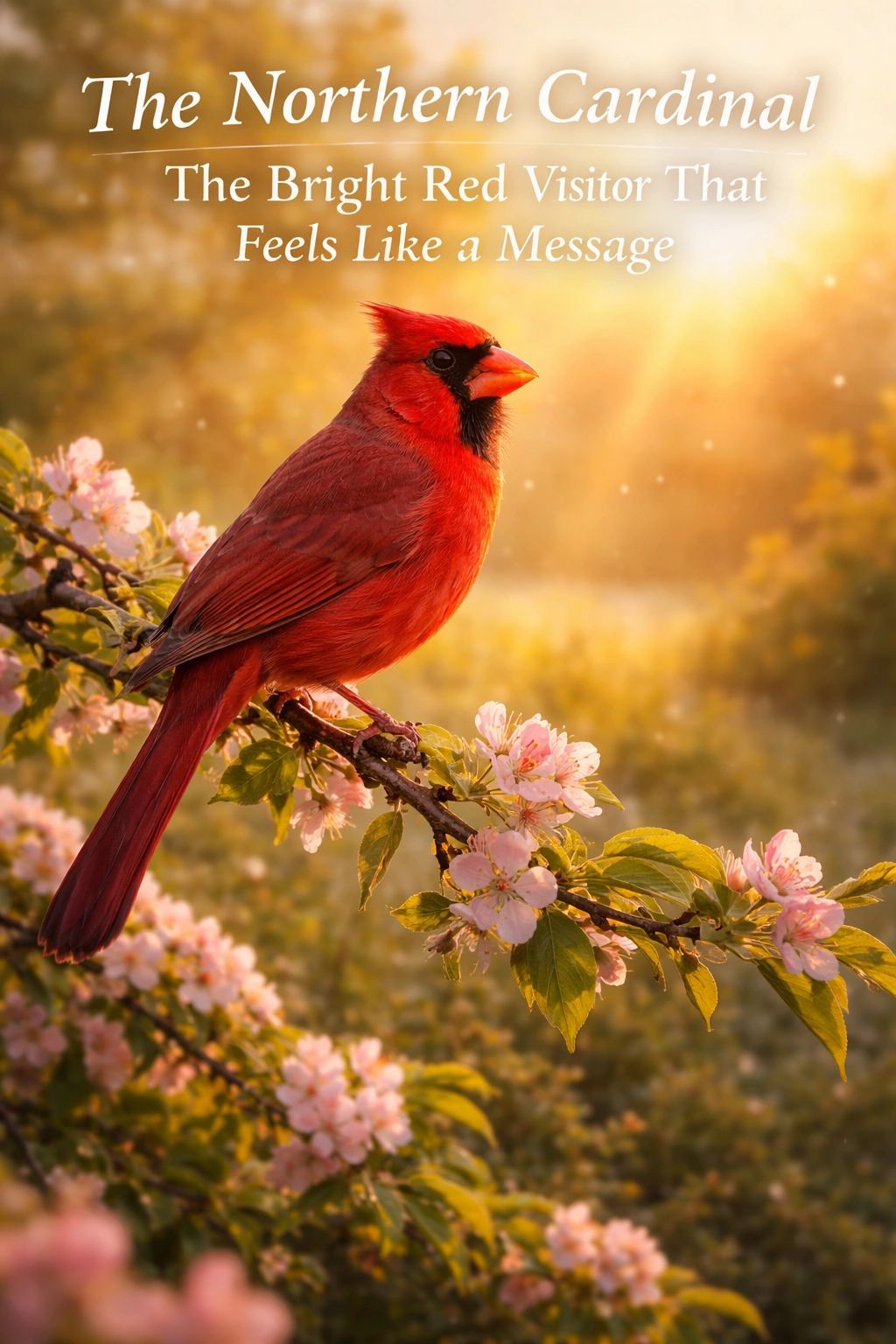
Not long after the mockingbird’s ever-changing song faded into the background that morning, another sound rose clearly above the rest.
It was steady, confident, and unmistakably pure.
The notes carried across the yard in a series of sharp whistles, each phrase repeating as if it were meant to be remembered. Unlike the mockingbird’s layered performance, this song felt direct. Focused. Intentional.
When I looked down at the Merlin Bird ID app, the answer appeared almost instantly.
Northern Cardinal.
A Flash of Red in the Morning Light
Even before the app confirmed it, there was a good chance I already knew.
The Northern Cardinal is one of the few birds that doesn’t need much introduction. The male’s bright red feathers stand out against almost any background, whether it’s green foliage, gray skies, or the soft light of early morning.
Seeing one often feels like a moment that interrupts everything else.
It doesn’t blend in. It doesn’t hide. It arrives with presence.
That morning, I caught a glimpse of it perched quietly among the branches, its crest raised slightly as it called out again. The contrast between its vivid color and the surrounding greenery made it impossible to ignore.
But it wasn’t just the color that drew attention.
It was the feeling that came with it.
A Song That Carries Meaning
The cardinal’s song is one of the clearest in North America. It rings out in repeated phrases, often described as sounding like “cheer-cheer-cheer” or “birdie-birdie-birdie.”
There is a rhythm to it that feels structured, almost like a conversation.
Unlike many birds, both male and female cardinals sing. This is relatively uncommon among songbirds and adds another layer to their behavior. Their calls are not just about attracting mates or defending territory. They are also a way of staying connected.
Listening to the cardinal that morning, there was a sense of purpose in each note. It wasn’t just filling the air with sound. It was communicating something, even if the message wasn’t entirely clear to me.
Recognizing the Northern Cardinal
The Northern Cardinal is one of the easiest birds to identify, even for someone new to birdwatching.
The male’s brilliant red plumage is its most striking feature, paired with a black mask that surrounds the face and extends to the throat. Its crest gives it a slightly regal appearance, as if it is always alert and aware of its surroundings.
The female, while less brightly colored, is just as distinctive. Her feathers are a soft blend of brown and warm tones, with subtle hints of red on the wings and crest. She shares the same shape and presence, even if her colors are more muted.
Together, they create a balance that reflects both visibility and subtlety within the same species.
A Bird That Stays Close to Home
Unlike many of the birds identified that morning, the Northern Cardinal does not migrate long distances.
It is a year-round resident in Florida and much of the eastern United States. This means that its presence is consistent. It doesn’t arrive and disappear with the seasons in the same way that some other birds do.
Because of this, cardinals become familiar in a different way.
They are not just visitors. They are part of the landscape.
They can be found in backyards, forests, parks, and along the edges of wooded areas. They adapt well to human environments, often appearing near bird feeders or perched in shrubs close to homes.
Over time, their presence becomes something people expect, even if they don’t always stop to notice it.
Feeding and Daily Life
Cardinals spend much of their time moving through low vegetation, searching for food.
Their diet consists mainly of seeds, grains, fruits, and insects. Their strong, thick beaks are well suited for cracking seeds, allowing them to take advantage of a wide range of food sources.
Watching a cardinal feed, there is a sense of calm focus in its movements. It hops deliberately, pausing occasionally, always aware of its surroundings.
Unlike some birds that move quickly and unpredictably, the cardinal’s behavior feels measured. There is a quiet confidence in the way it moves through its environment.
A Deeper Meaning: The Cardinal as a Messenger
For many people, the Northern Cardinal is more than just a bird.
There is a widely held belief that seeing a cardinal carries a deeper meaning. In many cultures and traditions, the appearance of a cardinal is thought to represent a visit from a loved one who has passed on.
The idea is simple but powerful.
When a cardinal appears, especially in a quiet or reflective moment, it can feel as though someone is reaching out. The bird becomes a symbol of connection, a reminder that those who are gone are not entirely absent.
Whether this belief is taken literally or symbolically, it has a strong emotional impact.
The cardinal’s bright red color makes it stand out in any setting, almost as if it is meant to be noticed. Its presence often feels intentional, arriving at just the right moment to draw attention.
That morning, seeing the cardinal after hearing its song, it was easy to understand why people hold onto this belief.
There was something about the way it appeared—sudden, vivid, and calm—that felt different from the other birds.
It didn’t just pass through.
It stayed long enough to be seen.
Why Cardinals Inspire Such Strong Feelings
Part of what makes the cardinal so meaningful is its consistency.
Unlike migratory birds that come and go, cardinals remain in the same areas throughout the year. This creates a sense of familiarity and continuity.
They are there in the quiet mornings, in the changing seasons, in the ordinary moments that make up daily life.
Because of this, they become tied to memory.
Seeing one can bring back thoughts of specific times, places, or people. Over time, that association grows stronger, turning the bird into something more than just a part of the environment.
It becomes a symbol.
Nesting and Raising Young
During breeding season, cardinals form strong pair bonds.
The female builds the nest, often choosing a location hidden within dense shrubs or low trees. The nest itself is carefully constructed from twigs, leaves, and grasses, creating a secure place for eggs.
Once the eggs hatch, both parents take part in feeding the chicks. There is a shared responsibility in raising the young, a coordination that reflects their strong bond.
One of the most interesting behaviors during this time is how the male will sometimes feed the female, even after the chicks have hatched. This interaction reinforces their connection and helps maintain the pair bond.
Returning to the Moment
As the Merlin app continued to identify birds in the background, the cardinal remained one of the most memorable parts of that morning.
Its song was clear, its presence unmistakable, and its appearance striking against the natural surroundings.
It was not the most complex singer, nor the most unusual species detected that day.
But it was the one that stayed with me.
There was something about it that felt different.
Not just because of how it looked or sounded, but because of what it represented.
More Than Just a Backyard Bird
The Northern Cardinal is often described as a common bird, but that description doesn’t fully capture its impact.
It is a species that blends visibility with meaning.
It is easy to identify, yet it carries layers of significance that go beyond its physical characteristics. It is both part of the everyday environment and something that stands apart from it.
For some, it is simply a beautiful bird with a clear song.
For others, it is something more.
A reminder. A presence. A connection.
Conclusion: A Presence That Stays With You
That morning in the backyard, the cardinal was just one of several birds identified by Merlin.
But in many ways, it felt like the most important.
Its song cut through the noise, its color stood out against the landscape, and its presence lingered long after it flew away.
Whether seen as a symbol or simply appreciated for its beauty, the Northern Cardinal has a way of leaving an impression.
It reminds us that sometimes the most meaningful encounters are not the rarest or the most unexpected.
Sometimes, they are the ones that feel familiar—and yet still manage to say something new.
Bibliography
Cornell Lab of Ornithology. All About Birds: Northern Cardinal.
Cornell Lab of Ornithology. Merlin Bird ID App. Cornell University.
National Audubon Society. Northern Cardinal.
Sibley, David Allen. The Sibley Guide to Birds. Alfred A. Knopf.
Florida Fish and Wildlife Conservation Commission. Florida Bird Species Information.
Originally published at the live site .