
Maritime ·
The Shark Fin Trade and What You Need to Know
Sharks have been swimming in our oceans for more than 400 million years. That’s even older than dinosaurs! These incredible animals are important predators in the ocean. They help keep the food web in balance. But sadly,...
By Rebecca "Madam Chronicler" Ryan
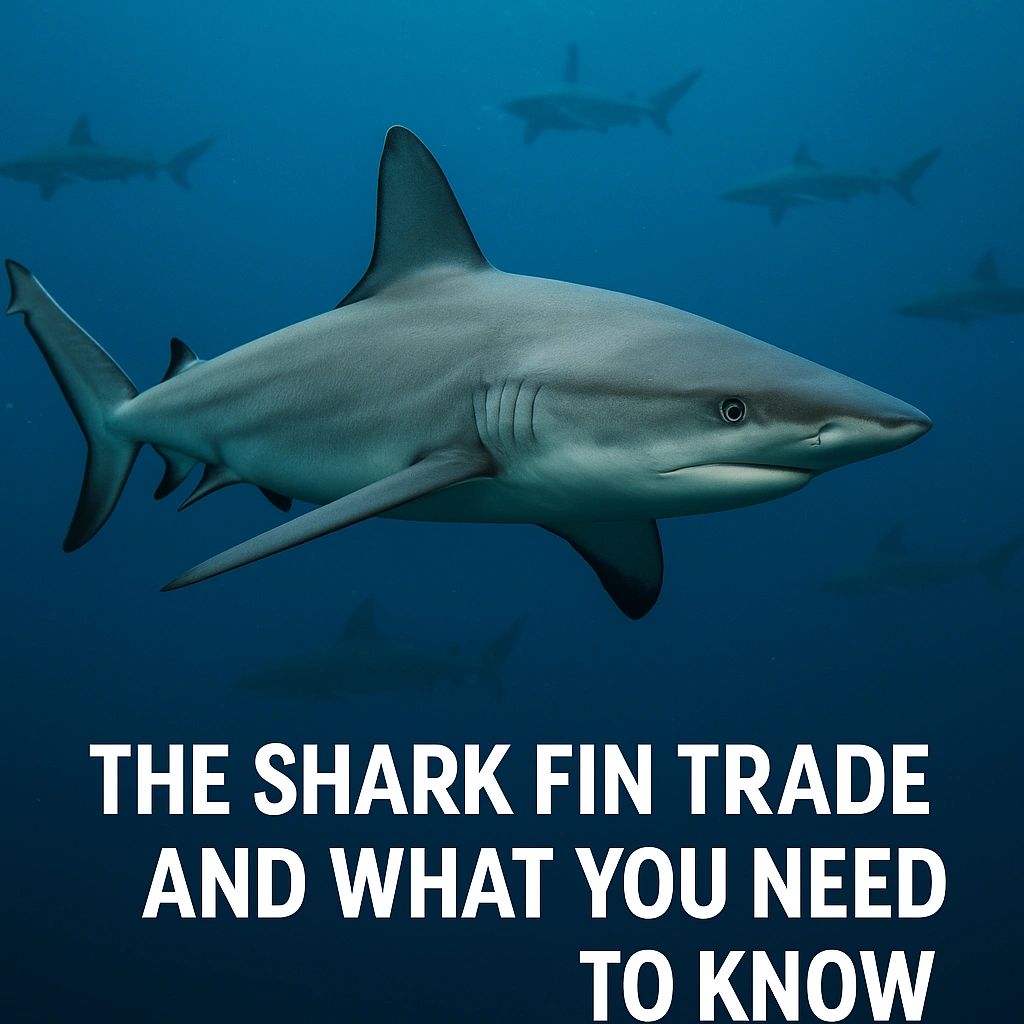
Sharks have been swimming in our oceans for more than 400 million years. That’s even older than dinosaurs! These incredible animals are important predators in the ocean. They help keep the food web in balance. But sadly, millions of sharks are killed every year just for their fins. This blog will dive deep into what the shark fin trade is, why it’s harmful, and what you can do to help save these amazing creatures.
What Is the Shark Fin Trade?
The shark fin trade is a global business where people catch sharks just for their fins. The fins are often used to make shark fin soup, a popular dish in some Asian cultures, especially at weddings and special events.
Here’s how it usually happens:
- A shark is caught in a fishing net or on a long fishing line.
- Fishermen cut off its fins—usually the dorsal (top) fin, pectoral (side) fins, and tail fin.
- Sometimes, the shark is thrown back into the ocean still alive, but now it can’t swim and quickly dies.
- The fins are dried, packed, and sold to restaurants or stores.
This practice is called shark finning, and it’s both cruel and wasteful. The shark’s body is often left behind, even though it could be used for meat, oil, or other products.
Why Do People Want Shark Fins?
Shark fin soup has been eaten in parts of Asia for hundreds of years. In places like China, it’s seen as a luxury food. It was once only served to royalty and the very rich. Eating shark fin soup is still viewed by some as a sign of wealth, power, and respect.
The problem? Shark fins don’t even have much taste. Most of the flavor in the soup comes from chicken or pork broth. The fins are mostly used for their texture—they’re soft and stringy, kind of like noodles.
Because of growing wealth in many parts of Asia, especially China, demand for shark fin soup rose sharply in the 1990s and early 2000s. This led to a massive increase in shark fishing all over the world.
How Many Sharks Are Killed for Their Fins?
Each year, scientists estimate that 63 to 273 million sharks are killed globally, and many of those deaths are tied to the fin trade (Worm et al., 2013). That’s a huge number! Sharks grow slowly and don’t have many babies, so they can’t bounce back quickly like some fish.
In many shark species, it takes 10 to 20 years to reach adulthood. That means overfishing—even for just a few years—can destroy an entire population.
Which Sharks Are Most Affected?
Not all sharks are treated equally in the fin trade. Some species are targeted more because their fins are larger or more valuable.
Some of the most commonly hunted sharks for fins include:
- Hammerhead sharks
- Oceanic whitetip sharks
- Blue sharks
- Thresher sharks
- Silky sharks
Many of these species are now endangered or vulnerable, meaning their numbers are dropping fast.
The scalloped hammerhead shark, for example, has seen its population drop by over 90% in some regions because of finning (Dulvy et al., 2014).
Is the Shark Fin Trade Legal?
That depends on the country. In some places, shark finning is completely banned. In others, it’s still legal to catch sharks and sell their fins—as long as the whole shark is brought to shore. Here’s a quick look:
- United States: Shark finning is banned, and many states have banned the sale of fins too.
- Canada: In 2019, Canada became the first G7 country to ban the import and export of shark fins.
- European Union: Finning is banned, but trading fins is still allowed.
- China: The government banned shark fin soup from official events in 2013, but it is still sold in stores and restaurants.
- Singapore and Hong Kong: These areas are major hubs in the shark fin trade, although demand is starting to drop.
While progress has been made, illegal finning still happens in many parts of the world. Some boats operate in the open ocean, far from watchful eyes. These are known as illegal, unreported, and unregulated (IUU) fishing operations—and they’re a big problem for sharks.
What Are the** Environmental Impacts**?
Killing sharks for their fins doesn’t just hurt the sharks. It harms the entire ocean.
Sharks are apex predators, which means they’re at the top of the food chain. When sharks disappear, the whole ecosystem can get out of balance. For example:
- Too many smaller fish may survive, eating up more plankton or coral.
- Reef health may suffer because grazers are over-eaten.
- Fish populations we rely on for food may crash.
This is called a trophic cascade, where removing one important species causes a chain reaction through the ecosystem (Ferretti et al., 2010).
Sharks also help keep fish populations healthy by eating the sick and weak. Without them, diseases may spread more easily.
Human Health Risks
Shark meat and fins can contain high levels of mercury and other toxins. Mercury is a dangerous chemical that can cause brain and kidney damage, especially in children and pregnant women (Takahashi et al., 2017).
So even though shark fin soup might seem fancy, it can actually be harmful to people who eat it often.
Is Demand for Shark Fin Soup Going Down?
Yes—and that’s good news! In the past 10 years, more people have learned about how sharks suffer because of the fin trade. Thanks to awareness campaigns and laws, demand for shark fins has started to drop.
For example:
- WildAid, a nonprofit group, found that shark fin consumption in China fell by more than 80% from 2011 to 2020.
- Many Chinese celebrities, like basketball star Yao Ming, have helped promote the message: “When the buying stops, the killing can too.”
- Airlines like American, Delta, and Lufthansa have banned the transport of shark fins.
- Hotels like Hilton and Marriott no longer serve shark fin dishes.
Public opinion is changing. More and more people now see sharks as animals worth protecting—not food for a bowl.
What Are Scientists and Activists Doing?
Researchers are working hard to track shark numbers, tag sharks, and learn about their migrations. This helps figure out where sharks are most at risk and how we can protect them.
Conservationists are also pushing for stronger laws and better enforcement. For example:
- CITES (the Convention on International Trade in Endangered Species) has added more sharks to its protected list.
- Marine protected areas (MPAs) are being created around the world to give sharks safe zones.
- Groups like OCEARCH and the Shark Conservation Fund are tagging and studying sharks to help them survive.
Still, there’s a lot more work to be done.
What Can YOU Do to Help?
You don’t need to be a scientist or a lawmaker to help protect sharks! Here are some simple things anyone can do:
1. Say No to Shark Fin Soup
If you see shark fin soup on a menu, don’t order it. And if you’re at a wedding or party where it’s served, politely say no. Every small action counts.
2. Talk About It
Many people don’t know about the shark fin trade. Share what you’ve learned with friends, family, or classmates. Social media is a great tool!
3. Support Shark-Friendly Laws
Call or write to your local leaders and ask them to support bans on shark fin sales. Petitions and campaigns can make a real difference.
4. Be a Smart Shopper
Don’t buy shark products, such as shark cartilage pills, shark oil, or shark leather. These products often come from threatened species.
5. Support Shark Charities
Donate to or volunteer with groups that protect sharks and marine life. Some good ones include:
- WildAid
- Shark Trust
- Oceana
- Sea Shepherd Conservation Society
Final Thoughts: Sharks Deserve a Future
Sharks are not monsters. They’re not villains from scary movies. They are ancient, graceful animals that play a huge role in keeping our oceans healthy. But they are being pushed toward extinction—mostly for a bowl of soup.
The good news? People like you are helping to turn the tide. By learning the facts, spreading awareness, and making thoughtful choices, we can stop the shark fin trade and give sharks the future they deserve.
Let’s be the generation that saves sharks—not just for their sake, but for the health of the oceans and the planet we all share.
Bibliography
Dulvy, N. K., Fowler, S. L., Musick, J. A., Cavanagh, R. D., Kyne, P. M., Harrison, L. R., … & White, W. T. (2014). Extinction risk and conservation of the world’s sharks and rays. eLife, 3, e00590. https://doi.org/10.7554/eLife.00590
Ferretti, F., Worm, B., Britten, G. L., Heithaus, M. R., & Lotze, H. K. (2010). Patterns and ecosystem consequences of shark declines in the ocean. Ecology Letters, 13(8), 1055–1071. https://doi.org/10.1111/j.1461-0248.2010.01489.x
Takahashi, Y., Tsuji, M., & Watanabe, I. (2017). Mercury content in shark fins and mercury exposure levels among shark fin consumers in Japan. Environmental Science and Pollution Research, 24(25), 20474–20481. https://doi.org/10.1007/s11356-017-9697-1
Worm, B., Davis, B., Kettemer, L., Ward-Paige, C. A., Chapman, D., Heithaus, M. R., … & Lotze, H. K. (2013). Global catches, exploitation rates, and rebuilding options for sharks. Marine Policy, 40, 194–204. https://doi.org/10.1016/j.marpol.2012.12.034
Originally published at the live site .