
Boats ·
The Shark That Swallowed a Submarine Camera
A True Tale of Curiosity, Technology, and One Big Bite
By Rebecca "Madam Chronicler" Ryan
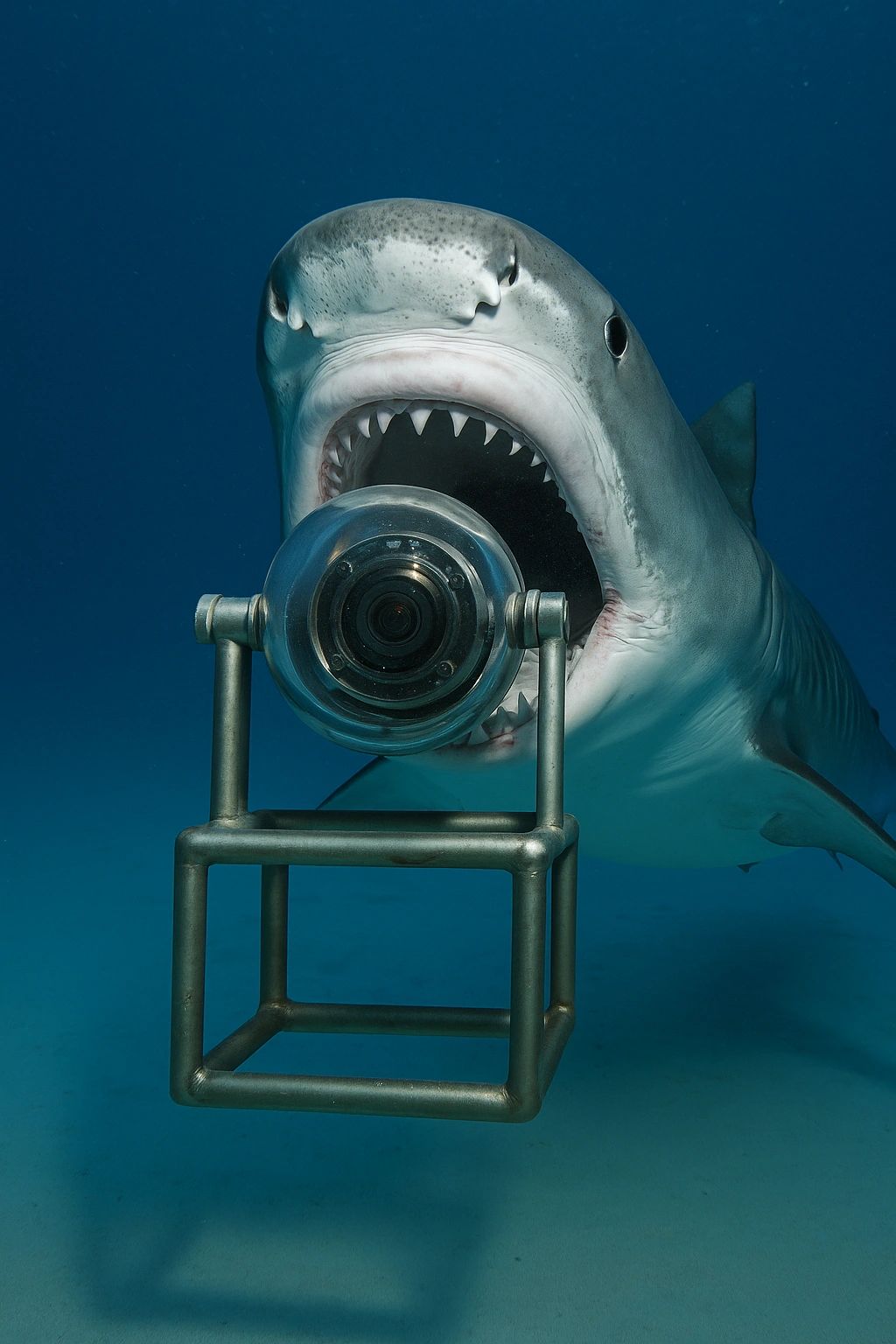
A True Tale of Curiosity, Technology, and One Big Bite
Imagine you’re sitting in a high-tech control room, watching live footage from a submarine camera exploring the deep sea. Suddenly, the screen goes black. No, it’s not a technical glitch. Instead, you’re staring down the gullet of one of the ocean’s top predators—a shark just swallowed your camera!
Believe it or not, that’s exactly what happened during a real underwater exploration. In a moment that seems straight out of a sci-fi movie, a curious shark decided that the camera looked just tasty enough to try a bite. But why did this happen? What kind of shark was it? And how did scientists recover their precious technology? Buckle up, because this blog dives deep into the incredible story of the shark that swallowed a submarine camera—and what it teaches us about these apex predators of the sea.
A Strange Disappearance in the Deep
In the waters off the coast of the Bahamas, a research crew had sent down a state-of-the-art underwater camera system. It was designed to capture never-before-seen footage of deep-sea creatures. This wasn’t your average GoPro. It was a titanium-framed, pressure-resistant camera pod, meant to survive crushing depths and record high-resolution video of marine life in action.
The team was hoping to capture images of deep-dwelling sharks, squids, and strange glowing fish that lurk in the darkness. Everything was going smoothly—until it wasn’t. The feed went black. One second, the researchers were watching the camera glide past coral and sea fans, and the next, it was like staring into a void.
That void, they quickly realized, had teeth.
The Bite That Changed Everything
Later, when they recovered the camera (yes, they did get it back!), they found something wild: deep tooth marks gouged into the metal casing. The culprit? A tiger shark—a large, powerful predator known for eating just about anything.
Tiger sharks (Galeocerdo cuvier) have earned the nickname “garbage cans of the sea.” Scientists have found license plates, tires, and even chicken coops inside tiger shark stomachs. It’s no surprise then that a shiny, moving camera piqued this shark’s interest.
The camera was tough, but not tougher than a tiger shark’s bite. These sharks can exert over 300 pounds of pressure per square inch, enough to crush bone and metal alike (Wroe et al., 2008). It’s no wonder the feed went out instantly. The shark didn’t just bump into the camera—it bit right through it.
Shark vs. Submarine: Why Did It Happen?
So, why would a shark try to eat a submarine camera?
It all comes down to curiosity and instinct. Sharks don’t have hands or fingers. To investigate something new in their environment, they use their mouths. That means a strange object hovering in the water—especially one that moves, flashes, or hums—might as well be an appetizer in a buffet line.
Tiger sharks are especially curious and opportunistic. According to Papastamatiou et al. (2012), they often roam long distances, investigate unknown objects, and test potential food sources. They’re not picky eaters, either. If it smells, shines, or makes noise, it’s fair game.
Even though the camera didn’t taste like fish, it likely looked like something worth checking out.
How Do Sharks “See” the World?
Sharks have super senses that help them explore the ocean, but those senses can also trick them into biting things that aren’t food.
Here’s how they find their way:
- Electroreception – Sharks have special organs called the ampullae of Lorenzini, which can detect electric fields from other animals. A camera’s motor might give off just enough electricity to catch their attention.
- Smell – Their sense of smell is legendary. They can detect a drop of blood in an Olympic-sized swimming pool. If the camera had oils or chemical traces on it, a shark might’ve followed the scent trail.
- Vision – Most sharks see well in dim light, and their eyes are tuned to movement. A spinning camera propeller or flashing light might have looked like prey.
- Lateral Line – This system helps sharks detect vibrations and movement in the water. A swimming camera could feel like a wounded fish to a hungry predator.
Combined, these senses make sharks incredible hunters—but also prone to “tasting” the wrong things.
The Science of Shark Curiosity
The shark that swallowed the camera wasn’t being aggressive. It was being curious.
Shark expert Dr. Neil Hammerschlag has spent years tagging and studying tiger sharks, hammerheads, and reef sharks. He says many shark “attacks” on objects—including boats, cameras, and surfboards—aren’t acts of rage. They’re investigations.
A 2020 study published in Animal Cognition found that sharks are capable of learning and memory, and they often interact with new objects to figure them out (Schluessel et al., 2020). In other words, a shark biting a camera isn’t all that different from a toddler putting toys in their mouth. It’s how they learn.
What Happens When a Shark Eats a Camera?
When a shark swallows something strange—like a camera—one of three things can happen:
- It spits it out. Most non-food items aren’t tasty, so the shark might just drop it after a chomp or two.
- It passes through. Sharks can sometimes pass foreign objects without much trouble.
- It gets stuck. In rare cases, large objects can cause internal injury or death.
Thankfully, in this real-life story, the camera wasn’t fully swallowed. The shark bit it and let go, leaving behind scratches and bite marks but not taking it to the bottom of the sea. Still, the risk is real. That’s why many underwater devices are now designed to be shark-resistant.
The Aftermath: A Scientific Goldmine
When scientists reviewed the damaged camera footage, they made a surprising discovery: the shark’s bite didn’t just end the video—it began a new kind of data.
The camera caught a flash of the shark’s mouth, giving researchers a close-up of its teeth, skin, and behavior they never expected. This bite became a breakthrough, offering clues into how sharks react to human technology and what it means for marine research.
Scientists now use this kind of data to design better, safer equipment. They’ve added shark deterrents, like electrical pulses or special coatings, to keep predators from biting their gear.
Other Shark-Tech Encounters
This wasn’t the first time a shark tangled with technology—and it won’t be the last.
- In 2015, a great white shark bit a shark cage camera off Guadalupe Island. The slow-motion video went viral and showed just how fast and powerful these predators can be.
- In 2019, a lemon shark in Florida bit a diver’s underwater drone, mistaking its buzzing sound for prey.
- In 2022, researchers studying Greenland sharks in the Arctic lost contact with an underwater robot—only to recover it with chunks missing and deep teeth grooves.
These stories remind us that the ocean is full of surprises. When we enter a shark’s world, we have to be ready for anything—including a toothy greeting.
Lessons Learned from a Bite
The shark that swallowed the submarine camera gave scientists a lot to think about:
- Sharks aren’t mindless killers. They’re intelligent, curious, and exploratory creatures.
- Tech needs to evolve. If we’re going to study sharks safely, we need tools that can withstand their attention—or deter it entirely.
- Every bite is data. Even a shark attack on a machine can teach us something new about behavior, feeding, and interaction with humans.
This encounter wasn’t just a setback. It was a step forward in understanding the delicate dance between nature and technology.
Protecting Sharks and Cameras
So what’s next? Researchers are now working on ways to keep both sharks and equipment safe:
- Smart cameras that send real-time alerts when a shark is nearby.
- Shark-proof casings made from composite materials.
- Eco-friendly repellents that release harmless electrical fields.
- Visual deterrents like stripes or bright colors that signal “I’m not food!”
It’s all part of a bigger mission to study sharks without disturbing or endangering them. The more we learn, the better we can protect these ancient animals and the ecosystems they help balance.
The Bigger Picture: Why It Matters
You might wonder—why do we go to such great lengths to film sharks in the first place?
Well, sharks are keystone species. That means their health affects the entire ocean. When sharks thrive, fish populations stay balanced, reefs stay healthy, and ecosystems stay strong. But shark numbers are dropping fast. Since 1970, over 70% of oceanic shark populations have disappeared (Pacoureau et al., 2021).
Studying sharks, even when they bite our cameras, helps us learn how to save them. Every interaction, every close call, every tooth mark tells a story. And in this case, it was a story that started with a chomp and ended with a whole lot of discovery.
Final Splash: A Shark Tale to Remember
The story of the shark that swallowed a submarine camera is more than just a cool headline. It’s a window into how wild, curious, and smart sharks really are. It’s also a reminder of how much we still have to learn—and how far we’re willing to go to learn it.
From the depths of the Bahamas to labs around the world, scientists are piecing together the puzzle of shark behavior one bite at a time. And thanks to that one curious tiger shark, we’re one step closer to understanding the true nature of the ocean’s most iconic predator.
So the next time you see a photo of a shark with its toothy grin, remember: they’re not just the stars of scary movies. They’re explorers, just like us—and sometimes, they just want to see what that camera tastes like.
Bibliography
Papastamatiou, Y. P., Meyer, C. G., Kosaki, R. K., Wallsgrove, N. J., & Popp, B. N. (2012). Movements and foraging of tiger sharks (Galeocerdo cuvier) in a subtropical marine ecosystem. Marine Ecology Progress Series, 449, 223–235. https://doi.org/10.3354/meps09518
Pacoureau, N., Rigby, C. L., Kyne, P. M., Sherley, R. B., Winker, H., Carlson, J. K., … & Dulvy, N. K. (2021). Half a century of global decline in oceanic sharks and rays. Nature, 589(7843), 567-571. https://doi.org/10.1038/s41586-020-03173-9
Schluessel, V., Bennett, M. B., Blomberg, S. P., & Collin, S. P. (2020). Learning and memory in elasmobranch fishes: A review and assessment of future research. Animal Cognition, 23(1), 1–24. https://doi.org/10.1007/s10071-019-01317-4
Wroe, S., McHenry, C., & Thomason, J. (2008). Bite club: comparative bite force in big biting mammals and the prediction of predatory behaviour in fossil taxa. Proceedings of the Royal Society B: Biological Sciences, 272(1563), 619–625. https://doi.org/10.1098/rspb.2004.3049
Originally published at the live site .