
Maritime ·
The U.S. Navy and Shark Attacks: Separating Fact from Fiction
When you think of the U.S. Navy, you probably picture massive ships, brave sailors, and powerful submarines. You might also imagine daring missions across the world’s oceans. But there’s another image that often sneaks i...
By Rebecca "Madam Chronicler" Ryan
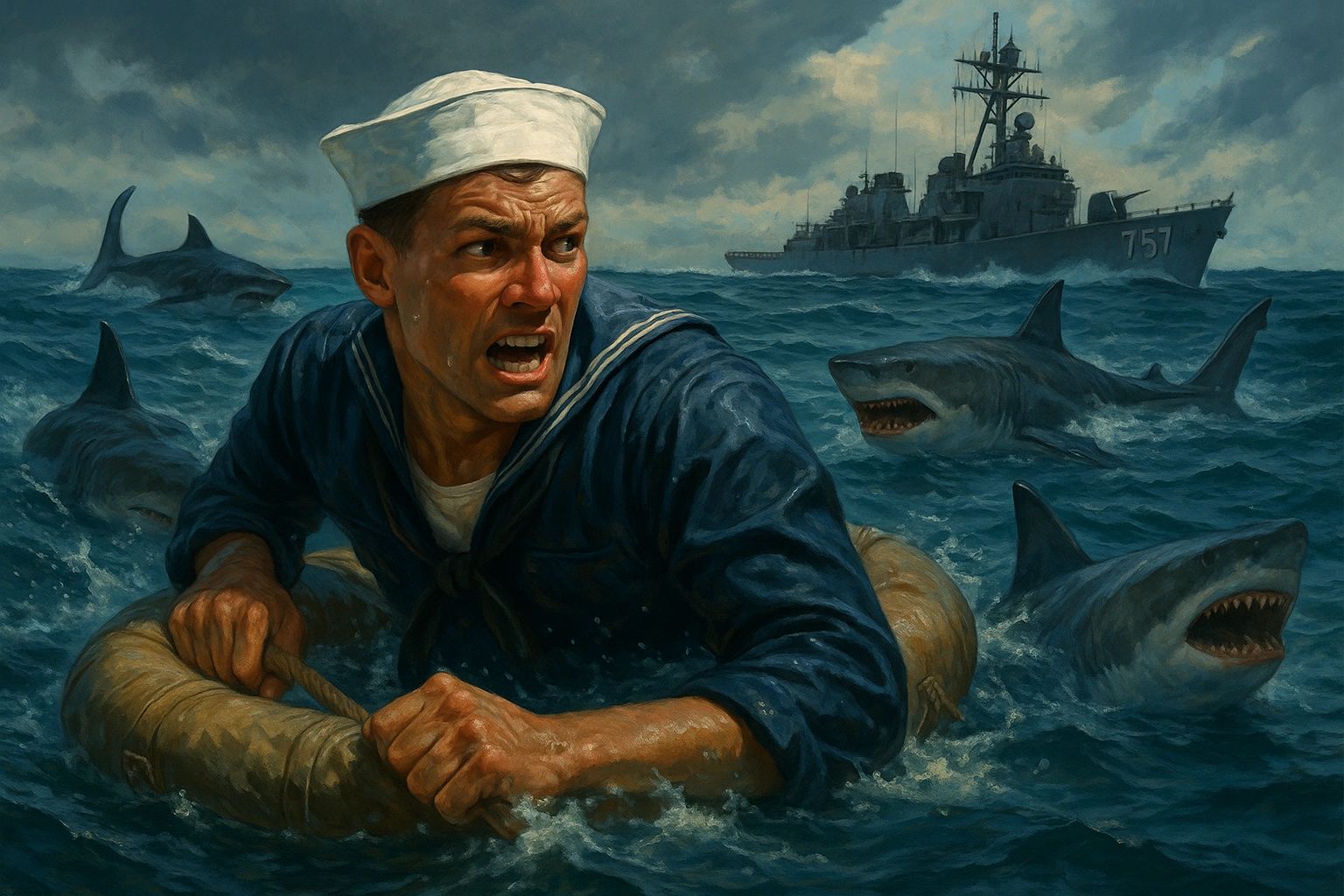
When you think of the U.S. Navy, you probably picture massive ships, brave sailors, and powerful submarines. You might also imagine daring missions across the world’s oceans. But there’s another image that often sneaks into people’s minds—sharks. For decades, stories have swirled about Navy sailors being attacked by sharks during wars, shipwrecks, and ocean training exercises. Some of these stories are true, and others are exaggerated. But what’s the real relationship between the U.S. Navy and shark attacks?
In this blog, we’re going to dive deep—pun intended—into this mysterious connection. We’ll look at the most famous incidents, the truth about sharks in Navy waters, and what the Navy is doing today to keep sailors safe.
The Myth of the “Shark-Infested Waters”
The phrase “shark-infested waters” has been used in movies and headlines for years. It sounds scary, doesn’t it? But in reality, sharks aren’t waiting to eat every person who falls into the ocean. The truth is, shark attacks on humans are extremely rare.
Still, because the Navy operates in oceans where sharks naturally live, there have been times when sailors have had dangerous encounters. The key is to understand when and why those attacks happen—and how the Navy has responded.
World War II and the USS Indianapolis
Let’s start with one of the most infamous shark stories in U.S. Navy history—the sinking of the USS Indianapolis.
In July 1945, the USS Indianapolis was on a secret mission to deliver parts of the atomic bomb to an island in the Pacific. After completing the mission, the ship was torpedoed by a Japanese submarine. It sank in just 12 minutes. Of the 1,196 men on board, about 900 survived the initial sinking and were left floating in the ocean.
For the next four days, the sailors floated in the water, clinging to life with no food or water. During that time, some were attacked by sharks. It is considered the worst shark attack in U.S. naval history.
How many men died from shark attacks? It’s hard to say exactly. Most experts agree that many of the deaths were caused by exposure, dehydration, and drowning. But shark attacks certainly played a role. Survivors described terrifying scenes of sharks circling and attacking at night.
According to a study published in the journal Naval History, about 150 men may have died from shark-related injuries during those four days in the water (Streit, 2001). That means roughly 15% of the survivors in the water may have been victims of sharks.
Why Were There So Many Sharks?
Sharks are drawn to noise, blood, and movement. When a ship sinks, it often releases oil and debris, which attracts fish—and fish attract sharks. If there are injured or dead people in the water, that can also draw sharks to the area.
The USS Indianapolis went down in warm tropical waters, where species like oceanic whitetip sharks and tiger sharks live. These species are large and known to scavenge, especially when humans are floating helplessly for days.
This tragedy taught the Navy many lessons—not just about enemy attacks, but about survival at sea and the risk of sharks.
Other Incidents and Training Accidents
While the Indianapolis is the most famous case, it’s not the only time Navy personnel have faced sharks. During World War II, shipwrecks were common, and sometimes survivors had to wait days before being rescued. Reports from the Pacific and Atlantic oceans mention sharks circling life rafts or picking off men floating alone.
The Navy also runs training missions in open water. Navy SEALs and rescue swimmers are often required to swim in areas where sharks are present. While rare, there have been close encounters.
For example, in 1963, a Navy diver was reportedly killed by a shark off the coast of California during a training mission. More recently, in 2023, a Navy sailor was injured by a shark off the coast of Florida while swimming during off-duty hours (Florida Fish and Wildlife Commission, 2023). These incidents are rare, but they remind us that sharks are wild animals—and that safety measures are important.
What Types of Sharks Are Involved?
The sharks most often involved in incidents with the Navy are:
- Oceanic Whitetip Shark (Carcharhinus longimanus): This species was likely responsible for many attacks after shipwrecks in WWII. They are curious and aggressive scavengers.
- Tiger Shark (Galeocerdo cuvier): Known for eating almost anything, tiger sharks live in warm coastal waters and are responsible for many bites worldwide.
- Bull Shark (Carcharhinus leucas): These sharks are known to enter rivers and bays, which makes them more likely to come into contact with humans.
- Great White Shark (Carcharodon carcharias): While less common in the tropical areas where the Navy often trains, great whites have been involved in attacks near California and other temperate zones.
How the Navy Protects Sailors Today
Over the years, the U.S. Navy has become much better at keeping sailors safe from sharks. Here are some ways they do that:
1. Survival Training
Navy personnel are taught how to survive in the ocean. This includes how to stay calm, how to float properly, and how to avoid attracting sharks. Survival courses also teach sailors what to do if they see a shark.
2. Protective Gear
Life rafts, inflatable vests, and survival suits help keep sailors above water and make them less vulnerable to sharks. Some gear even has colors and patterns designed to make sailors harder for sharks to spot.
3. Shark Repellent
During and after World War II, the Navy worked with scientists to create shark repellents. One early version was a black dye packet that sailors could break open in the water. The idea was to hide them from sharks. While it didn’t always work, it gave sailors something to use during emergencies.
More recently, researchers have tested chemicals and magnetic fields to keep sharks away. Some progress has been made, but there’s no perfect solution yet (Hart & Collin, 2015).
4. Rescue Response
Thanks to modern technology, sailors are rescued much faster today than they were in the past. GPS, radios, and helicopters mean that survivors don’t have to wait days to be saved. That alone reduces the risk of shark attacks.
Are Shark Attacks Still a Concern?
Yes, but only a small one. The chance of a Navy sailor being bitten by a shark is extremely low. According to the International Shark Attack File, the odds of being attacked by a shark are about 1 in 11.5 million (ISAF, 2024). For sailors, the real dangers are things like storms, accidents, and enemy threats—not sharks.
That said, the Navy takes every threat seriously. That’s why they continue to study shark behavior and improve safety practices.
What the Science Says
Modern studies show that sharks are not the “man-eaters” we once believed them to be. Most shark bites happen because the animal is confused. For example, a shark might mistake a person for a seal. In nearly all cases, once the shark realizes the mistake, it lets go.
Many shark species are actually endangered today. Overfishing, pollution, and climate change have hurt their populations. Scientists now say that humans are a far bigger threat to sharks than the other way around (Dulvy et al., 2021).
Even the Navy has started to help. In recent years, Navy ships have participated in shark research by tagging and tracking sharks in open water. The data helps scientists learn how sharks migrate, which can help both conservation and safety efforts.
Real Voices: Sailors Who Faced Sharks
Many Navy veterans have shared stories of their experiences with sharks. Some of the most powerful accounts come from survivors of the USS Indianapolis. One sailor, Edgar Harrell, recalled in his memoir:
“We saw fins slicing through the water. You couldn’t see them all, but you knew they were there. Some guys never came back after drifting too far. You’d hear screams, then silence” (Harrell & Baggett, 2005).
Stories like these show just how terrifying the experience was—but also how brave these sailors were. Their courage and survival are now part of Navy history.
Final Thoughts: Sharks and the Sea
The U.S. Navy has faced many dangers throughout its history. Shark attacks, while rare, are one of the more chilling ones. From the tragedy of the USS Indianapolis to today’s careful safety training, the Navy’s story with sharks is one of caution, learning, and respect.
But it’s important to remember: sharks are not our enemies. They’re an important part of the ocean ecosystem. And thanks to science and technology, the Navy can safely navigate waters where sharks live.
So the next time you hear a story about Navy sailors and sharks, think about the bravery behind those tales. And remember—the real danger isn’t the shark. It’s forgetting that the ocean, like all wild places, deserves our respect.
Bibliography
Dulvy, N. K., Pacoureau, N., Rigby, C. L., Pollom, R. A., Jabado, R. W., Ebert, D. A., … & Simpfendorfer, C. A. (2021). Overfishing drives over one-third of all sharks and rays toward a global extinction crisis. Current Biology, 31(21), 4773-4787.e8. https://doi.org/10.1016/j.cub.2021.08.062
Florida Fish and Wildlife Conservation Commission. (2023). Shark attack reports. https://myfwc.com
Harrell, E., & Baggett, D. (2005). Out of the depths: An unforgettable WWII story of survival, courage, and the sinking of the USS Indianapolis. Bethany House Publishers.
Hart, N. S., & Collin, S. P. (2015). Sharks senses and shark repellents. In Carrier, J. C., Heithaus, M. R., & Simpfendorfer, C. A. (Eds.), Biology of Sharks and Their Relatives (pp. 349-400). CRC Press.
International Shark Attack File. (2024). Shark attack statistics. Florida Museum of Natural History. https://www.floridamuseum.ufl.edu/shark-attacks/
Streit, L. (2001). The ordeal of the USS Indianapolis: The Navy’s greatest sea disaster. Naval History, 15(4), 22–29.
Originally published at the live site .