
Stories ·
What Are the Biggest Threats to Manatees in Florida Waters?
Florida is home to many incredible sea creatures, but few are as beloved as the manatee. These slow-moving, gentle giants—sometimes called "sea cows"—live in warm coastal waters, rivers, and springs throughout the state....
By Rebecca "Madam Chronicler" Ryan
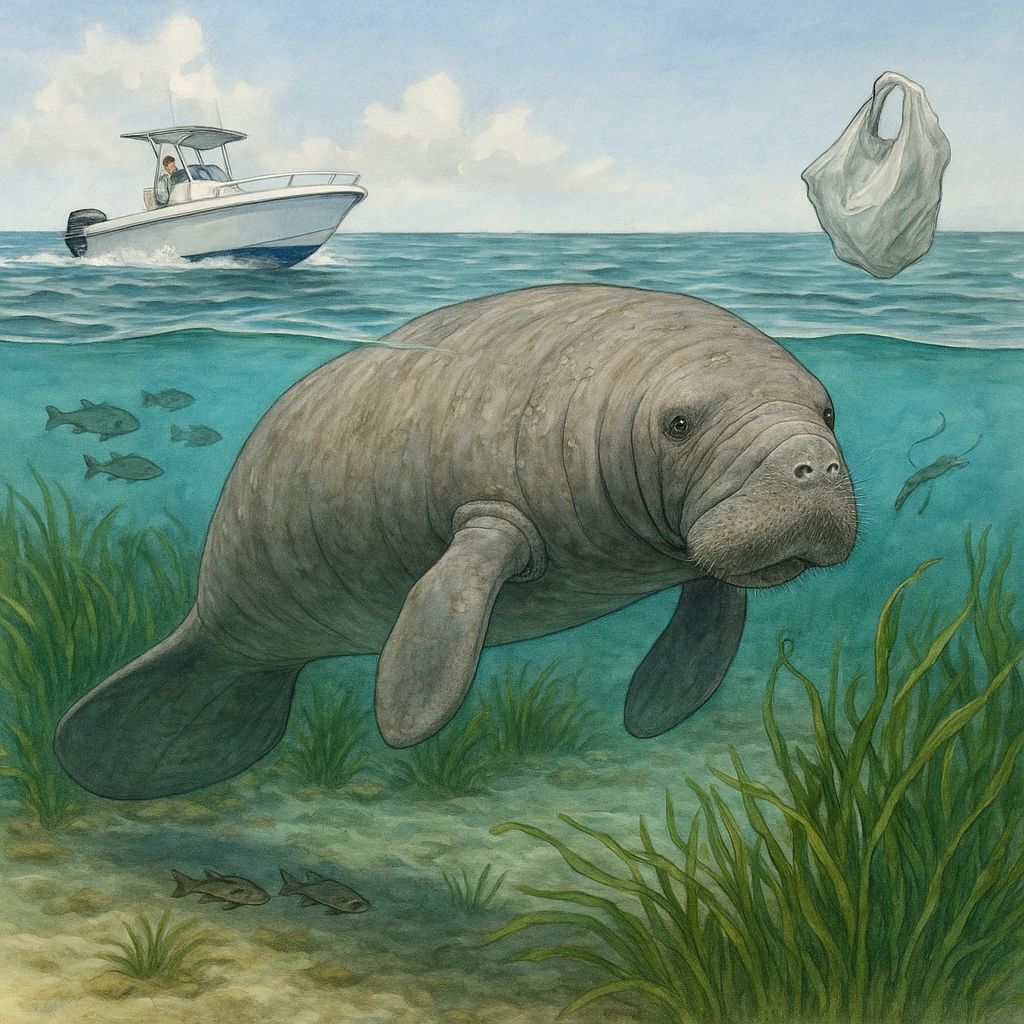
Florida is home to many incredible sea creatures, but few are as beloved as the manatee. These slow-moving, gentle giants—sometimes called “sea cows”—live in warm coastal waters, rivers, and springs throughout the state. People love watching manatees drift along, munching on sea grass, and popping up to breathe. But did you know that manatees are in trouble?
Even though they seem peaceful and protected, manatees face many serious dangers in Florida waters. Some threats are natural, like cold weather or disease. But many others come from humans—like pollution, boat strikes, and habitat loss. In this blog post, we’ll explore the biggest threats to manatees, how these dangers affect them, and what we can all do to help.
1. Boat Strikes: The Most Visible Threat
One of the biggest and most common dangers to manatees is being hit by boats. Manatees swim slowly near the surface of the water, making them easy targets for fast-moving boats. Their bodies are large, and they don’t have a way to move quickly out of the way when danger comes.
In places like the Indian River Lagoon and Crystal River, many manatees are injured or killed by boat propellers. Sadly, boat strikes are one of the leading causes of manatee deaths in Florida each year.
Some manatees survive the accidents but are left with deep scars or broken bones. Scientists and rescuers often recognize manatees by their scar patterns. These injuries can affect their ability to swim, eat, or even breathe properly.
To protect them, many areas have “slow speed” zones where boats must go slow. These rules are helpful, but they only work when boaters follow them.
2. Loss of Seagrass: Starving the Sea Cows
Manatees are herbivores, which means they only eat plants. Their favorite food? Seagrass! These underwater meadows grow in shallow waters and provide tons of nutrition for manatees. An adult manatee can eat up to 100 pounds of seagrass every day!
But lately, Florida’s seagrass beds have been disappearing. Pollution from fertilizers, sewage, and stormwater runoff has caused harmful algae blooms. These blooms block sunlight, killing the seagrass below. Without sunlight, the underwater plants can’t grow—and manatees have nothing to eat.
In recent years, this has led to starvation events, especially on Florida’s east coast. In 2021 and 2022, hundreds of manatees died because they simply didn’t have enough food. Wildlife agencies even tried feeding manatees lettuce near power plants just to help them survive the winter.
3. Cold Stress: Trouble When Temperatures Drop
Manatees love warm water and need it to stay healthy. When the water temperature drops below 68°F (20°C), they can get very sick or even die from something called “cold stress syndrome.” This condition affects their skin, immune system, and organs.
In winter, manatees often swim to natural springs or warm water outflows from power plants to stay warm. But if they can’t find a warm spot in time—or if the warm waters become too crowded—they risk getting sick.
Cold stress is especially dangerous for young manatees who don’t have as much body fat as adults. When too many manatees crowd into one place, it can also lead to more disease or injury.
4. Pollution and Red Tides
Pollution doesn’t just kill seagrass—it also creates toxic conditions for manatees. Fertilizers, sewage, and waste in the water can feed harmful algal blooms like red tide. Red tide is caused by a tiny organism called Karenia brevis, which releases toxins that affect fish, sea turtles, and yes—manatees too.
When manatees swim through water full of red tide toxins, they can have trouble breathing, get confused, or even die. In 2013, a red tide event killed nearly 300 manatees in southwest Florida.
These harmful blooms are becoming more common due to climate change and increased runoff from farms and cities. Cleaner water and better stormwater controls could help reduce the risk of future red tides.
5. Habitat Loss From Development
As Florida’s population grows, more buildings, roads, and seawalls are being built along the coasts and rivers. This development removes or damages the natural areas manatees need to survive.
When mangroves, wetlands, and seagrass beds are destroyed, manatees lose both food and shelter. Construction can also increase boat traffic and noise, making it harder for manatees to avoid danger.
Even natural springs—important winter shelters for manatees—are affected when water is pumped out for human use. As groundwater levels fall, springs produce less warm water, leaving manatees at risk during cold months.
6. Fishing Gear and Litter: Deadly Entanglements
Manatees often get tangled in fishing lines, crab traps, and other types of marine debris. These lines can wrap around their flippers, tails, or faces—causing cuts, infections, or making it hard to swim or eat.
Plastic waste and trash also pose a problem. Manatees may accidentally swallow plastic bags or balloons, which can block their digestive system. Even a single piece of litter can be deadly.
Florida’s Fish and Wildlife Conservation Commission (FWC) and rescue groups often respond to manatees with entanglement injuries. But preventing this issue is much easier than fixing it after the fact.
7. Disease and Parasites
Although human-related threats are the biggest dangers, manatees can also get sick from natural causes. Diseases, bacteria, and parasites can harm them—especially if their immune systems are already weakened by stress, poor nutrition, or cold weather.
Some researchers worry that manatees might be more vulnerable to disease as their habitats become more polluted or crowded. Monitoring their health is important for understanding how to keep their populations strong.
8. Climate Change: A Growing Threat
Climate change is making almost all these problems worse. Warmer temperatures may sound like good news for manatees, but they also bring stronger storms, rising sea levels, and more pollution in waterways.
For example, hurricanes can tear up seagrass beds and mix pollutants into the water. Rising seas can flood freshwater habitats, forcing manatees into areas with less food. And changing rainfall patterns can lead to more harmful algae blooms.
In the long run, climate change could be one of the biggest challenges manatees face. Scientists are studying how these changes will affect manatees and what we can do to help them adapt.
What’s Being Done to Help?
Even with all these threats, there is hope for manatees. Conservation groups, scientists, and everyday people are working hard to protect them. Here are some ways people are making a difference:
- Rescue and rehabilitation: Sick and injured manatees are rescued by groups like FWC and the Manatee Rescue & Rehabilitation Partnership. After treatment, many are released back into the wild.
- Seagrass restoration: Scientists and volunteers are planting new seagrass beds in damaged areas to help bring back manatee food sources.
- Water quality improvements: Cities and farms are being encouraged to reduce pollution and improve stormwater systems to protect waterways.
- Education and awareness: Signs, apps, and public programs help boaters avoid manatees and teach people how to live in harmony with wildlife.
- Laws and protections: Manatees are protected under the Marine Mammal Protection Act and the Endangered Species Act. These laws help limit harassment, boat speeds, and habitat destruction.
What Can You Do to Help?
You don’t have to be a scientist or a park ranger to help manatees. Here are some simple ways anyone can make a difference:
- Follow boating speed limits. If you drive a boat in Florida, always obey “manatee zone” signs and keep a lookout.
- Pick up litter. Never leave trash behind at the beach or on the water. Join a cleanup event to make a bigger impact.
- Use less fertilizer. Chemicals from lawns and gardens can run into rivers and harm manatee habitats.
- Report injured manatees. If you see a hurt manatee, call the FWC Wildlife Alert Hotline at 1-888-404-FWCC.
- Share what you learn. Talk to your friends and family about manatees and why they matter.
Conclusion: Protecting Florida’s Gentle Giants
Manatees are more than just cute creatures swimming through Florida waters. They are an important part of the ecosystem and a symbol of our natural heritage. But they face many serious threats—most of them caused by humans.
From boat strikes and pollution to habitat loss and climate change, manatees need our help now more than ever. The good news is that we can all play a role in saving them. By making smart choices, spreading awareness, and supporting conservation efforts, we can help these amazing animals survive and thrive for generations to come.
Let’s keep Florida’s waters safe—not just for manatees, but for all the wildlife that calls it home.
Bibliography
- Florida Fish and Wildlife Conservation Commission (FWC). (2024). Manatee conservation. Retrieved from https://myfwc.com/research/manatee/
- Save the Manatee Club. (2023). Threats to manatees. Retrieved from https://www.savethemanatee.org/
- U.S. Fish and Wildlife Service. (2023). West Indian Manatee (Trichechus manatus). Retrieved from https://www.fws.gov/species/west-indian-manatee-trichechus-manatus
- NOAA Fisheries. (2023). Marine mammal protection: Manatees. Retrieved from https://www.fisheries.noaa.gov/species/west-indian-manatee
- Walsh, C. J., et al. (2020). Sublethal red tide toxin exposure in manatees: Effects on immune function. Environmental Health Perspectives, 128(1), 017001. https://doi.org/10.1289/EHP5927
- Smith, J. A., et al. (2022). Nutrient pollution and seagrass decline in Florida: Implications for manatees. Aquatic Botany, 173, 103410. https://doi.org/10.1016/j.aquabot.2021.103410
Originally published at the live site .