
Maritime ·
What It’s Really Like Swimming With Sharks
Not as scary as you think… and way cooler than you imagine!
By Rebecca "Madam Chronicler" Ryan
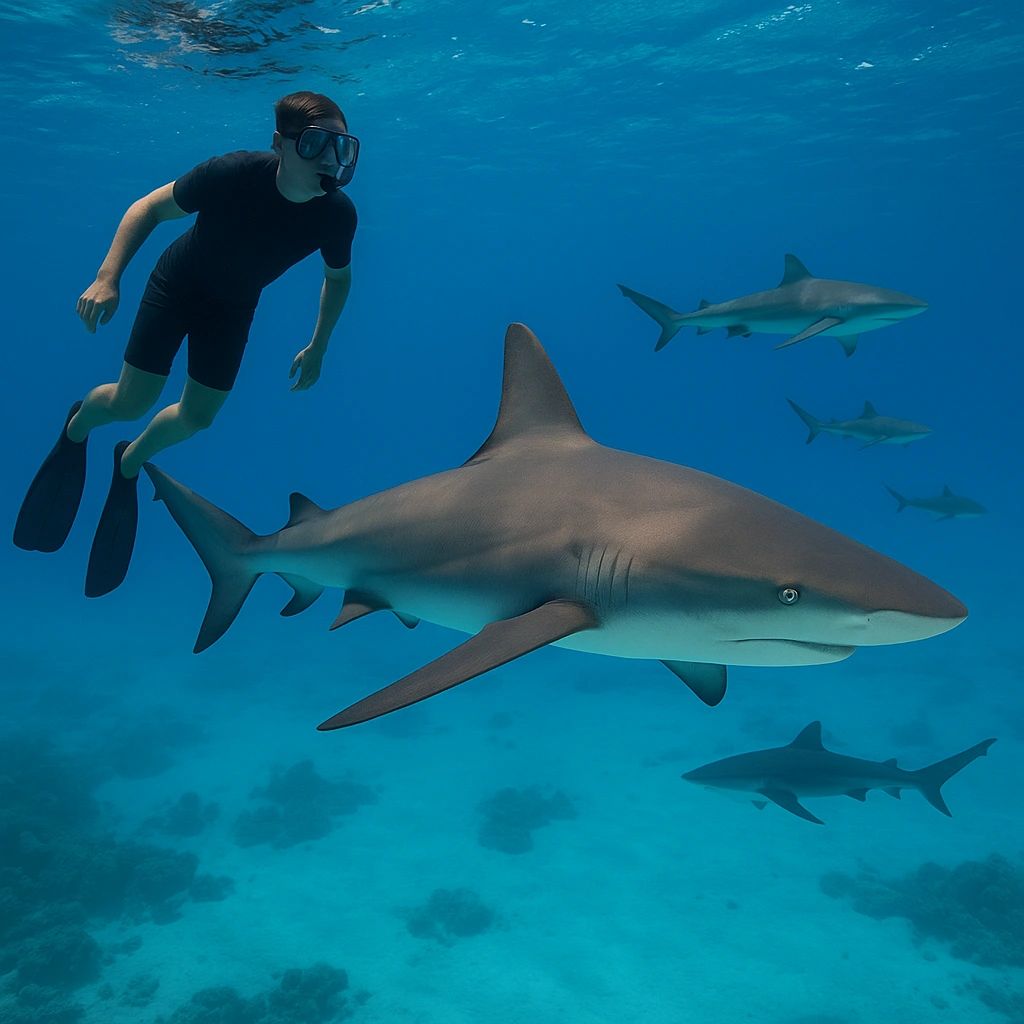
Not as scary as you think… and way cooler than you imagine!
Have you ever wondered what it would be like to swim with sharks? For many people, just hearing the word “shark” makes their heart race. Movies and TV shows often paint sharks as dangerous predators lurking in the deep. But here’s the truth: swimming with sharks is not only safe (when done the right way), it’s also one of the most unforgettable experiences in the world.
Let’s dive into what it’s really like to swim with sharks—and why thousands of people do it every year without a scratch.
Sharks Aren’t Out to Get You
First, let’s bust a myth: sharks are not mindless man-eaters. In fact, shark attacks on humans are incredibly rare. According to the International Shark Attack File, there were only 57 unprovoked bites worldwide in 2022, and most were not deadly (ISAF, 2023). You’re more likely to get injured by your own toaster than a shark!
Sharks don’t hunt people. Most of the time, if a shark gets too close, it’s just curious. Many shark species rely on smell and taste to explore the world. Sometimes they “test bite” something unfamiliar—but once they realize you’re not on the menu, they usually swim away.
Where People Swim With Sharks
People swim with sharks all over the world! Some popular spots include:
- The Bahamas – known for calm, clear waters and reef sharks.
- Hawaii – home to Galapagos and sandbar sharks.
- Fiji – where bull sharks glide past coral reefs.
- South Africa – famous for cage diving with great whites.
- Florida – where swimmers can encounter nurse sharks and blacktips.
Some experiences happen in open water (no cage), while others use cages for protection—especially if great whites or tiger sharks are involved.
The Prep: What Happens Before the Dive
Before jumping into shark-infested waters, divers go through a lot of preparation.
You’ll typically begin with a safety briefing. Experts explain the shark species you might see, how they behave, and what to do (and not do). You’ll learn things like:
- Don’t splash – Sharks pick up vibrations in the water. Splashing can attract attention.
- Keep calm – Sharks sense panic. Staying relaxed helps both you and the shark stay comfortable.
- Don’t chase or touch – Respect is key. Sharks are wild animals, not pets.
Then you suit up. Most divers wear wetsuits and use scuba or snorkel gear, depending on the depth. Sometimes guides use chum (a mix of fish oils and blood) to attract sharks, especially for photography tours.
The Moment You See Your First Shark
Imagine floating in the water, looking down into the deep blue. Suddenly, a shadow appears. It moves smoothly, with purpose. It’s a shark—and it’s headed your way.
Your heart pounds. Every sense is heightened. But guess what?
The shark just swims by.
In most cases, sharks are totally uninterested in humans. They might give you a glance or circle once or twice. Then they go on their way, as calm and graceful as ocean dancers. Many divers describe the moment as peaceful, even spiritual.
“I thought I’d be scared,” says marine photographer Cristina Zenato, who has dived with Caribbean reef sharks for over 25 years. “But when I saw them up close, I felt connected, not afraid. They’re not monsters—they’re misunderstood” (Zenato, 2021).
Different Sharks, Different Vibes
Not all sharks are the same. Here’s a quick guide to what it feels like swimming with a few popular species:
🦈 Nurse Sharks
- Mood: Chill and lazy
- Size: Up to 10 feet
- Vibe: Like swimming with a sleepy puppy
- Fun Fact: They often rest on the seafloor and barely notice humans nearby.
🦈 Reef Sharks (Caribbean, Blacktip, Grey)
- Mood: Curious but cautious
- Size: 5–8 feet
- Vibe: They glide past like patrol officers—alert but not aggressive.
- Fun Fact: They often swim in groups but are rarely dangerous.
🦈 Bull Sharks
- Mood: Bold and powerful
- Size: 7–11 feet
- Vibe: Swimming with them can be intense—they’re confident but not reckless.
- Fun Fact: They can live in freshwater and saltwater.
🦈 Tiger Sharks
- Mood: Calm, inquisitive
- Size: 10–14 feet
- Vibe: Majestic and slow-moving; they’ll often make eye contact.
- Fun Fact: They’re called “garbage cans of the sea” for their varied diet.
🦈 Great White Sharks
- Mood: Unpredictable but not mindless
- Size: Up to 20 feet
- Vibe: You’ll likely see them while in a cage; their size alone makes them impressive.
- Fun Fact: They often do “test bumps” before deciding whether to bite prey (which is rarely a human).
The Fear Fades Fast
Many first-time divers admit they were nervous. But almost all say the fear melted away once they were actually in the water. Being close to a shark—seeing its eyes, its smooth movements, its grace—can change the way you see the ocean forever.
A study from the University of California found that people who swam with sharks developed more positive feelings toward them afterward. Even those with previous fears felt safer after the experience (Myers & Neff, 2018).
Shark diving isn’t about danger. It’s about connection. It’s about seeing the ocean through the eyes of one of its top predators—and realizing that we’ve been misjudging them all along.
Is It Safe?
Yes—if you go with trained professionals. Most shark swims are guided by marine experts who know the area, the sharks, and the safety rules.
That being said, sharks are wild animals. Risk is never zero. But with proper planning, it’s about as dangerous as crossing a busy street with a traffic light.
Many shark species aren’t aggressive toward humans at all. For example, whale sharks—the largest shark on Earth—are gentle filter-feeders. They eat plankton, not people.
Here are a few safety tips professionals follow:
- Dive in groups
- Avoid flashy jewelry (it can look like fish scales)
- Don’t bring food unless guided by experts
- Stay vertical, not horizontal—this makes you look less like prey
- Respect the sharks’ space
Why People Keep Coming Back
Once people swim with sharks, they often can’t wait to do it again. Why?
Because it’s magical.
Here are just a few reasons:
- Sharks are beautiful. Their sleek bodies, powerful tails, and smooth skin are amazing to watch up close.
- It builds confidence. Facing your fears in the ocean makes you braver in life.
- It helps the planet. Many shark dive companies support conservation. Your money often goes toward protecting sharks from illegal fishing and finning.
- It creates awareness. Seeing sharks in the wild makes people care about ocean health and marine life.
The Science Behind the Experience
Swimming with sharks isn’t just fun—it also helps scientists. Divers and guides often record shark behavior, track populations, and even collect data for research.
Citizen science programs like eShark and SharkBase allow tourists to log sightings, helping scientists study migration and habitats (Ward-Paige et al., 2013).
In fact, eco-tourism has become a tool for conservation. A study in Palau found that each live shark brings in about $1.9 million in revenue over its lifetime—compared to just $108 if it’s caught and sold (Vianna et al., 2012).
By swimming with sharks instead of hunting them, we help keep ocean ecosystems in balance.
Final Thoughts: Who’s the Real Danger?
So, what’s it really like swimming with sharks?
It’s thrilling. It’s humbling. It’s peaceful. It’s life-changing.
And most importantly—it’s not nearly as scary as people think.
The truth is, sharks have more to fear from us than we do from them. Humans kill an estimated 100 million sharks every year through fishing, finning, and bycatch (Worm et al., 2013). Meanwhile, sharks are vital to the health of the oceans. Without them, fish populations collapse, coral reefs suffer, and marine ecosystems fall apart.
Swimming with sharks helps people see them as they truly are: not monsters, but magnificent creatures that deserve respect and protection.
So if you ever get the chance, take the plunge. Swim with sharks. Look them in the eye. You just might find a new favorite animal.
Bibliography
International Shark Attack File (ISAF). (2023). 2022 Worldwide Shark Attack Summary. Florida Museum of Natural History. https://www.floridamuseum.ufl.edu/shark-attacks/yearly-summary/
Myers, R. A., & Neff, C. (2018). Sharks, media, and public fear: A decade of studies on human-shark interactions. Marine Policy, 87, 10–18. https://doi.org/10.1016/j.marpol.2017.09.017
Vianna, G. M. S., Meekan, M. G., Pannell, D., Marsh, S. P., & Meeuwig, J. J. (2012). The socio-economic value of the shark-diving industry in Palau. Marine Policy, 36(5), 993–1001. https://doi.org/10.1016/j.marpol.2012.02.009
Ward-Paige, C. A., Mora, C., Lotze, H. K., Pattengill-Semmens, C., McClenachan, L., Arias-Castro, E., & Myers, R. A. (2013). Global population trends and human use patterns of Manta and Mobula rays. PLoS ONE, 8(9), e74835. https://doi.org/10.1371/journal.pone.0074835
Worm, B., Davis, B., Kettemer, L., Ward-Paige, C. A., Chapman, D., Heithaus, M. R., Kessel, S. T., & Gruber, S. H. (2013). Global catches, exploitation rates, and rebuilding options for sharks. Marine Policy, 40, 194–204. https://doi.org/10.1016/j.marpol.2012.12.034
Zenato, C. (2021). Personal communication and interviews. As featured in National Geographic Explorer Reports on Shark Behavior and Human Interaction.
Originally published at the live site .